About
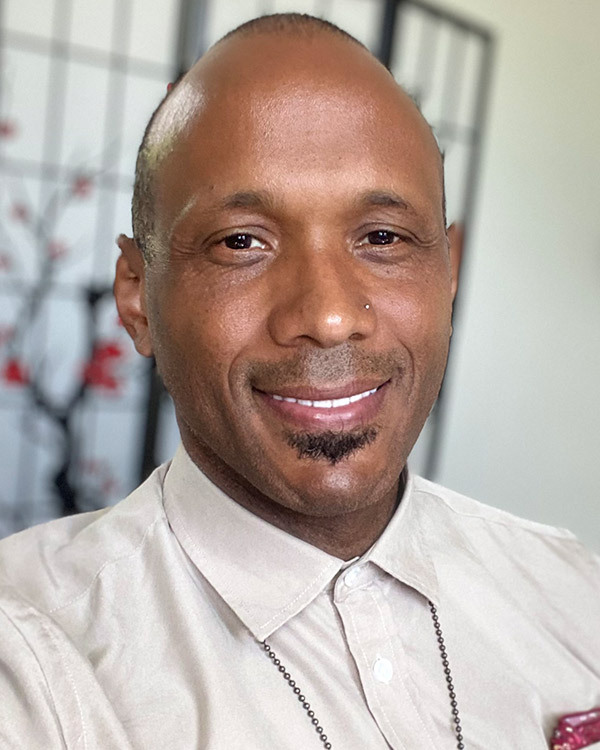
Adhamh Roland Hoeltzel is a Buddhist practitioner and spiritual care provider based in Portland, Oregon. He has practiced Buddhism for 16 years and trained in mindfulness instruction through the East Bay Meditation Center and Buddhist pastoral care through The Sati Center and the Institute for Buddhist Studies. He holds a graduate degree from Starr King School for The Ministry and is endorsed as a professional chaplain through Spirit Rock Meditation Center. Hoeltzel works as a spiritual care provider at Providence Portland Medical Center and has mentored youth through Niroga Institute and Inward Bound Mindfulness Education. He contributed to the anthology "Transcending: Trans Buddhist Voices" and has released original music.
Teaching focus
Adhamh Roland Hoeltzel's teaching focus sits inside the Insight Meditation lineage that grew from Burmese vipassana through teachers like Joseph Goldstein, Sharon Salzberg, and Jack Kornfield, with insight meditation (vipassana) as the working ground. The Insight Meditation lineage carries forward the Burmese vipassana teaching as it took root in the West through teachers like Joseph Goldstein, Sharon Salzberg, and Jack Kornfield. That means mindfulness held at the center, with metta and the broader brahmaviharas as steady companions, and a household-friendly framing that doesn't require ordination or extreme retreat conditions. The space is structured for queer and trans practitioners as a real part of the room rather than an accommodation, with attention to the particular shapes practice takes inside lives the dominant culture has worked to discipline. Teen-oriented teaching keeps the language plain, the demands realistic, and the framing free of adult hand-wringing about what young people should be doing with their attention. Across the body of work, the consistent thread in Adhamh Roland Hoeltzel's teaching is the refusal to let practice become abstract. The instruction asks for direct contact with what's actually arising, and the framing supports practitioners in giving it that. Recurring questions in the teaching include how to keep practice honest across years, how to hold difficulty without bypassing it, and how the dharma actually shows up in ordinary life rather than only on the cushion.
Background
Adhamh Roland Hoeltzel is a Buddhist practitioner and spiritual care provider based in Portland, Oregon. He has practiced Buddhism for 16 years and trained in mindfulness instruction through the East Bay Meditation Center and Buddhist pastoral care through The Sati Center and the Institute for Buddhist Studies. He holds a graduate degree from Starr King School for The Ministry and is endorsed as a professional chaplain through Spirit Rock Meditation Center. Hoeltzel works as a spiritual care provider at Providence Portland Medical Center and has mentored youth through Niroga Institute and Inward Bound Mindfulness Education. He contributed to the anthology "Transcending: Trans Buddhist Voices" and has released original music. After his residency in clinical pastoral education, Adhamh became endorsed as a professional chaplain through Spirit Rock Meditation Center. He currently serves as a spiritual care provider to patients, their people, and staff at Providence Portland Medical Center. He has enjoyed mentoring youth through Niroga Institute, Inward Bound Mindfulness Education, and Spirit Rock Teen Programs. He is a contributing author to "Transcending: Trans Buddhist Voices" and has released many albums of original songs. Adhamh practices, plays, sings, creates, and loves with the land currently known as Portland, Oregon. Adhamh Roland Hoeltzel's teaching is anchored at Spirit Rock. The teaching draws from the Insight Meditation lineage that grew from Burmese vipassana through teachers like Joseph Goldstein, Sharon Salzberg, and Jack Kornfield, with insight meditation (vipassana) as the working ground. Areas of particular focus include teens, LGBTQ+. The voice in Adhamh Roland Hoeltzel's teaching is recognizably in the Insight Meditation lineage, warm without being soft, and willing to sit with the difficult places practice opens. Mindfulness, loving-kindness, and the gradual accumulation of insight are the working vocabulary. Practitioners drawn to Adhamh Roland Hoeltzel's teaching tend to be people who've already noticed that practice is a long arc, not a quick fix, and who want a teacher who treats it that way. Practitioners drawn to Adhamh Roland Hoeltzel's teaching tend to be people who've already noticed that practice is a long arc, not a quick fix, and who want a teacher who treats it that way. Practitioners drawn to Adhamh Roland Hoeltzel's teaching tend to be people who've already noticed that practice is a long arc, not a quick fix, and who want a teacher who treats it that way. Practitioners drawn to Adhamh Roland Hoeltzel's teaching tend to be people who've already noticed that practice is a long arc, not a quick fix, and who want a teacher who treats it that way.
Lineage
Adhamh Roland Hoeltzel teaches within the Insight Meditation lineage that grew from Burmese vipassana through teachers like Joseph Goldstein, Sharon Salzberg, and Jack Kornfield. Adhamh has been a student of the Buddhadharma for 16 years. He is trained in sharing mindfulness teachings through the East Bay Meditation Center, and in Buddhist pastoral care through The Sati Center and The Institute for Buddhist Studies. Adhamh completed his graduate studies at Starr King School for The Ministry. Current affiliation runs through Spirit Rock. Adhamh Roland Hoeltzel teaches as a lay practitioner rather than from a monastic role. The lineage shapes the form of the teaching, not just its content. Practitioners encountering it find a transmission line still actively developing.
What to expect
In Adhamh Roland Hoeltzel's classes and groups, expect guided sitting, dharma teaching held to a manageable length, and time for practitioners to ask the questions that are actually live for them. Sittings are conventional, mindfulness of breath and body, with metta and inquiry into difficult mind-states woven through. There's space for questions, and the answers don't get rushed. The atmosphere is grounded rather than performative, and practitioners tend to leave with practical ground to keep working from on their own. The atmosphere is grounded rather than performative, and practitioners tend to leave with practical ground to keep working from on their own.