About
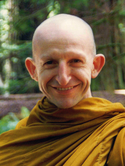
Ajahn Pasanno is a Theravada Buddhist monk and abbot of Abhayagiri Monastery in California. He moved to the United States on New Year's Eve 1997 to share the abbotship with Ajahn Amaro. When Ajahn Amaro departed for Amaravati Buddhist Monastery in England in 2010, Ajahn Pasanno became sole abbot. He teaches within the Forest Tradition of Thai Buddhism and offers talks and retreats at Abhayagiri.
Teaching focus
Pasanno's teaching is grounded in the Thai Forest framing of practice. Anapanasati at the center, the brahmaviharas as steady companions, the four foundations of mindfulness as the working ground, and the gradual training as the structure that holds all of it together. He emphasizes sila as foundational, not as preliminary, and treats the training rules of the Vinaya as actual practice instruction rather than as monastic technicalities lay practitioners can ignore. His talks tend to be unhurried and conversational, drawing freely on his training under Ajahn Chah, on the suttas, and on practical observation of how practice unfolds across decades. He's particularly skilled at meeting lay practitioners where they actually are, treating the householder context as a real condition for practice rather than as an inferior version of monastic life. Recurring themes include the relationship between samadhi and panna, the role of contemplating not-self across the three characteristics, and the slow, sustained development of patience and contentment that the Forest tradition treats as practice in its own right. Across decades of teaching at Abhayagiri and on retreats internationally, Pasanno has been one of the steady voices arguing that the Thai Forest tradition has something essential to offer Western practice that other lineages don't replicate. The renunciate framing, the seriousness about Vinaya, and the patient rhythm of monastic life carry a particular shape of teaching that lay-only contexts can't quite reach, and his work has been to translate that shape into a form lay practitioners can actually use.
Background
Ajahn Pasanno is a Canadian-born Theravada bhikkhu in the Thai Forest tradition and one of the most senior Western monastics in the lineage of Ajahn Chah. Born in 1949 in Manitoba, he traveled to Thailand in 1973, took higher ordination in 1974 under Phra Khru Ñanasirivatana, and trained directly under Ajahn Chah at Wat Pah Pong. He served for many years at Wat Pah Nanachat, the international forest monastery in Thailand, and was its abbot for two decades. In 1996 he came to the United States to help establish Abhayagiri Buddhist Monastery in Redwood Valley, California, alongside Ajahn Amaro, and he served as co-abbot and then abbot of Abhayagiri until his retirement from the abbotship in 2018. He continues to live and teach at Abhayagiri as the senior teacher in residence. His teaching is deeply rooted in classical Thai Forest practice: the suttas, the Vinaya, anapanasati, and the steady, patient training that characterizes the lineage. He's known for warmth, humor, and an unusual gift for making the renunciate side of practice feel reachable for lay practitioners. His talks are widely available through Abhayagiri's audio archive and on Dharma Seed, with thousands of recordings spanning decades of public teaching.
Lineage
Pasanno is a fully ordained Theravada bhikkhu in the Thai Forest lineage of Ajahn Chah. He took higher ordination in 1974 in Thailand and trained directly under Ajahn Chah at Wat Pah Pong. He served as abbot of Wat Pah Nanachat from 1982 to 1995, then helped establish Abhayagiri Buddhist Monastery in California in 1996, where he served as co-abbot and then abbot until 2018. He continues to live and teach at Abhayagiri as senior teacher in residence.
What to expect
At Abhayagiri retreats and on the broader insight retreat circuit, Pasanno teaches conventional Thai Forest practice. Long sittings, walking meditation, dharma talks, chanting in Pali and English, and substantial Q&A. The atmosphere is warm and traditional. He's accessible to questioners and works with practitioners practically. The teaching doesn't push novelty. It trusts the practice to do its work over time, with the right framing.