About
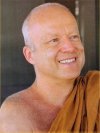
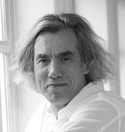
Alan brings a rare blend of dharma practice and real-world engagement. When you work with him, you'll feel permission to be fully human—not to bypass the messy parts of life in the name of spirituality. He's spent decades bridging Buddhist practice with activism, social justice, and honest conversation. He's written extensively on freedom and the dharma, founded organizations dedicated to applied spirituality, and performs his one-man show exploring what it actually means to practice with integrity. His 34+ talks and retreat teachings reflect someone who refuses easy answers. Alan's particularly good for practitioners who've felt split between their inner work and their conscience.
Teaching focus
His teaching weaves classical vipassana with non-dual contemporary teaching and with sustained attention to political and social engagement. The work on Burma and on dharma in conflict zones distinguishes his teaching from the more retreat-centered insight tradition. The work draws on Theravada Buddhism in its classical form as the foundational framework, taught with care for the textures of present experience rather than as abstract doctrine. Mindfulness of breath, body, feeling tone, and mental states forms the spine of the practice, with the four foundations of mindfulness as the standard organizational frame. The brahmaviharas, lovingkindness, compassion, sympathetic joy, and equanimity, are taught as serious meditative work alongside the mindfulness curriculum. Lovingkindness gets serious time on retreat, treated as central practice rather than supplemental, and the broader brahmavihara framework offers additional ground for the slower work of equanimity and forgiveness. Daily-life integration runs through the recorded teaching as a steady concern. The same awareness that opens during a sit is the awareness that meets traffic, family, and work, and the teaching keeps coming back to that continuity rather than treating retreat as a separate world. Across the recorded teaching runs a steady commitment to the actual work of practice, the slow unfolding that doesn't always make for inspirational soundbites but that carries the path forward across years of sitting. A consistent thread runs through the recorded archive: the willingness to be specific about what to do in this moment rather than gesture at long arcs of advanced practice. That specificity is part of what makes the teaching usable in ordinary daily-life practice.
Background
Alan Clements is an established teacher in the Theravada and Non-dual tradition descended from the Burmese and Thai vipassana lineages as carried into the West. Alan Clements is an American teacher who trained as a monk in Burma in the 1970s and has spent decades bridging Buddhist practice with social and political engagement, particularly around Burma and human rights. He's the author of multiple books and films, co-founder of the Burma Project USA and World Dharma Online Institute, and known for his work with Aung San Suu Kyi. The Dharma Seed archive at dharmaseed.org/teacher/14 currently holds about 34 talks across 2 recorded retreats, a focused body of work that rewards careful listening. Established teachers occupy a useful middle position in the directory, with enough recorded teaching to give students a sustained body of work to study, and enough ongoing practice to keep developing. The teaching voice is plainly framed and unceremonial, in keeping with the broader Western lay-teacher insight tradition. Students who follow a single teacher's archive over time tend to pick up not only practice instructions but a quality of attention, the way the teacher meets restlessness, doubt, or sudden opening, and that transmission across recordings is part of what makes a sustained body of recorded work valuable for practice over years rather than weeks. The lay-teacher form of practice this teacher works within asks something specific of students: they have to take responsibility for their own practice in ways monastic students don't always have to, since the structures of monastic life don't carry them. That responsibility is part of what the teaching points at.
Lineage
Clements trained as a monk in Burma at Mahasi Sayadaw's Vipassana Center for years before disrobing. His current work integrates Theravada vipassana, non-dual teaching, and social engagement. The teacher works as a layperson, in keeping with the broader Western lay-teacher form of the tradition. He's the co-founder of the Burma Project USA, World Dharma Publications, and World Dharma Online Institute.
What to expect
Programs through World Dharma and his own platform tend to be unconventional in format, integrating dharma teaching with political and social material. Standard retreat work is less central to his current teaching. Retreats typically follow a classical Theravada structure with sittings, walking meditation, dharma talks, and one-on-one meetings with the teachers, often with chanting and shorter formal periods built into the schedule. The atmosphere is warm and committed rather than performance-oriented, with serious dharma underneath an accessible surface. The center or platform where the teaching happens publishes current schedules and registration information, and email contact is generally the most direct way to ask specific questions about a particular retreat or program.