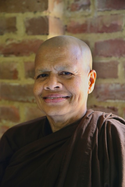
About
Ayya Khemakā is a meditation teacher in the Meditation tradition.
Teaching focus
Her teaching follows classical Theravada vipassana practice with anapanasati, the brahmaviharas, and the suttas as primary sources. The renunciate framing is central. The work draws on Theravada Buddhism in its classical form as the foundational framework, taught with care for the textures of present experience rather than as abstract doctrine. Mindfulness of breath, body, feeling tone, and mental states forms the spine of the practice, with the four foundations of mindfulness as the standard organizational frame. The brahmaviharas, lovingkindness, compassion, sympathetic joy, and equanimity, are taught as serious meditative work alongside the mindfulness curriculum. Lovingkindness gets serious time on retreat, treated as central practice rather than supplemental, and the broader brahmavihara framework offers additional ground for the slower work of equanimity and forgiveness. Daily-life integration runs through the recorded teaching as a steady concern. The same awareness that opens during a sit is the awareness that meets traffic, family, and work, and the teaching keeps coming back to that continuity rather than treating retreat as a separate world. Across the recorded teaching runs a steady commitment to the actual work of practice, the slow unfolding that doesn't always make for inspirational soundbites but that carries the path forward across years of sitting. The recorded talks return often to the question of how practice meets specific lives rather than an idealized practitioner, and the careful framing of instructions reflects that orientation. Students don't have to fit themselves to the teaching; the teaching meets them where they actually are.
Background
Ayya Khemakā is a teacher associated with the Theravada tradition descended from the Burmese and Thai vipassana lineages as carried into the West. Ayya Khemaka is a Theravada bhikkhuni teacher. The Dharma Seed archive holds about 14 talks across three retreats. As a monastic, most teaching circulates through her affiliated monastery rather than through Dharma Seed. The Dharma Seed archive at dharmaseed.org/teacher/1502 currently holds about 14 talks across 3 recorded retreats, a focused body of work that rewards careful listening. Teachers with smaller public archives still represent serious training and ongoing practice, even when the public footprint is limited. Listeners may want to combine the available recordings with the websites of the centers where these teachers offer programs. The teaching voice is plainly framed and unceremonial, in keeping with the broader Western lay-teacher insight tradition. Like many teachers in the wider Insight community, this teacher's path includes time on long silent retreat, ongoing study with senior teachers, and gradual integration of teaching responsibility through co-teaching and small local programs before stepping into broader retreat work. That apprenticeship model shapes the careful pacing of the teaching. Students who follow a single teacher's archive over time tend to pick up not only practice instructions but a quality of attention, the way the teacher meets restlessness, doubt, or sudden opening, and that transmission across recordings is part of what makes a sustained body of recorded work valuable for practice over years rather than weeks. For practitioners surveying Western Theravada bhikkhuni teachers, this teacher contributes to a small but important pool of voices alongside Ayya Canda, Ayya Nimmala, and others working to establish bhikkhuni monasticism in the contemporary West. The bhikkhuni line had been dormant for centuries before its restoration in the early 2000s, and teachers like this one are carrying that recent restoration forward.
Lineage
Ayya Khemaka is a fully ordained Theravada bhikkhuni in the broader Western forest tradition. The teacher holds full monastic ordination and teaches from inside that renunciate framing. She's part of the wider Western Theravada bhikkhuni community.
What to expect
Programs follow the standard Theravada monastic format with Pali chanting, formal sittings, and the rhythms of bhikkhuni community life. Retreats typically follow a classical Theravada structure with sittings, walking meditation, dharma talks, and one-on-one meetings with the teachers, often with chanting and shorter formal periods built into the schedule. The tone is unhurried and grounded, with attention given to the practical questions students bring rather than to large theoretical frameworks. For practitioners working at distance, recorded talks and online programs often offer a good initial point of contact, with in-person retreat following once the teaching voice and approach have become familiar.