About
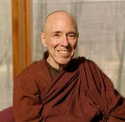
Bhikkhu Bodhi is a meditation teacher in the Meditation tradition.
Teaching focus
Bodhi's teaching is sutta-centered. He'll typically take a discourse, set its context within the Nikaya it sits in, and walk through it with attention to what the Pali is actually doing. This isn't dry exegesis. He treats the suttas as practice instructions, and his interest in any given passage is what it asks the listener to do, see, or relinquish. Recurring themes include the structure of the Noble Eightfold Path as a developmental sequence rather than a checklist, dependent origination read as a present-moment process, the gradual training (anupubbi-katha), and the role of right view as the orienting factor for everything else. He's careful with the brahmaviharas, careful with samadhi, and especially careful with how easily Western practitioners flatten technical Pali terms into vague self-help equivalents. He also teaches engaged Buddhism with unusual specificity. Through Buddhist Global Relief he's argued that compassion isn't real until it shows up as redistribution, and his talks on social ethics tie back into the suttas rather than borrowing from a separate political vocabulary. His pace is patient. Talks often start slowly, build by accumulation, and reward listeners who stay with him.
Background
Bhikkhu Bodhi was born Jeffrey Block in Brooklyn in 1944. He earned a doctorate in philosophy at Claremont in 1972, traveled to Sri Lanka, and took ordination as a Theravada bhikkhu under Ven. Ananda Maitreya in 1973. He spent more than two decades in Sri Lanka, much of that time at the Forest Hermitage near Kandy, before returning to the United States in 2002. He's now resident teacher at Chuang Yen Monastery in Carmel, New York, and a frequent visitor to Bodhi Monastery. His translation work is the spine of much of what English-speaking Buddhists read today. He produced new translations of the Majjhima Nikaya (with Bhikkhu Nanamoli), the Samyutta Nikaya, the Anguttara Nikaya, and a long-form translation of the Suttanipata, alongside compendiums like In the Buddha's Words and The Noble Eightfold Path. He served as president of the Buddhist Publication Society in Sri Lanka and as editor of its tracts and Wheel publications. In 2008 he founded Buddhist Global Relief, a nonprofit addressing chronic hunger and food insecurity, which channels much of his public teaching toward applied ethics and engaged Buddhism. His talks lean scholarly without becoming inaccessible. He treats the suttas as living instruction, walks line by line through Pali phrasing when it matters, and doesn't shy from the harder doctrinal terrain that other contemporary teachers smooth over. He's one of the senior Western monastics whose work has shaped how the Pali canon reads in English, and his recordings on Dharma Seed and BodhiMonastery.org run into the thousands of hours.
Lineage
Bodhi is a fully ordained bhikkhu in the Sri Lankan Theravada tradition. He took higher ordination in 1973 under Ven. Ananda Maitreya, one of the senior elders of twentieth-century Sinhala Buddhism. He served for many years as editor and then president of the Buddhist Publication Society in Kandy. Since his return to the US in 2002 he's been resident teacher at Chuang Yen Monastery and at Bodhi Monastery in New Jersey. He's affiliated with Buddhist Global Relief, the food-security nonprofit he founded in 2008.
What to expect
Expect sutta study at the center of any retreat or course. He'll usually open with the text, read the relevant Pali phrase, give a literal English rendering, and then unpack what the passage asks of practice. Sittings are conventional Theravada: sitting and walking, no novelty technique. Q&A tends to be substantive. He answers questions at the doctrinal level the questioner offers, so vague questions get widened back out and precise ones get precise responses. There's chanting, often in Pali, and a clear ethical framing. Newcomers should be ready for material that builds across days rather than landing in a single talk.