About
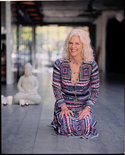
Chris Germer is a clinical psychologist and part-time lecturer on psychiatry at Harvard Medical School. He co-developed the Mindful Self-Compassion (MSC) program with Kristin Neff in 2010. MSC has been taught to over 250,000 people worldwide. Germer studied psychology at Colby College and earned a PhD in clinical psychology from Temple University in 1984. His early research focused on selective attention in schizophrenia and indigenous mental health practices in India. He studied yoga and meditation with various teachers in India over multiple visits. Germer has maintained a private psychotherapy practice in Cambridge, Massachusetts since 1985 and teaches workshops on mindfulness and self-compassion internationally. He authored The Mindful Path to Self-Compassion and co-edited volumes on mindfulness and psychotherapy.
Teaching focus
Chris Germer's teaching focus, drawn from the source profile, sits in the Secular and Insight traditions. Several threads come up: compassion training that doesn't collapse into pity or burnout;. On talks, the style is closer to thinking-along than presenting. Chris Germer works with whatever shows up in the room rather than reading from notes, which is part of why these talks land as conversational instead of scripted. Short pauses, longer sits, and questions that come back to direct experience are usual. Listed specialties on the source profile include stress, relationships. The bigger move Chris Germer keeps making is back toward attention itself: what's happening, how it's being held, and what gets in the way. That keeps the teaching close to practice rather than drifting into commentary about practice. For talks, schedules, and longer essays, the affiliated organization's page is where the live material lives. Chris Germer's sessions tend to keep returning to the body, to breath, and to the felt quality of attention as the steady ground that the rest rests on. Chris Germer's sessions tend to keep returning to the body, to breath, and to the felt quality of attention as the steady ground that the rest rests on.
Background
Chris Germer teaches in the Secular and Insight traditions. The teaching home is InsightLA. From the teacher's own profile: Short Bio Chris Germer, PhD is a clinical psychologist and lecturer on psychiatry (part-time) at Harvard Medical School. He co-developed the Mindful Self-Compassion (MSC) program with Kristin Neff in 2010 and MSC has since been taught to over 250,000 people worldwide. They co-authored two books on MSC, The Mindful Self-Compassion Workbook and Teaching the Mindful Self-Compassion Program. Chris spends most of his time lecturing and leading workshops around the world on mindfulness and self-compassion. He is also the author of The Mindful Path to Self-Compassion; he co-edited two influential volumes on therapy, Mindfulness and Psychotherapy, and Wisdom and Compassion in Psychotherapy; and he maintains a small online practice in Cambridge, Massachusetts, USA. Expanded Bio Chris Germer has been interested in the science of psychology and contemplative practice since early adulthood. He graduated from Colby College, Waterville, ME with a BA in psychology in 1974, and then traveled abroad for 3 years to conduct research on selective attention in schizophrenia at the University Psychiatric Hospital in Tübingen, Germany, and implement a field study on indigenous mental health healing practices in India under the guidance from the Bangalore National Institute of Mental Health. Chris became fascinated by the many varieties of yoga and meditation in India, and he returned to India over a dozen times to study with a variety of teachers. In 1978, Chris went to Temple University (Philadelphia, Pennsylvania) for graduate training in clinical psychology and received a PhD in 1984. The title of his dissertation was “Contextual Treatment of Test Anxiety,” reflecting an early interest in acceptance-based treatment methods. After graduation, Chris moved to Cambridge, Massachusetts where he met his wife, Claire, a molecular biologist, and they have been living in Cambridge ever since. Chris has maintained a private psychotherapy practice since 1985, and has also taught and supervised clinical trainees at the Cambridge Health Alliance (CHA), Harvard Medical School. Chris first learned mindfulness meditation at a hermitage in Sri Lanka in 1977. His interest in mindfulness was rekindled in 1985 when he joined a study group in Cambridge that became the Institute for Meditation and Psychotherapy. Decades of conversations came together in 2005 with the publishing of a co-edited, professional text, Mindfulness and Psychotherapy (now in its 2nd edition), and Wisdom and Compassion in Psychotherapy (2012). Mindfulness is the heart of Buddhist psychology, and interest in mindfulness, acceptance, and compassion-based psychotherapy has recently blossomed to become a mainstream approach to psychotherapy. In the Insight stream Chris Germer works inside, the emphasis is on direct attention to body, feeling tone, and mind, alongside the brahmaviharas and an ongoing investigation of how clinging and aversion arise. Talks tend to be conversational rather than scripted, and there's room for sila and ethics to be talked about as part of practice rather than as a separate topic.
Lineage
Chris Germer teaches as a lay teacher in the Secular and Insight traditions. The institutional home, per the source listing, is InsightLA, and that's where most of the public teaching schedule and any retreat offerings will be posted. The Insight lineage in the West runs through teachers like Mahasi Sayadaw, U Ba Khin, Anagarika Munindra, and Dipa Ma into the founders of IMS, Spirit Rock, and the regional centers, and most contemporary Insight teachers position themselves somewhere in that broad family.
What to expect
On a class or retreat with Chris Germer, the basic shape is short instruction, longer sittings, and some Q&A. Online sittings and talks, mostly in real time with optional recordings, are part of the offering. The container is shaped by InsightLA, so format details, fees, and access policies follow that organization's norms. Expect plenty of silence, less talking-at-you than you might think, and an emphasis on letting the practice do its work rather than chasing experiences. For exact dates, registration, and any sliding-scale or scholarship information, There's usually a short Q&A window and, on retreats, optional teacher interviews where students can bring specific questions about their practice.