About
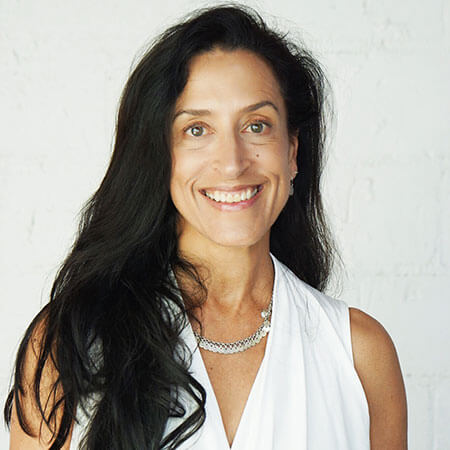
Wildecy de Fátima Jury has practiced Theravada and Vipassana meditation since 2000. She completed training programs at Spirit Rock Meditation Center, including the Dedicated Practitioner Program and Community Dharma Leader Program. She was ordained as a Dharmacharya Lay-Ordained Monastic Minister and completed additional trainings in dharma teaching, mindfulness mentoring, and Aboriginal Focusing Oriented Therapy. She holds degrees in psychology, women's studies, and social work. Jury has taught at East Bay Meditation Center, Insight LA, New York Insight Meditation Center, and other centers in the United States and Brazil. She is currently a resident teacher at New York Insight Meditation Center. Her work focuses on community building and decolonization practices.
Teaching focus
Fátima - Wildecy de Fátima Jury's teaching focus, drawn from the source profile, sits in the Theravada and Vipassana traditions. Several threads come up: compassion training that doesn't collapse into pity or burnout; dharma applied to social and collective suffering;. On talks, the style is closer to thinking-along than presenting. Fátima - Wildecy de Fátima Jury works with whatever shows up in the room rather than reading from notes, which is part of why these talks land as conversational instead of scripted. Short pauses, longer sits, and questions that come back to direct experience are usual. Listed specialties on the source profile include trauma. The bigger move Fátima - Wildecy de Fátima Jury keeps making is back toward attention itself: what's happening, how it's being held, and what gets in the way. That keeps the teaching close to practice rather than drifting into commentary about practice. For talks, schedules, and longer essays, the affiliated organization's page is where the live material lives. Fátima - Wildecy de Fátima Jury's sessions tend to keep returning to the body, to breath, and to the felt quality of attention as the steady ground that the rest rests on. Fátima - Wildecy de Fátima Jury's sessions tend to keep returning to the body, to breath, and to the felt quality of attention as the steady ground that the rest rests on.
Background
Fátima - Wildecy de Fátima Jury teaches in the Theravada and Vipassana traditions. The teaching home is East Bay Meditation Center. From the teacher's own profile: Wildecy de Fátima Jury has been formally practicing Theravada/Vipassana meditation since 2000. She graduated from the Dedicated Practitioner Program and the Community Dharma Leader Program at Spirit Rock, in California. She is a Dharmacharya Lay-Ordained Monastic Minister by the Venerables Pannavati and Pannadipa. She completed the Dharmapala Training with teachers Thanissara and Kittisaro and the Mindfulness Mentoring Training (MMT) with Tara Brach and Jack Kornfield. She completed the Original Medicine Foundation and In-Depth Original Medicine Program, both through Braided Wisdom.She has offered classes and retreats at East Bay Meditation Center in Oakland, Insight LA, Zen Center and University of Syracuse, at meditation centers in Brazil, Harlem Insight Community, Spirit Rock Meditation Center, and New York Insight Meditation Center. At the moment Fátima is a resident teacher at NYIMC teachers' collective.Fatima is a spiritual mentor who walks beside others on the path of awakening, guiding their growth with mindful clarity. Through her teachings and support, she helps her mentees see their true nature and cultivate the wisdom and courage to transform themselves and the world. She inspires compassion actions, challenging injustices, and nurtures peace - turning inner wakening into outward change.She has studied different spiritual practices and as a spiritual practitioner she has worked with many multicultural communities. She holds a BA in Psychology and Women's Study and a Master in Social Work. She is certified in Aboriginal Focusing Oriented Therapy through the Justice Institute in Vancouver, BC.Her intention is to promote the strengthening of sanghas and communities through the cultivation of compassion, unity and decolonization of oppressed and oppressive minds. She is an artist, a writer, and a poet who describes herself as a person within floating identities.To support Fátima's teachings, please use: Venmo: @WildecydeFatima-Jury or Paypal: Wildecy de Fátima Jury. In the Insight stream Fátima - Wildecy de Fátima Jury works inside, the emphasis is on direct attention to body, feeling tone, and mind, alongside the brahmaviharas and an ongoing investigation of how clinging and aversion arise. Talks tend to be conversational rather than scripted, and there's room for sila and ethics to be talked about as part of practice rather than as a separate topic. Fátima - Wildecy de Fátima Jury's page on OMP collects the publicly available bio, the listed affiliations, and any talks tracked through the source archive, and is meant as a directory entry rather than an authorized biography.
Lineage
Fátima - Wildecy de Fátima Jury teaches as a monastic teacher in the Theravada and Vipassana traditions. The institutional home, per the source listing, is East Bay Meditation Center, and that's where most of the public teaching schedule and any retreat offerings will be posted. The Insight lineage in the West runs through teachers like Mahasi Sayadaw, U Ba Khin, Anagarika Munindra, and Dipa Ma into the founders of IMS, Spirit Rock, and the regional centers, and most contemporary Insight teachers position themselves somewhere in that broad family.
What to expect
On a class or retreat with Fátima - Wildecy de Fátima Jury, the basic shape is short instruction, longer sittings, and some Q&A. Retreats are part of the offering, usually a few days to a week, mostly silent. The container is shaped by East Bay Meditation Center, so format details, fees, and access policies follow that organization's norms. Expect plenty of silence, less talking-at-you than you might think, and an emphasis on letting the practice do its work rather than chasing experiences. For exact dates, registration, and any sliding-scale or scholarship information, There's usually a short Q&A window and, on retreats, optional teacher interviews where students can bring specific questions about their practice.