About
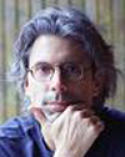
Mark Epstein is a meditation teacher in the Meditation tradition.
Teaching focus
Epstein's central interest is the territory where Buddhist practice and psychoanalytic thought meet. The no-self teaching, which contemporary insight practitioners often hold as a target experience, looks different through the lens of psychoanalysis, where the self is something fragile and developmentally won. Epstein's careful work has been to refuse the easy resolution in either direction. Buddhism doesn't simply correct psychotherapy's assumption of a substantial self, and psychotherapy doesn't simply ground Buddhism's claims in clinical reality. The two traditions illuminate different layers of the same human situation. His writing on trauma, particularly in The Trauma of Everyday Life, treats the Buddha's life as a clinically recognizable response to early loss, and his work on desire (in Open to Desire) reads the second noble truth alongside Donald Winnicott's concept of the transitional space. Across all of it, his voice is even, careful, and undefended. He doesn't oversell either tradition and is willing to name where each falls short of the other.
Background
Mark Epstein is a New York-based psychiatrist and longtime Buddhist practitioner, widely credited with shaping the contemporary Western conversation between Buddhism and psychotherapy. He earned his MD from Harvard, trained as a psychiatrist, and has practiced privately in New York since the 1980s while writing a sustained body of work bridging contemplative and psychoanalytic thought. He came to Buddhist practice as a college student through Robert Thurman, Joseph Goldstein, and Jack Kornfield in the early years of the IMS and Naropa scenes, and his vipassana training has continued without interruption since. His books include Thoughts Without a Thinker, Going to Pieces Without Falling Apart, Going on Being, Open to Desire, Psychotherapy Without the Self, The Trauma of Everyday Life, Advice Not Given, and The Zen of Therapy. The work tracks a clear arc: how the no-self teaching of Buddhism complicates and enriches psychoanalytic notions of self-cohesion, how desire and trauma look from a contemplative angle, and how a clinician trained in both traditions actually sits with patients. Epstein doesn't position himself as a meditation teacher in the formal sense. He teaches occasionally at IMS and Spirit Rock, contributes to academic and popular writing on Buddhism and psychology, and spends most of his professional life seeing patients. His influence on contemporary Buddhism in the West is nonetheless substantial, particularly among practitioners whose contemplative life sits alongside long-term psychotherapy.
Lineage
Epstein's vipassana training runs through the early IMS and Naropa networks. His Buddhist teachers have included Joseph Goldstein, Jack Kornfield, and Robert Thurman, with sustained study in the insight lineage and supplementary engagement with Tibetan material through Thurman's scholarship. He's not a authorized dharma teacher in the formal lineage sense. He teaches occasionally at IMS and Spirit Rock and in academic settings, but his primary professional identity is as a practicing psychiatrist in New York City.
What to expect
Epstein's public teaching is mostly through writing, podcasts, and occasional retreats and talks. His retreats at IMS or with collaborators tend to braid dharma instruction with reflections on psychotherapy, and they're attended both by long-time vipassana practitioners and by clinicians trying to think the two traditions together. The voice is steady and conversational. Talks reward listeners willing to hold both traditions at once without forcing a clean synthesis.