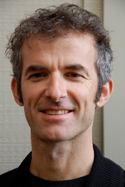
About
Working with Michael, you'll discover that fear doesn't have to stay locked away. Most of us keep our fear at arm's length—it's safer that way. But that distance creates a kind of subtle numbness. Michael teaches you how to turn toward fear instead, to get curious about it. And when you do, something shifts. Suddenly there's more room to breathe, more space in your life. With over 40 retreats and decades of Vipassana practice, he knows how to guide you through this deeper work. He'll help you develop the inner qualities that actually stick with you—the ones that hold steady when everything else feels uncertain. Michael's particularly good for anyone ready to stop white-knuckling through life and start actually befriending what scares them.
Teaching focus
His teaching emphasizes turning toward fear rather than avoiding it. He treats fear as legitimate dharma material rather than as an obstacle, and his recorded talks return often to the practical work of meeting anxiety with mindful, kind attention rather than with strategies of suppression. The work draws on the Insight Meditation lay-teacher lineage as the foundational framework, taught with care for the textures of present experience rather than as abstract doctrine. The four foundations of mindfulness, breath, body, feeling tone, and mental states, organize the formal practice, with lovingkindness woven through as supporting work. Sitting and walking are the standard formal forms, paired with daily-life mindfulness as the integration practice. Lovingkindness gets serious time on retreat, treated as central practice rather than supplemental, and the broader brahmavihara framework offers additional ground for the slower work of equanimity and forgiveness. Daily-life integration runs through the recorded teaching as a steady concern. The same awareness that opens during a sit is the awareness that meets traffic, family, and work, and the teaching keeps coming back to that continuity rather than treating retreat as a separate world. Across the recorded teaching runs a steady commitment to the actual work of practice, the slow unfolding that doesn't always make for inspirational soundbites but that carries the path forward across years of sitting. The recorded talks return often to the question of how practice meets specific lives rather than an idealized practitioner, and the careful framing of instructions reflects that orientation. Students don't have to fit themselves to the teaching; the teaching meets them where they actually are.
Background
Michael Grady is an established teacher in the Insight Meditation tradition descended from the Burmese and Thai vipassana lineages as carried into the West. Michael Grady is a senior Insight Meditation teacher with over 80 talks and more than 40 retreats in his recorded archive. He's particularly known for his work with anxiety and fear in practice, and for his sustained involvement in the longer-arc retreat work that defines the IMS-Spirit Rock lineage. The Dharma Seed archive at dharmaseed.org/teacher/124 holds about 81 recorded talks across 41 retreats, a substantial body of work for students to study at distance. Established teachers occupy a useful middle position in the directory, with enough recorded teaching to give students a sustained body of work to study, and enough ongoing practice to keep developing. The teaching voice is plainly framed and unceremonial, in keeping with the broader Western lay-teacher insight tradition. Students who follow a single teacher's archive over time tend to pick up not only practice instructions but a quality of attention, the way the teacher meets restlessness, doubt, or sudden opening, and that transmission across recordings is part of what makes a sustained body of recorded work valuable for practice over years rather than weeks. The lay-teacher form of practice this teacher works within asks something specific of students: they have to take responsibility for their own practice in ways monastic students don't always have to, since the structures of monastic life don't carry them. That responsibility is part of what the teaching points at.
Lineage
Grady teaches in the Insight Meditation lineage descended from IMS and the broader Western lay-teacher vipassana tradition. The teacher works as a layperson, in keeping with the broader Western lay-teacher form of the tradition. He's a senior teacher in the wider US Insight Meditation community.
What to expect
Retreats with Grady follow standard Insight format. The careful work with fear and anxiety is woven through the teaching rather than addressed in separate programs. Retreats follow standard Insight format: sittings, walking, dharma talks, and meetings with the teachers, with lovingkindness practice woven through and daily-life integration treated as serious work rather than an afterthought. The tone is unhurried and grounded, with attention given to the practical questions students bring rather than to large theoretical frameworks. First-time retreatants are usually welcomed without fuss, and the format is designed to support practitioners across a range of experience levels rather than only veterans. Newer students may want to begin with shorter programs and work up to longer silent residential retreats over time.