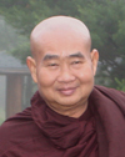
About
Pa Auk Sayadaw is a meditation teacher in the Meditation tradition.
Teaching focus
The Pa Auk method moves practitioners systematically through the entire samatha-vipassana sequence as laid out in the Visuddhimagga. Samatha begins with anapanasati, mindfulness of breathing, developed through to the fourth jhana with stable nimitta. From there, practitioners typically move through the kasinas, the divine abodes, and the immaterial attainments, building a deep foundation of concentration before vipassana proper begins. Vipassana then proceeds through analysis of the four elements, discernment of materiality (rupa) and mentality (nama) at the level of momentary arising and passing, contemplation of dependent origination across past, present, and future lives, and the contemplation of the three characteristics culminating in the path and fruit of stream-entry. The method is unusual among modern Theravada approaches in taking jhana as a literal attainment with specific phenomenological criteria rather than a metaphor for deep concentration. Practitioners interview with teachers regularly during retreat, often daily, and progress through the stages individually rather than as a class.
Background
Pa Auk Tawya Sayadaw, U Acinna, was born in Burma in 1934, ordained as a samanera at age ten and as a bhikkhu at twenty, and trained in classical Theravada doctrine and meditation across several Burmese monasteries before settling at Pa-Auk Forest Monastery in Mon State in the early 1980s. He became principal teacher there in 1981 and rebuilt the monastery into one of the major centers of jhana and vipassana training in the Theravada world. His method, drawn from the Visuddhimagga and the Pali Abhidhamma, takes practitioners systematically through samatha, including the four jhanas of mindfulness of breathing and the immaterial attainments, into vipassana practice grounded in the four elements analysis, contemplation of materiality and mentality, and dependent origination, with the explicit aim of stream-entry as the structural goal of the practice. He's authorized senior Western and Asian disciples to teach the method, and Pa-Auk centers now operate in Burma, Sri Lanka, Malaysia, Singapore, Taiwan, the United States, and elsewhere. His own writings, including The Workings of Kamma, Knowing and Seeing, and Light of Wisdom, lay out the method in detail. He's now in his nineties and teaches less actively, but his lineage of trained teachers, including Sayadaw U Revata, Sayadaw U Kundadhana, and Western teachers like Stephen Snyder and Tina Rasmussen, continues to teach the full system internationally. His method is often described as one of the most rigorous and traditional approaches to jhana training available in modern Theravada.
Lineage
Pa-Auk Sayadaw is a fully ordained Burmese Theravada bhikkhu who trained in the classical Burmese sasana with extensive grounding in the Pali canon and Abhidhamma. He took higher ordination in 1954, served as principal teacher of Pa-Auk Forest Monastery from 1981, and rebuilt that monastery into a major training center for the samatha-vipassana method drawn from the Visuddhimagga. His method is often associated with the broader revival of jhana practice in modern Theravada, alongside but distinct from the Mahasi and U Ba Khin lineages.
What to expect
Pa-Auk retreats are long, structured, and demand sustained sitting. Practitioners often stay for weeks or months. Days are organized around long sittings with brief walking, meals taken in silence, and individual interviews with a teacher to report progress through the stages. The atmosphere is quiet and traditional, with monastic conduct expected from all practitioners. Newcomers begin with anapanasati and don't move forward until concentration stabilizes.