About
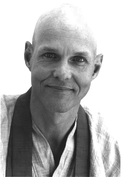
Reb Anderson is a meditation teacher in the Meditation tradition.
Teaching focus
Anderson's teaching is grounded in Dogen, the Yogacara school of Mahayana Buddhist philosophy, and the bodhisattva precepts. His Dogen work, particularly his teaching on the Genjokoan and the Shobogenzo, is some of the most careful contemporary Western Zen scholarship, and his book Being Upright treats the bodhisattva precepts as actual meditation instructions, not as ethical bullet points. The Yogacara thread, presented in The Third Turning of the Wheel, brings the school's analysis of consciousness, the eight consciousnesses, the storehouse, the manas, into Zen practice as a way of seeing how the self gets fabricated moment by moment. Across all of this, his style is patient and unforced. Talks often circle a single Zen koan or sutra phrase for an hour, and the point usually doesn't land in a single sentence. He'll sit with silence, repeat a question with slight variation, and trust that something in the listener can meet the material if given time. On the cushion, his teaching is recognizably Soto Zen, shikantaza-centered, with attention to posture, breath, and the precept-grounded ethical sphere within which practice happens.
Background
Tenshin Reb Anderson is a senior Soto Zen priest and one of the most influential American Zen teachers of his generation. Born in 1943 in Mississippi and raised in Minnesota, he came to Zen practice through Shunryu Suzuki Roshi at the San Francisco Zen Center in 1967. He was ordained as a priest in 1970 and received Dharma transmission from Mel Weitsman, who in turn received it from Suzuki Roshi's lineage. Anderson served as abbot of San Francisco Zen Center from 1986 to 1995, has been a Zentatsu Baker Roshi-era and post-Baker SFZC fixture, and currently teaches at Green Gulch Farm Zen Center in Marin County, California, where he has been resident teacher for decades. His books include Warm Smiles from Cold Mountains, Being Upright: Zen Meditation and the Bodhisattva Precepts, and The Third Turning of the Wheel: Wisdom of the Samdhinirmocana Sutra. His teaching is grounded in Dogen's Shobogenzo, the bodhisattva precepts, and the Yogacara school's analysis of consciousness, with a sustained interest in how the precepts function as real practice instruction rather than as moral checklists. He's known for slow, careful, sometimes cryptic talks that reward patient listening. His voice is unmistakable: gentle, willing to sit with silence, and unwilling to rush through a question for the sake of a clean answer.
Lineage
Anderson is a fully ordained Soto Zen priest in the Suzuki Roshi lineage. He received Dharma transmission from Mel Weitsman, who received it from Suzuki Roshi's American successors. He was ordained in 1970 and served as abbot of San Francisco Zen Center from 1986 to 1995. He's been resident teacher at Green Gulch Farm Zen Center in Marin County for several decades and continues to lead sesshins and offer Dharma teaching at SFZC's three practice locations.
What to expect
At Green Gulch and SFZC sesshins, expect formal Soto Zen practice, zazen, kinhin, oryoki, dokusan, with talks that run long and reward careful listening. Anderson's voice is gentle and slow. He'll often pause for what feels like an unusual length of time mid-sentence. Newcomers sometimes find the pace slow at first and then realize the slowness is the practice. Q&A is substantive and unhurried.