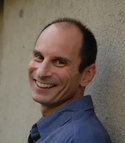
About
Rob Burbea is a meditation teacher in the Meditation tradition.
Teaching focus
Burbea's teaching is unusually layered. The earlier strand, presented most fully in Seeing That Frees, treats emptiness as a graduated practice that begins with simple anatta investigations and moves through dependent arising, the unfindability of objects, fabrication, and what he called the deeper soundings into nature of mind. He gave specific meditation instructions for each way of looking and treated insight not as a single moment of breakthrough but as a deepening series of releases. The later strand, the Soulmaking Dharma, brought image-work, eros, and what he called sensing with soul into a vipassana frame, drawing heavily on James Hillman's archetypal psychology and on his own experience of illness and beauty. He resisted the assumption that the path culminates in a single bare-awareness vantage. He took seriously the possibility that the imagination, the body, and devotion could be integral to liberation rather than steps along the way to it. His later years saw him develop teaching on what he called the Energy Body and on the imaginal as a distinct dimension of practice, alongside continued teaching on emptiness and dependent arising. Across the body of work, his consistent move was to refuse the assumption that the path has a single endpoint or a single best vantage. The teaching keeps opening new ways of looking, each one rewarded by sustained practice rather than by intellectual assent.
Background
Rob Burbea (1965 to 2020) was a British dharma teacher who served as resident teacher at Gaia House in Devon, England, from 2005 until his death from pancreatic cancer in 2020. He trained primarily in the vipassana lineage transmitted from Burma through Christopher Titmuss, Christina Feldman, Stephen and Martine Batchelor, and the broader Insight Meditation Society and Spirit Rock teacher network, and held authorization from that lineage to teach. His central work, Seeing That Frees: Meditations on Emptiness and Dependent Arising, is one of the most original contemporary texts on contemplative practice written by a Western teacher. The book moves systematically through what he called ways of looking, structured stages of insight into emptiness drawn from Madhyamaka and Yogacara framings, with full meditation instructions at every stage. His later teaching developed what he called the Soulmaking Dharma, drawing on archetypal psychology, James Hillman, and his own experience with serious illness, integrating image-work, eros, and devotional practice into the vipassana lineage in ways that hadn't been done before in that tradition. He was widely regarded as one of the most original teachers of his generation. After his death, the Hermes Amara Foundation was established to preserve and continue his teaching, and his retreat archives at Gaia House and dharmaseed.org now run to hundreds of recordings, including the book-length spoken presentation of Seeing That Frees and the Soulmaking Dharma retreats.
Lineage
Burbea trained in the vipassana lineage transmitted to the West through Christopher Titmuss, Christina Feldman, Stephen and Martine Batchelor, and the broader Insight Meditation Society and Gaia House teacher network. He was authorized to teach from within that lineage. He served as resident teacher at Gaia House in Devon from 2005 until his death in 2020. He was lay, not monastic, and his teaching drew freely on Madhyamaka, Yogacara, archetypal psychology, and his own innovations in the Soulmaking direction.
What to expect
His retreats are demanding. Long sittings, careful instruction, and often a single way of looking developed across days. Talks are dense and reward repeated listening. The Soulmaking retreats integrate image-work and journaling alongside formal sitting. Practitioners new to him sometimes find the pace slow at first and then realize the slowness is the practice. Q&A is substantive.