About
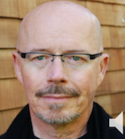
Robert Cusick is a Stanford Lecturer and co-founder of the Applied Compassion Training program at Stanford University's Center for Compassion and Altruism Research & Education. He teaches compassion training at Stanford, UCSF, and Kaiser Permanente Medical Centers. Cusick is a student of Gil Fronsdal and ordained as a Buddhist monk in Burma under Pa Auk Sayadaw from 2003 to 2012. He provides grief counseling and bereavement support through Kara in Palo Alto, where he facilitates retreats for fathers grieving child loss. He serves on the Board of Directors of the Sati Center for Buddhist Studies.
Teaching focus
Cusick's core teaching draws on mindfulness of breathing, noting practice, body sweeping. The frame is early Buddhist teachings rooted in the Pali canon, but the language stays plain. Cusick doesn't lecture from height. The talks tend to think alongside whatever's actually present in the room. Recurring themes include sila, samadhi, and the four foundations of mindfulness. None of those get presented as abstract ideas. They're worked into the body, into ethics, into how a practitioner shows up in family life or at work, so that the dharma stops feeling like a separate compartment. Cusick works comfortably with longer-term practitioners. Talks assume some familiarity with sitting, and the questions tend to circle around how to keep practice alive once the early enthusiasm has thinned out. Format-wise, Cusick teaches in in-person, retreat, 1:1, and the tone moves easily between guided sittings, dharma talks, and Q&A. Questions tend to get answered the way they were asked, without being reframed into something cleaner. That alone tells you a lot about how the room feels.
Background
Robert Cusick is a Stanford Lecturer and co-founder of the Applied Compassion Training program at Stanford University's Center for Compassion and Altruism Research & Education. He teaches compassion training at Stanford, UCSF, and Kaiser Permanente Medical Centers. Cusick is a student of Gil Fronsdal and ordained as a Buddhist monk in Burma under Pa Auk Sayadaw from 2003 to 2012. He provides grief counseling and bereavement support through Kara in Palo Alto, where he facilitates retreats for fathers grieving child loss. He serves on the Board of Directors of the Sati Center for Buddhist Studies. Robert Cusick is the Co- Founder & Director of the Applied Compassion Training (ACT) program offered through the Center for Compassion and Altruism Research & Education (CCARE) at Stanford University. He is a Stanford Lecturer and Certified Sr. Stanford Compassion Training Instructor and teaches at Stanford University, UCSF, Kaiser Permanente Medical Centers and in multiple other venues. He is a longtime meditator and student of Gil Fronsdal. As a former Buddhist monk, Robert ordained in Burma under the renowned meditation master, Ven. Pa Auk Sayadaw, and studied with him from 2003 - 2012. In addition to his teaching, Robert provides grief counseling and bereavement support for adults at Kara in Palo Alto, CA where he facilitates retreats for fathers grieving the loss or death of a child. Robert sits on the Board of Directors of the Sati Center for Buddhist Studies. Cusick teaches across several communities, including Insight Meditation Center, Insight Retreat Center. That work sits within early Buddhist teachings rooted in the Pali canon, and the recurring concerns of Cusick's teaching, ethical foundation, steady attention, and the slow softening of habitual reactivity, echo the older texts without sounding distant from a 21st-century practitioner's life. What stands out across Cusick's talks isn't a single technique but a steadying tone. Practice is treated as something built slowly, in ordinary life, with care. There's room for the difficulties practitioners actually bring into the room, grief, restlessness, the body's complaints, family obligations, and the encouragement is consistent without being pushy.
Lineage
Cusick teaches within early Buddhist teachings rooted in the Pali canon. Source notes mention training with Pa Auk Sayadaw. Current affiliations include Insight Meditation Center, Insight Retreat Center. The lineage shows up less in titles than in the way Cusick talks about practice, with steady reference to the older Buddhist vocabulary while keeping the door open for people who've never read a sutra. Whether that framing lands as monastic or lay depends on the specific talk, but the consistent thread is care for the form without letting the form become the point.
What to expect
Sitting with Cusick, you can expect grounded instruction in mindfulness of breathing, with space to ask questions and bring whatever's actually showing up in your practice. On retreat the structure follows a classical rhythm of sittings, walking practice, and dharma talks, with silence held between sessions. The teaching voice is steady. Cusick won't push you past your edge, and there's a clear preference for slow, sustainable practice over breakthrough chasing. Bring a notebook if you like, or don't. Either way, you'll be met where you are.