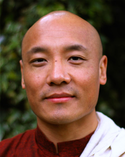
About
Roberto Serrano is based in Puebla, Mexico, where he has worked with Tergar Mexico since 2014. A sociologist by profession, he coordinates translation teams for the organization and facilitates meditation sessions. He trains continuously with Tergar to deepen his knowledge of their meditation methods and approach. Outside of translation and teaching work, Serrano reads novels and comics, observes nature, and engages in reflection on social issues.
Teaching focus
At the center of Serrano's teaching is the Joy of Living curriculum, Mingyur Rinpoche's three-stage path that begins with calm-abiding (shamatha) and works gradually toward the recognition of awareness itself. The first stage works with the breath, sense perceptions, thoughts, and emotions as supports for attention. Students learn to stabilize the mind without forcing it, using what Mingyur Rinpoche calls the panic button method: come back, again, without self-criticism. The second stage opens up awareness practice, where the field of attention widens beyond any single object. The third stage works directly with the nature of mind, the non-conceptual openness that the Karma Kagyu and Nyingma traditions point at with the words mahamudra and dzogchen. Serrano teaches all of this in a register Western practitioners can use. Sessions tend to be short and warm, with a lot of room for questions. There's an emphasis on taking practice off the cushion: noticing awareness in conversation, in walking, in moments of emotional reactivity. Tergar's broader framing is that meditation is not a separate activity reserved for retreat. It's a way of being with experience that gets steadier with repetition. Serrano's sessions live inside that framing. Expect grounded, practical instruction with a clear line back to the lineage, rather than improvised or eclectic methods stitched together from multiple traditions.
Background
Roberto Serrano teaches inside the Tergar Meditation Community, the global sangha gathered around Yongey Mingyur Rinpoche. The biographical details on file come from Tergar's instructor page and reflect only what Serrano has chosen to share publicly there. Roberto has been collaborating with Tergar Mexico in his hometown of Puebla since 2014. His work with the community includes coordinating translation teams, a role that draws upon his dedication to meditation practice and study. A sociologist by profession, Roberto continually trains with Tergar to deepen his understanding of the methods and approach to meditation offered by Tergar International programs. When not engaged in translation and facilitating meditation sessions, Roberto enjoys reading novels and comics, observing nature, and reflecting on social complexities. Within Tergar, that history places Serrano in a community whose teaching is structured around Mingyur Rinpoche's Joy of Living curriculum and the deeper practice paths that follow it: awareness practice, the meeting with awareness, and the open, non-conceptual recognition the Tibetan traditions describe as rigpa. Serrano teaches in that idiom, with the language and pacing that Tergar has refined for Western lay practitioners over the past two decades. For people new to Tibetan Buddhism, the Tergar entry point is unusually gentle. There's no requirement to take refuge, no demand for prostrations or visualizations on day one, and no assumption that students arrive with a background in dharma. The work begins with learning to recognize what's already there: the natural openness and clarity of mind that gets briefly glimpsed and then quickly buried under planning, worry, and the next thing on the list. Serrano's teaching role inside that container is part guide, part friend on the path. Tergar organizes its teachers into groups of guides, instructors, and meditation facilitators trained directly by Mingyur Rinpoche and senior students, and Serrano sits within that structure. The community's online platform, Tergar Online, houses the practice paths, supporting talks, and weekly group sittings that members of the global sangha use to keep the practice alive between in-person retreats. Many of Serrano's students will encounter Serrano through that platform first and only meet in person later, at a regional retreat or program.
Lineage
Serrano teaches under the auspices of the Tergar Meditation Community, founded by Yongey Mingyur Rinpoche and rooted in the Karma Kagyu and Nyingma lineages of Tibetan Buddhism. Mingyur Rinpoche is the son of the late Tulku Urgyen Rinpoche, a major Dzogchen master of the twentieth century, and the brother of Tsoknyi Rinpoche and Mingyur Rinpoche's other Dharma siblings. Tergar's lineage transmission flows through that family line and the wider Karma Kagyu monastic tradition. Serrano teaches as a lay practitioner trained inside the Tergar instructor pathway. Outside formal teaching, Serrano participates in the global sangha that Tergar has built across in-person centers, regional groups, and the Tergar Online platform.
What to expect
In a session with Serrano you can expect short, guided practice periods drawn from Mingyur Rinpoche's Joy of Living instructions, plenty of room for questions, and a friendly, non-dogmatic tone. Newcomers won't be asked to take refuge or to commit to anything beyond showing up. Longer programs follow the Joy of Living workbook through its three stages. There's chanting and dedication of merit at the start and end of formal sessions, in keeping with Tibetan custom, but the framing stays accessible. Serrano tends to point students back to their own direct experience rather than asking them to take anything on faith. Practice on and off the cushion gets equal weight.