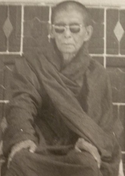
About
Taungpulu Sayadaw is a meditation teacher in the Meditation tradition.
Teaching focus
Taungpulu teaches in a buddhist meditation register, and the recorded talks point back, again and again, to a small set of practices done carefully. The main work is mindfulness practice, supported by clear instruction in posture, attention, and the relationship between concentration and insight. The instruction stays close to what's actually happening in the body and mind in the moment, rather than pushing toward states or attainments. Taungpulu returns to the basics often, which is part of what makes the talks useful for both newer and longer-term practitioners. The voice across Taungpulu's talks is conversational rather than lecture-style. Sentences land with care, pauses are real pauses, and there's space left for the listener's own attention to do the work. There's a recurring trust that practice isn't about adding more to an already busy life. It's about subtracting noise until what's already there can be felt clearly. Taungpulu's framing rewards re-listening: the same instructions land differently as practice matures, which is usually a sign of a teacher worth staying with. Taungpulu's framing rewards re-listening: the same instructions land differently as practice matures, which is usually a sign of a teacher worth staying with. Taungpulu's framing rewards re-listening: the same instructions land differently as practice matures, which is usually a sign of a teacher worth staying with.
Background
Taungpulu Sayadaw is a teacher in the Buddhist meditation tradition. Detailed biographical information isn't published in the public source records that feed this directory, so the description below leans on the style of practice Taungpulu represents rather than personal biography. 17 of Taungpulu's recorded talks are publicly archived and free to listen to. Taungpulu's teaching sits within the broader Buddhist meditation tradition as it's been transmitted in English over the last several decades. The exact lineage details aren't always published in public records, so practitioners interested in tradition-specific framing should check the teacher's own website or recorded talks for context. For listeners trying to find a steady teacher voice rather than a single great talk, Taungpulu's recorded archive is the kind of place you can spend months and not run out of useful material. The talks tend to repay re-listening, especially as practice deepens and the same words land differently. As with any teacher in this lineage, the most useful next step is usually to listen to a handful of Taungpulu's recorded talks back to back, notice which language and framings actually open the practice for you, and then sit with what's there rather than collecting more material. Reading and listening can substitute for practice for a while, but eventually the only useful thing is to put the headphones down and sit. As with any teacher in this lineage, the most useful next step is usually to listen to a handful of Taungpulu's recorded talks back to back, notice which language and framings actually open the practice for you, and then sit with what's there rather than collecting more material. Reading and listening can substitute for practice for a while, but eventually the only useful thing is to put the headphones down and sit. As with any teacher in this lineage, the most useful next step is usually to listen to a handful of Taungpulu's recorded talks back to back, notice which language and framings actually open the practice for you, and then sit with what's there rather than collecting more material. Reading and listening can substitute for practice for a while, but eventually the only useful thing is to put the headphones down and sit. As with any teacher in this lineage, the most useful next step is usually to listen to a handful of Taungpulu's recorded talks back to back, notice which language and framings actually open the practice for you, and then sit with what's there rather than collecting more material. Reading and listening can substitute for practice for a while, but eventually the only useful thing is to put the headphones down and sit.
Lineage
Taungpulu teaches in robes within the buddhist meditation tradition. For specifics on ordination, root teachers, or current sangha affiliations, the teacher's own website and recorded talks are the most reliable source. Taungpulu's teaching reaches lay practitioners primarily through recorded talks and retreat invitations, which is how most English-speaking students of this lineage encounter the work. Taungpulu's teaching reaches lay practitioners primarily through recorded talks and retreat invitations, which is how most English-speaking students of this lineage encounter the work. Taungpulu's teaching reaches lay practitioners primarily through recorded talks and retreat invitations, which is how most English-speaking students of this lineage encounter the work. Taungpulu's teaching reaches lay practitioners primarily through recorded talks and retreat invitations, which is how most English-speaking students of this lineage encounter the work.
What to expect
On a retreat or sit with Taungpulu, expect long stretches of silent practice anchored in mindfulness practice, walking meditation done at an honest pace, and dharma talks that build slowly across days rather than packing everything into one session. Expect quiet. Expect to be left alone with your own practice for stretches that feel longer than what most lay-life schedules allow. That's part of how the form works. The pace is slow on purpose. Practitioners who arrive looking for content density usually find that the real teaching shows up in the spaces between the words. The pace is slow on purpose. Practitioners who arrive looking for content density usually find that the real teaching shows up in the spaces between the words.