About
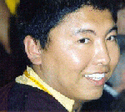
Tsoknyi Rinpoche is a meditation teacher in the Meditation tradition.
Teaching focus
His teaching center is essence Mahamudra and Dzogchen as transmitted through the Nyingma and Drukpa Kagyu streams of his father and root teachers. The point of practice in this framing isn't to construct calm or build virtue from scratch, it's to recognize the nature of mind as already present and learn to rest in it. He uses pointing-out instructions, often in small group settings, and works with students on stabilizing recognition rather than chasing meditative experience. Around that core sit two adjacent emphases. First, he treats the body and nervous system as the actual site where most Western students get stuck. Without grounding, recognition becomes a head game, and he'll send students back into somatic practice, breathing, and what he calls handshake practice with difficult emotions before he'll move forward. Second, he names the beautiful monsters, his term for the unconscious emotional patterns that hijack practice and look like spiritual material. He teaches loving-kindness and compassion as natural functions of recognized awareness rather than as cultivated states.
Background
Tsoknyi Rinpoche was born in Nubri, Nepal, in 1966, the second son of the late Tulku Urgyen Rinpoche, one of the most respected Nyingma masters of the twentieth century, and brother of Chokyi Nyima Rinpoche, Mingyur Rinpoche, and Tsikey Chokling Rinpoche. He was recognized in childhood as the reincarnation of Drubwang Tsoknyi Rinpoche of the Drukpa Kagyu and Nyingma lineages, and trained from boyhood in Tibetan Buddhist contemplative practice under his father, Khenchen Thrangu Rinpoche, Nyoshul Khen Rinpoche, and other senior teachers. He oversees Pundarika Foundation, his teaching organization, and supervises a network of monasteries and nunneries in Nepal, Tibet, and India. He's spent more than three decades teaching students in Asia, Europe, and North America, and is the author of Carefree Dignity, Fearless Simplicity, Open Heart Open Mind, and most recently Why We Meditate, co-written with Daniel Goleman. His public teaching style is unusually warm and often funny, mixing Dzogchen and Mahamudra pointing-out instructions with ordinary-language descriptions of how the nervous system, emotions, and what he calls beautiful monsters interfere with practice. His Pulsing as One Reality and Handful of Dust trainings have introduced thousands of Western students to essence-based Tibetan practice without requiring them to take on the full ngondro framework first. He teaches in English with a strong sense of the contemporary Western mind, naming things like trauma, dissociation, and somatic dysregulation directly rather than translating them into traditional doctrinal categories.
Lineage
Tsoknyi Rinpoche holds lineages in both the Nyingma and the Drukpa Kagyu traditions of Tibetan Buddhism. He's a recognized incarnation of Drubwang Tsoknyi Rinpoche, head of the Drukpa Kagyu Tsoknyi Gechak Ling lineage, and trained primarily under his father Tulku Urgyen Rinpoche, with additional training from Khenchen Thrangu Rinpoche and Nyoshul Khen Rinpoche, both senior holders of Mahamudra and Dzogchen. He oversees roughly seventy monasteries and nunneries in Nepal, Tibet, and India, including Tsoknyi Gechak Ling Nunnery in Nepal, and teaches internationally through the Pundarika Foundation.
What to expect
On a Pulsing as One Reality or essence-practice retreat with him, expect a mix of formal sitting, somatic exercises, group inquiry, and pointing-out instructions given to small groups or the whole room. He'll make the room laugh, and then he'll ask you to look at something subtle that requires the laughter to land first. Public talks are usually free-form, meandering, and ground out in practical instruction by the end. He's accessible in Q&A and works with student questions at whatever level the questioner offers.