Key Takeaways
- For a racing mind, stillness can be a pressure cooker — movement gives the energy somewhere to go.
- Moving meditation metabolizes stress hormones and gives a restless mind an external rhythm to lock onto.
- It's real meditation, not a lesser substitute — many traditions include it on purpose.
- Anchor attention to the sensation of moving; when the mind wanders, return to the body.
If sitting still to meditate feels like being strapped into a chair with your own racing thoughts, you've probably concluded you're just bad at it. You're not. You may simply need a practice that moves.
Moving meditation is exactly what it sounds like: training attention through deliberate, gentle movement instead of stillness. For an anxious, restless, or racing mind, it's often not a compromise — it's the better tool.
Why movement calms a racing mind
Two things happen when you move with attention. First, movement metabolizes the stress chemistry that anxiety pumps into your system. Sitting still asks you to marinate in adrenaline and cortisol; moving helps burn it off. Second, movement gives the mind an external rhythm — the cadence of your steps, the arc of a stretch — that's much harder to spiral away from than a faint, internal sensation like the breath.
There's also relief in what movement removes: you're not sealed into stillness and silence, the combination that creates the trapped, looping feeling for so many anxious people. (More on that in why meditation can trigger panic.)
Four ways to practice
Slow walking. The simplest entry point. Walk at half your normal pace and feel each footstep — heel, ball, toe. When the mind wanders, come back to the feet. We've got a full anxiety-aware approach to this, and a dedicated step-by-step walking guide in this series.
Mindful chores. Wash dishes, fold laundry, sweep — at half speed, with attention fully on the sensations. Ordinary tasks become practice when you stop rushing them.
Slow, flowing movement. Tai-chi-style motion, or any slow continuous movement, gives attention something rich and steady to follow. You don't need to learn a form; you need to move slowly and pay attention.
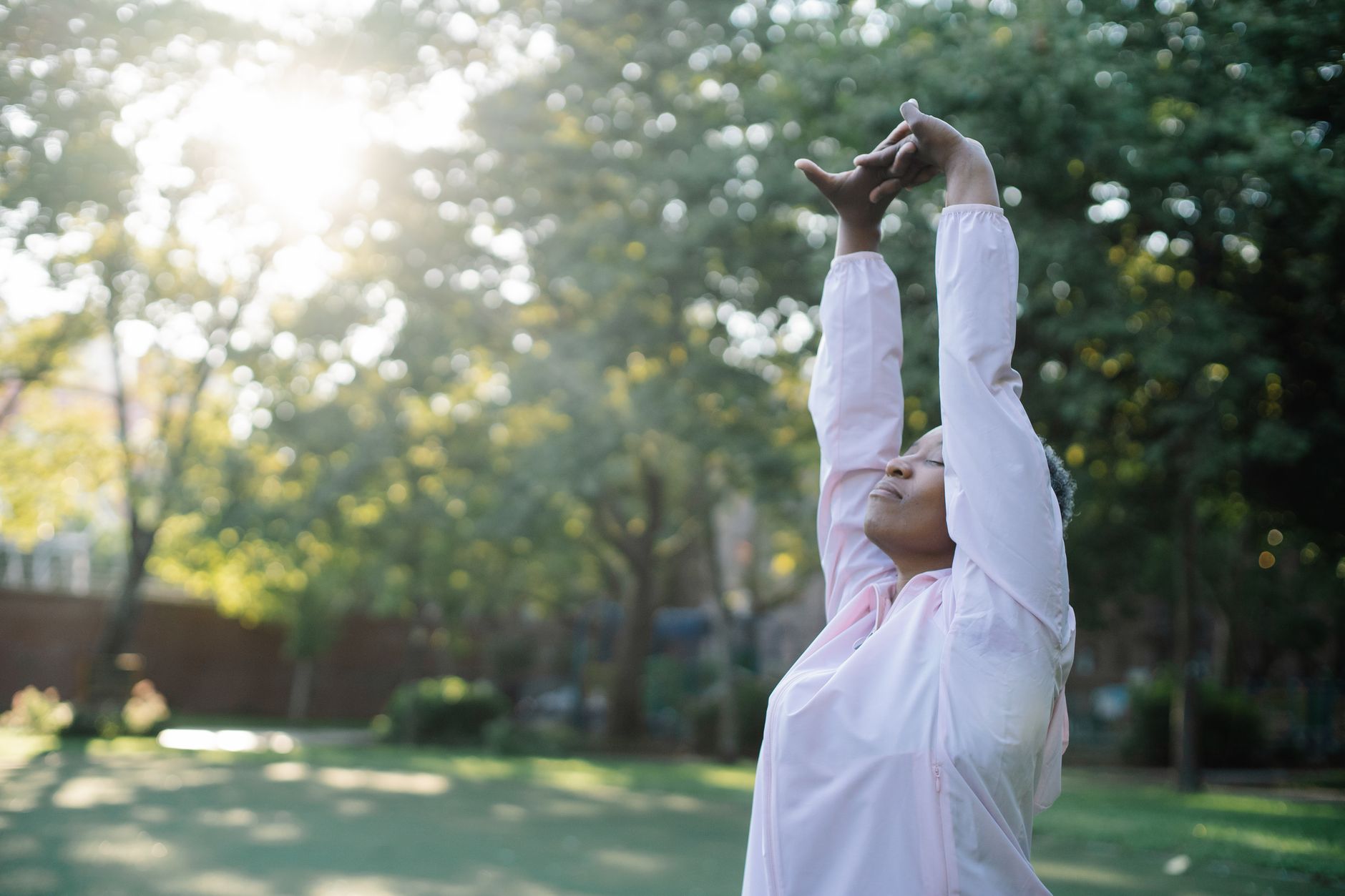
Stretching with attention. Move gently into a stretch and rest attention on the sensation of the muscle lengthening. The "edge" of a stretch is a vivid, reliable anchor.
The one rule
In every version, the movement is the anchor. The practice isn't "exercise while thinking" — it's returning attention to the physical sensation of moving each time you notice you've drifted. The wandering and the return are the practice, exactly as in seated meditation.
Start with five to ten minutes. If even that feels like a lot, 5-minute meditations for overthinkers includes a short walking option, and five anchors besides the breath covers the broader set of things you can anchor to when the breath doesn't work.
Frequently Asked Questions
What is moving meditation?
Meditation practiced through gentle, deliberate movement rather than stillness — walking, slow mindful chores, tai-chi-style motion, or stretching done with full attention. The moving body becomes the anchor you return to, instead of the breath.
Does moving meditation help with racing thoughts?
Yes, often better than sitting for anxious people. Movement metabolizes stress hormones and gives a restless mind an external rhythm to lock onto, so there's less spare attention available to spin out into worry.
Is moving meditation as effective as sitting meditation?
It's real meditation, not a lesser substitute — many traditions include it deliberately. For minds that race or panic when still, it's frequently more effective, because it works with the body's need to move rather than against it.
How do I start a moving meditation practice?
Pick one activity — slow walking is easiest — and anchor attention to the physical sensation of moving (your feet, the rhythm). When your mind wanders, return to the movement. Start with five to ten minutes.