About
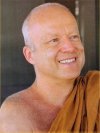
Aleix Ruiz-Falqués holds a PhD in Indian Studies from the University of Cambridge. He serves as Head of the Department of Pali and Languages at the Shan State Buddhist University in Taunggyi, Myanmar, and is a member of the Council of the Pali Text Society. His research focuses on Pali philology, textual criticism, medieval scholastic grammar, and hermeneutics. He edits the Journal of the Oxford Centre for Buddhist Studies and teaches Pali courses at multiple institutions including Hebrew University of Jerusalem, Universitat Autònoma de Barcelona, and Oxford. He recently founded an online platform for the study of ancient languages and cultures in Buddhism.
Teaching focus
Ruiz-Falqués's core teaching draws on mindfulness of breathing, noting practice, body sweeping. The frame is early Buddhist teachings rooted in the Pali canon, but the language stays plain. Ruiz-Falqués doesn't lecture from height. The talks tend to think alongside whatever's actually present in the room. Recurring themes include sila, samadhi, and the four foundations of mindfulness. None of those get presented as abstract ideas. They're worked into the body, into ethics, into how a practitioner shows up in family life or at work, so that the dharma stops feeling like a separate compartment. There's a steady invitation in the talks to keep practice human-sized. Sit when you can, return when you've drifted, and trust that small consistent attention does more over the years than dramatic breakthroughs. Format-wise, Ruiz-Falqués teaches in online, and the tone moves easily between guided sittings, dharma talks, and Q&A. Questions tend to get answered the way they were asked, without being reframed into something cleaner. That alone tells you a lot about how the room feels.
Background
Aleix Ruiz-Falqués holds a PhD in Indian Studies from the University of Cambridge. He serves as Head of the Department of Pali and Languages at the Shan State Buddhist University in Taunggyi, Myanmar, and is a member of the Council of the Pali Text Society. His research focuses on Pali philology, textual criticism, medieval scholastic grammar, and hermeneutics. He edits the Journal of the Oxford Centre for Buddhist Studies and teaches Pali courses at multiple institutions including Hebrew University of Jerusalem, Universitat Autònoma de Barcelona, and Oxford. He recently founded an online platform for the study of ancient languages and cultures in Buddhism. Aleix Ruiz-Falqués, PhD Indian Studies (University of Cambridge, UK). Currently serves as Head of the Department of Pali and Languages at the Shan State Buddhist University of Taunggyi (Myanmar). He is also a member of the Council of the Pali Text Society. His research focuses on Pali philology and textual criticism, as well as in medieval scholastic grammar and hermeneutics. He is the editor of the Journal of the Oxford Centre for Buddhist Studies and teaches Pali courses at several institutions such as Hebrew University of Jerusalem, Universitat Autònoma de Barcelona, Yogic Studies Online, and Oxford. He has recently founded an online platform for the study of ancient languages and cultures, including Buddhism. Ruiz-Falqués teaches across several communities, including Insight Meditation Center, Insight Retreat Center. That work sits within early Buddhist teachings rooted in the Pali canon, and the recurring concerns of Ruiz-Falqués's teaching, ethical foundation, steady attention, and the slow softening of habitual reactivity, echo the older texts without sounding distant from a 21st-century practitioner's life. What stands out across Ruiz-Falqués's talks isn't a single technique but a steadying tone. Practice is treated as something built slowly, in ordinary life, with care. There's room for the difficulties practitioners actually bring into the room, grief, restlessness, the body's complaints, family obligations, and the encouragement is consistent without being pushy.
Lineage
Ruiz-Falqués teaches within early Buddhist teachings rooted in the Pali canon. Current affiliations include Insight Meditation Center, Insight Retreat Center. The lineage shows up less in titles than in the way Ruiz-Falqués talks about practice, with steady reference to the older Buddhist vocabulary while keeping the door open for people who've never read a sutra. Whether that framing lands as monastic or lay depends on the specific talk, but the consistent thread is care for the form without letting the form become the point.
What to expect
Sitting with Ruiz-Falqués, you can expect grounded instruction in mindfulness of breathing, with space to ask questions and bring whatever's actually showing up in your practice. Online sessions tend to keep the same shape, shorter sits, a talk, and time for Q&A, in a format that's accessible from home. The teaching voice is steady. Ruiz-Falqués won't push you past your edge, and there's a clear preference for slow, sustainable practice over breakthrough chasing. Bring a notebook if you like, or don't. Either way, you'll be met where you are.