About
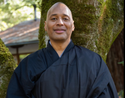
Arinna Weisman teaches in the Theravada lineage, tracing her root teachers to Ruth Denison and U Bha Khin. She emphasizes moment-to-moment awareness practice without ritual or special equipment. Her teaching incorporates her lived experience as a lesbian in a long-term relationship. She has given over 110 talks and led 7 retreats. Weisman frames the teacher-student relationship as peer-based spiritual friendship centered on practice itself.
Teaching focus
Arinna Weisman's teaching focus sits inside the classical Theravada tradition rooted in the Pali canon, with mindfulness of breathing and insight (vipassana) as the working ground. The classical Theravada framing means the four foundations of mindfulness, the brahmaviharas, and the gradual training are all on the table, and they're treated as a sequence that builds on itself rather than as a menu to pick from. Ethical foundation gets weight. Loving-kindness practice isn't an emotional warm-up to insight, it's a real cultivation in its own right. The space is structured for queer and trans practitioners as a real part of the room rather than an accommodation, with attention to the particular shapes practice takes inside lives the dominant culture has worked to discipline. Across the body of work, the consistent thread in Arinna Weisman's teaching is the refusal to let practice become abstract. The instruction asks for direct contact with what's actually arising, and the framing supports practitioners in giving it that. Recurring questions in the teaching include how to keep practice honest across years, how to hold difficulty without bypassing it, and how the dharma actually shows up in ordinary life rather than only on the cushion. Recurring questions in the teaching include how to keep practice honest across years, how to hold difficulty without bypassing it, and how the dharma actually shows up in ordinary life rather than only on the cushion.
Background
Arinna Weisman teaches in the Theravada lineage, tracing her root teachers to Ruth Denison and U Bha Khin. She emphasizes moment-to-moment awareness practice without ritual or special equipment. Her teaching incorporates her lived experience as a lesbian in a long-term relationship. She has given over 110 talks and led 7 retreats. Weisman frames the teacher-student relationship as peer-based spiritual friendship centered on practice itself. Even though I have been involved in different traditions over the years, what I love about Buddhism is the simplicity of the practice; the fact that it isn't embodied by a lot of ritual, or special clothes, or the need for different props. I love the moment-to-moment calling of awareness to whatever one is doing. And vitally important, I appreciate the safety inherent in the teacher/student relationship, where the emphasis is on the practice itself and the teacher engages as a peer and spiritual friend. Arinna Weisman's teaching is anchored at Donate to Arinna Weisman. The teaching draws from the classical Theravada tradition rooted in the Pali canon, with mindfulness of breathing and insight (vipassana) as the working ground. Areas of particular focus include relationships, LGBTQ+. The recorded talk archive on Dharma Seed currently runs to roughly 110 recordings, which gives a long view of how the teaching has developed across years. Retreat teaching is part of the ongoing schedule, with 7 retreats logged through the public archives so far. What comes through across Arinna Weisman's teaching is a steadiness more than a style. The framing is classical, the language is plain, and the practitioner is asked to do the work rather than be entertained. Ethical foundation isn't preliminary, it's the soil the rest grows in. Practitioners drawn to Arinna Weisman's teaching tend to be people who've already noticed that practice is a long arc, not a quick fix, and who want a teacher who treats it that way. Practitioners drawn to Arinna Weisman's teaching tend to be people who've already noticed that practice is a long arc, not a quick fix, and who want a teacher who treats it that way. Practitioners drawn to Arinna Weisman's teaching tend to be people who've already noticed that practice is a long arc, not a quick fix, and who want a teacher who treats it that way. Practitioners drawn to Arinna Weisman's teaching tend to be people who've already noticed that practice is a long arc, not a quick fix, and who want a teacher who treats it that way.
Lineage
Arinna Weisman teaches within the classical Theravada tradition rooted in the Pali canon. It is a deep honor for me to come together with others who feel a similar calling of connection to the Dharma to learn about the greatest gift of all: a happiness inside of us that is unconditional, and a depth of being that is infinite. To this I bring the flavor of my lineage--the continuation of the teachings of my root teachers, Ruth Denison and her teacher U Bha Khin; a commitment to learning how to live with each other in kindness; and my life as a lesbian in a long-term relationship. Current affiliation runs through Donate to Arinna Weisman. Arinna Weisman teaches as a lay practitioner rather than from a monastic role.
What to expect
On retreat with Arinna Weisman you'll get long sits, walking practice, and dharma talks that build on each other across days. The container is silent or near-silent, which gives the teaching room to land in a way that single classes can't quite reach. Sittings are conventional, mindfulness of breath and body, with metta and inquiry into difficult mind-states woven through. There's space for questions, and the answers don't get rushed. The atmosphere is grounded rather than performative, and practitioners tend to leave with practical ground to keep working from on their own. The atmosphere is grounded rather than performative, and practitioners tend to leave with practical ground to keep working from on their own.