About
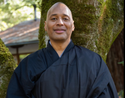
Shinmu brings a grounded, embodied approach to practice—one that honors both precision and gentleness. You'll feel met where you are, whether you're just starting out or deepening years of work. Their training spans Zen, Theravada, and Vipassana traditions, plus yoga, qigong, and psychology, which means they understand practice from multiple angles and can speak to what's actually happening in your body and mind. Ordained as a Sotō Zen priest in 2023, Shinmu graduated from the rigorous four-year Insight Meditation Society teacher training and draws on a lineage rooted in the wisdom of their Black Japanese heritage and cherished teachers. They're particularly good for anyone who wants meditation that feels real—not bypassing the hard stuff, but moving through it with clarity and care.
Teaching focus
Their teaching weaves Soto Zen forms with Theravada vipassana and Thai Forest practice, and they're attentive to embodied work, including yoga and qigong. The teaching addresses queer, Black, and Japanese American experience as part of what practice meets. The work draws on Theravada Buddhism in its classical form as the foundational framework, taught with care for the textures of present experience rather than as abstract doctrine. Mindfulness of breath, body, feeling tone, and mental states forms the spine of the practice, with the four foundations of mindfulness as the standard organizational frame. The brahmaviharas, lovingkindness, compassion, sympathetic joy, and equanimity, are taught as serious meditative work alongside the mindfulness curriculum. Lovingkindness gets serious time on retreat, treated as central practice rather than supplemental, and the broader brahmavihara framework offers additional ground for the slower work of equanimity and forgiveness. Daily-life integration runs through the recorded teaching as a steady concern. The same awareness that opens during a sit is the awareness that meets traffic, family, and work, and the teaching keeps coming back to that continuity rather than treating retreat as a separate world. Across the recorded teaching runs a steady commitment to the actual work of practice, the slow unfolding that doesn't always make for inspirational soundbites but that carries the path forward across years of sitting. The recorded talks return often to the question of how practice meets specific lives rather than an idealized practitioner, and the careful framing of instructions reflects that orientation. Students don't have to fit themselves to the teaching; the teaching meets them where they actually are.
Background
Shinmu Tamori Gibson is a teacher whose work is part of the wider Zen and Theravada tradition descended from the Burmese and Thai vipassana lineages as carried into the West, teaching since 2023. Shinmu Tamori Gibson is a Soto Zen monastic priest ordained in November 2023 by their teacher, Osho Zenju Earthlyn Manuel of the Suzuki Roshi lineage. They began formal meditation in Japan and have practiced across Theravada, Vipassana, and Zen traditions, with significant time in Thai Forest practice. They're a graduate of the four-year IMS Insight Retreat Teacher Training Program. The Dharma Seed archive at dharmaseed.org/teacher/1101 currently holds about 18 talks across 9 recorded retreats, a focused body of work that rewards careful listening. Emerging teachers offer something different from senior figures: the texture of a teaching voice still finding its specific shape, which can be useful for students who want to follow a teacher's development rather than encounter an already-canonized body of work. The recordings carry a quiet warmth and an attentive specificity, the kind of teaching that rewards careful listening over time. The lay-teacher form of practice this teacher works within asks something specific of students: they have to take responsibility for their own practice in ways monastic students don't always have to, since the structures of monastic life don't carry them. That responsibility is part of what the teaching points at. The wider Western Buddhist landscape that grew up across the second half of the twentieth century has produced a range of teaching voices working at the meeting point between classical Asian sources and contemporary lay practice, and this teacher is one of those voices. Across the recorded body of work runs a consistent attention to what's actually workable inside ordinary obligations rather than only in retreat.
Lineage
Shinmu was ordained in 2023 by Zenju Earthlyn Manuel in the Suzuki Roshi Soto Zen lineage. They've also completed the four-year IMS Insight Retreat Teacher Training Program and trained in Thai Forest Theravada practice. The teacher holds full monastic ordination and teaches from inside that renunciate framing. They're connected to the East Bay Meditation Center and other communities in the broader US dharma scene that work explicitly with anti-oppression and inclusivity principles.
What to expect
Retreats and programs include both Zen and Insight forms depending on the venue, with attention to embodied practice and to the social context students bring with them. Retreats typically follow a classical Theravada structure with sittings, walking meditation, dharma talks, and one-on-one meetings with the teachers, often with chanting and shorter formal periods built into the schedule. The tone is unhurried and grounded, with attention given to the practical questions students bring rather than to large theoretical frameworks. Students new to the teacher's work often find it useful to start with a shorter program or a recorded talk before committing to a longer residential retreat, both to get a feel for the teaching voice and to clarify whether the format suits their practice at this stage.