About
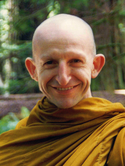
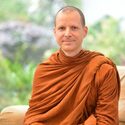
Bhikkhu Sambodhi was ordained as a bhikkhu in 2000 at Pa Auk forest monastery in Burma, where he trained in samatha meditation for two years. He spent twelve years in Sri Lanka, primarily with the Galduwa forest tradition, including periods of solitary practice in Laggala. He also trained in Western monasteries of the Luang Por Chah lineage. He encountered Buddhist meditation through psychology studies in 1992 and practiced vipassana at Mahasi Meditation Centre in Yangon before full ordination. His training spans Burmese and Sri Lankan Theravada traditions.
Teaching focus
Sambodhi's core teaching draws on mindfulness of breathing, noting practice, body sweeping. The frame is early Buddhist teachings rooted in the Pali canon, but the language stays plain. Sambodhi doesn't lecture from height. The talks tend to think alongside whatever's actually present in the room. Recurring themes include sila, samadhi, and the four foundations of mindfulness. None of those get presented as abstract ideas. They're worked into the body, into ethics, into how a practitioner shows up in family life or at work, so that the dharma stops feeling like a separate compartment. Sambodhi works comfortably with longer-term practitioners. Talks assume some familiarity with sitting, and the questions tend to circle around how to keep practice alive once the early enthusiasm has thinned out. Format-wise, Sambodhi teaches in in-person, online, retreat, and the tone moves easily between guided sittings, dharma talks, and Q&A. Questions tend to get answered the way they were asked, without being reframed into something cleaner. That alone tells you a lot about how the room feels.
Background
Bhikkhu Sambodhi was ordained as a bhikkhu in 2000 at Pa Auk forest monastery in Burma, where he trained in samatha meditation for two years. He spent twelve years in Sri Lanka, primarily with the Galduwa forest tradition, including periods of solitary practice in Laggala. He also trained in Western monasteries of the Luang Por Chah lineage. He encountered Buddhist meditation through psychology studies in 1992 and practiced vipassana at Mahasi Meditation Centre in Yangon before full ordination. His training spans Burmese and Sri Lankan Theravada traditions. Bhikkhu Sambodhi was born in the mid-sixties in what was then known as Czechoslovakia and what is now the Czech Republic, one the most irreligious countries in the world. Raised as an atheist with an initial strong bend toward “hard” science, he eventually ended up graduating in math and physics.The subsequent postgraduate study of psychology, a “soft” science, led him to encounter Buddhist meditation for the first time in 1992. He then abandoned psychology and worked as a journalist, a translator and a publishing-house editor for six years, while pursuing the Buddha’s path of the Dhamma as a lay practitioner. In 1995 though, he went to Burma for the first time and for 10 months practised vipassana meditation in Mahasi Meditation Centre in Yangon, while being temporarily ordained as a monk.His subsequent ordination as a bhikkhu took place in 2000 in Pa Auk forest monastery in Lower Burma where he underwent intense training in samatha meditation for 2 years. He then moved to Sri Lanka where he spent, on and off, 12 years and was mostly associated with the forest tradition of Galduwa. A few of those years were also spent in solitude, in simple solitary huts in the area called Laggala. Besides association with both Burmese and Sri Lankan traditions, he also spent considerable time in Western monasteries of Luang Por Chah lineage, where he benefited tremendously from their teachings. Sambodhi teaches across several communities, including Insight Meditation Center, Insight Retreat Center. That work sits within early Buddhist teachings rooted in the Pali canon, and the recurring concerns of Sambodhi's teaching, ethical foundation, steady attention, and the slow softening of habitual reactivity, echo the older texts without sounding distant from a 21st-century practitioner's life. What stands out across Sambodhi's talks isn't a single technique but a steadying tone. Practice is treated as something built slowly, in ordinary life, with care. There's room for the difficulties practitioners actually bring into the room, grief, restlessness, the body's complaints, family obligations, and the encouragement is consistent without being pushy.
Lineage
Sambodhi teaches within early Buddhist teachings rooted in the Pali canon. Current affiliations include Insight Meditation Center, Insight Retreat Center. The lineage shows up less in titles than in the way Sambodhi talks about practice, with steady reference to the older Buddhist vocabulary while keeping the door open for people who've never read a sutra. Whether that framing lands as monastic or lay depends on the specific talk, but the consistent thread is care for the form without letting the form become the point.
What to expect
Sitting with Sambodhi, you can expect grounded instruction in mindfulness of breathing, with space to ask questions and bring whatever's actually showing up in your practice. On retreat the structure follows a classical rhythm of sittings, walking practice, and dharma talks, with silence held between sessions. Online sessions tend to keep the same shape, shorter sits, a talk, and time for Q&A, in a format that's accessible from home. The teaching voice is steady. Sambodhi won't push you past your edge, and there's a clear preference for slow, sustainable practice over breakthrough chasing. Bring a notebook if you like, or don't. Either way, you'll be met where you are.