About
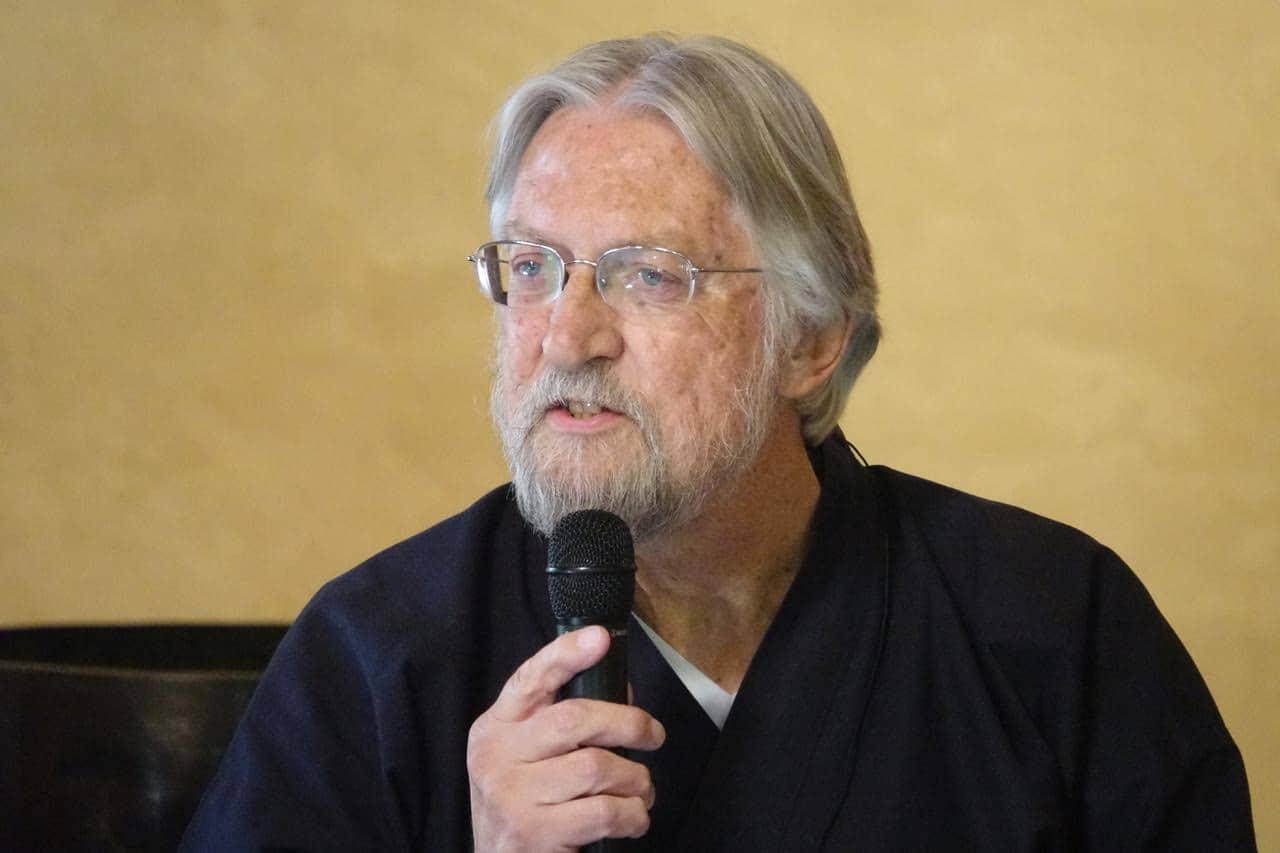
Duncan Ryūken Williams is a Soto Zen priest ordained at Kotakuji Temple in Nagano, Japan in 1993. He holds the position of Professor and Chair of the USC School of Religion and directs the USC Shinso Ito Center for Japanese Religions and Culture in Los Angeles. Previously he held the Ito Distinguished Chair of Japanese Buddhism at UC Berkeley and directed Berkeley's Center for Japanese Studies. Williams authored American Sutra: A Story of Faith and Freedom in the Second World War and The Other Side of Zen: A Social History of Sōtō Zen Buddhism in Tokugawa Japan. He has edited seven books on Buddhism and Japanese culture. Williams serves as National Co-Chair of Tsuru for Solidarity, a Japanese American racial justice organization.
Teaching focus
Duncan Ryūken Williams's teaching focus, drawn from the source profile, sits in the Zen tradition. Several threads come up: dharma applied to social and collective suffering;. On talks, the style is closer to thinking-along than presenting. Duncan Ryūken Williams works with whatever shows up in the room rather than reading from notes, which is part of why these talks land as conversational instead of scripted. Short pauses, longer sits, and questions that come back to direct experience are usual. The bigger move Duncan Ryūken Williams keeps making is back toward attention itself: what's happening, how it's being held, and what gets in the way. That keeps the teaching close to practice rather than drifting into commentary about practice. For talks, schedules, and longer essays, the affiliated organization's page is where the live material lives. Duncan Ryūken Williams's sessions tend to keep returning to the body, to breath, and to the felt quality of attention as the steady ground that the rest rests on. Duncan Ryūken Williams's sessions tend to keep returning to the body, to breath, and to the felt quality of attention as the steady ground that the rest rests on. Duncan Ryūken Williams's sessions tend to keep returning to the body, to breath, and to the felt quality of attention as the steady ground that the rest rests on.
Background
Duncan Ryūken Williams teaches in the Zen tradition. The teaching home is East Bay Meditation Center. From the teacher's own profile: Duncan Ryūken Williams was ordained as a Soto Zen Buddhist priest at Kotakuji Temple (Nagano, Japan) in 1993. He served as a Buddhist chaplain at Harvard University, where he received his Ph.D. in 2000. Currently, he is Professor in and the Chair of the USC School of Religion and Director of the USC Shinso Ito Center for Japanese Religions and Culture in Los Angeles. Previously, he held the Ito Distinguished Chair of Japanese Buddhism at UC Berkeley and served as the Director of Berkeley's Center for Japanese Studies. Williams is the author of the LA Times bestseller American Sutra: A Story of Faith and Freedom in the Second World War (Harvard University Press, 2019) about Buddhism and the WWII Japanese American internment; The Other Side of Zen: A Social History of Sōtō Zen Buddhism in Tokugawa Japan (Princeton University Press, 2005), and editor of 7 books including Issei Buddhism in the Americas, American Buddhism, Hapa Japan, and Buddhism and Ecology. He is also a National Co-Chair of Tsuru for Solidarity, a Japanese American racial justice organization. In a Zen container, what Duncan Ryūken Williams offers is steady, mostly silent practice with short pointed teachings. The form is the teaching as much as the words are. Sitting, walking, work practice, and the relationship with a teacher all carry weight. Duncan Ryūken Williams's page on OMP collects the publicly available bio, the listed affiliations, and any talks tracked through the source archive, and is meant as a directory entry rather than an authorized biography. Duncan Ryūken Williams's page on OMP collects the publicly available bio, the listed affiliations, and any talks tracked through the source archive, and is meant as a directory entry rather than an authorized biography. Duncan Ryūken Williams's page on OMP collects the publicly available bio, the listed affiliations, and any talks tracked through the source archive, and is meant as a directory entry rather than an authorized biography. Duncan Ryūken Williams's page on OMP collects the publicly available bio, the listed affiliations, and any talks tracked through the source archive, and is meant as a directory entry rather than an authorized biography. Duncan Ryūken Williams's page on OMP collects the publicly available bio, the listed affiliations, and any talks tracked through the source archive, and is meant as a directory entry rather than an authorized biography.
Lineage
Duncan Ryūken Williams teaches as a monastic teacher in the Zen tradition. The institutional home, per the source listing, is East Bay Meditation Center, and that's where most of the public teaching schedule and any retreat offerings will be posted. The Zen lineage frame here, where stated, is what authorizes a teacher to lead practice, and the source page usually names the dharma teacher or root teacher when relevant.
What to expect
On a class or retreat with Duncan Ryūken Williams, the basic shape is short instruction, longer sittings, and some Q&A. The container is shaped by East Bay Meditation Center, so format details, fees, and access policies follow that organization's norms. Expect plenty of silence, less talking-at-you than you might think, and an emphasis on letting the practice do its work rather than chasing experiences. For exact dates, registration, and any sliding-scale or scholarship information, There's usually a short Q&A window and, on retreats, optional teacher interviews where students can bring specific questions about their practice.