About
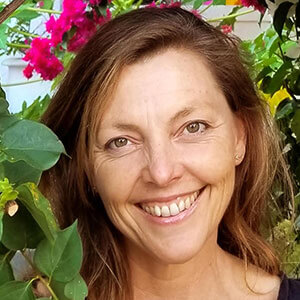
Jeff Rosenberg began formal meditation practice in 2001 and has studied with teachers including Tara Brach, Christina Feldman, Leigh Brasington, and Gregory Kramer. He completed the Integrated Study and Practice Program at the Barre Center for Buddhist Studies and attended seminars on Buddhist psychology, dependent origination, and neuroscience. Rosenberg is a certified teacher of Mindful Self-Compassion and has co-taught MSC courses in the Washington metro area. He holds a PhD in Clinical Psychology and offers Dharma-centered therapy through private practice. He is based with the Insight Meditation Community of Washington.
Teaching focus
Jeff Rosenberg's teaching focus sits inside the Insight Meditation lineage that grew from Burmese vipassana through teachers like Joseph Goldstein, Sharon Salzberg, and Jack Kornfield, with insight meditation (vipassana) as the working ground. The Insight Meditation lineage carries forward the Burmese vipassana teaching as it took root in the West through teachers like Joseph Goldstein, Sharon Salzberg, and Jack Kornfield. That means mindfulness held at the center, with metta and the broader brahmaviharas as steady companions, and a household-friendly framing that doesn't require ordination or extreme retreat conditions. The teaching is shaped by the silent-retreat container, with the long arcs and the sustained quiet that container makes possible. Across the body of work, the consistent thread in Jeff Rosenberg's teaching is the refusal to let practice become abstract. The instruction asks for direct contact with what's actually arising, and the framing supports practitioners in giving it that. Recurring questions in the teaching include how to keep practice honest across years, how to hold difficulty without bypassing it, and how the dharma actually shows up in ordinary life rather than only on the cushion. Recurring questions in the teaching include how to keep practice honest across years, how to hold difficulty without bypassing it, and how the dharma actually shows up in ordinary life rather than only on the cushion.
Background
Jeff Rosenberg began formal meditation practice in 2001 and has studied with teachers including Tara Brach, Christina Feldman, Leigh Brasington, and Gregory Kramer. He completed the Integrated Study and Practice Program at the Barre Center for Buddhist Studies and attended seminars on Buddhist psychology, dependent origination, and neuroscience. Rosenberg is a certified teacher of Mindful Self-Compassion and has co-taught MSC courses in the Washington metro area. He holds a PhD in Clinical Psychology and offers Dharma-centered therapy through private practice. He is based with the Insight Meditation Community of Washington. As a trained teacher of Mindful Self-Compassion, he’s taught MSC with Jennifer Stanley 20+ times here in the Washington metro area. His chapter, “Identity Flexibility and Buddhism,” can be found in the book Identity Flexibility During Adulthood. He has a PhD in Clinical Psychology and offers Dharma-centered therapy via private practice. Jeff Rosenberg's teaching is anchored at Insight Meditation Community of Washington. The teaching draws from the Insight Meditation lineage that grew from Burmese vipassana through teachers like Joseph Goldstein, Sharon Salzberg, and Jack Kornfield, with insight meditation (vipassana) as the working ground. Areas of particular focus include silent retreat. The voice in Jeff Rosenberg's teaching is recognizably in the Insight Meditation lineage, warm without being soft, and willing to sit with the difficult places practice opens. Mindfulness, loving-kindness, and the gradual accumulation of insight are the working vocabulary. Practitioners drawn to Jeff Rosenberg's teaching tend to be people who've already noticed that practice is a long arc, not a quick fix, and who want a teacher who treats it that way. Practitioners drawn to Jeff Rosenberg's teaching tend to be people who've already noticed that practice is a long arc, not a quick fix, and who want a teacher who treats it that way. Practitioners drawn to Jeff Rosenberg's teaching tend to be people who've already noticed that practice is a long arc, not a quick fix, and who want a teacher who treats it that way. Practitioners drawn to Jeff Rosenberg's teaching tend to be people who've already noticed that practice is a long arc, not a quick fix, and who want a teacher who treats it that way. Practitioners drawn to Jeff Rosenberg's teaching tend to be people who've already noticed that practice is a long arc, not a quick fix, and who want a teacher who treats it that way. Practitioners drawn to Jeff Rosenberg's teaching tend to be people who've already noticed that practice is a long arc, not a quick fix, and who want a teacher who treats it that way.
Lineage
Jeff Rosenberg teaches within the Insight Meditation lineage that grew from Burmese vipassana through teachers like Joseph Goldstein, Sharon Salzberg, and Jack Kornfield. At the Barre Center for Buddhist Studies, he completed a year-long Integrated Study and Practice Program (ISSP) and seminars including Essentials of Buddhist Psychology, Dependent Origination, and Brain Science and Buddhism. He's been on many silent retreats with teachers including Tara Brach, Eric Kolvig, Pat Coffey, Matt Flickstein, Christina Feldman, Rodney Smith, James Baraz, Leigh Brasington, and Gregory Kramer. Current affiliation runs through Insight Meditation Community of Washington. Jeff Rosenberg teaches as a lay practitioner rather than from a monastic role.
What to expect
On retreat with Jeff Rosenberg you'll get long sits, walking practice, and dharma talks that build on each other across days. The container is silent or near-silent, which gives the teaching room to land in a way that single classes can't quite reach. Sittings are conventional, mindfulness of breath and body, with metta and inquiry into difficult mind-states woven through. There's space for questions, and the answers don't get rushed. The atmosphere is grounded rather than performative, and practitioners tend to leave with practical ground to keep working from on their own. The atmosphere is grounded rather than performative, and practitioners tend to leave with practical ground to keep working from on their own.