About
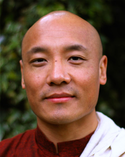
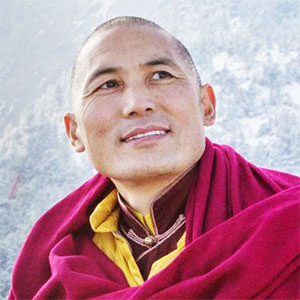
Kilung Rinpoche (born 1970) is the fifth reincarnation in the Kilung tulku line and head of Kilung Monastery in Dzachuka, Tibet. He was recognized by several prominent lamas including Dilgo Khyentse Rinpoche and Dodrupchen Rinpoche. His lineage traces to Rigdzin Jigme Lingpa, a major Nyingma teacher, through Jigme Ngotsar Gyatso, who founded Kilung Monastery in the 18th century. Since his teens, Rinpoche has focused on rebuilding the monastery as a center of learning and practice. In 1998 he established the Kilung Foundation, a U.S. nonprofit supporting the monastery's restoration. He has also initiated humanitarian and cultural projects including education, healthcare, and disaster relief in his region.
Teaching focus
Kilung Rinpoche's teaching focus, drawn from the source profile, sits in the Tibetan and Nyingma traditions. Several threads come up: Dzogchen-style recognition of awareness;. On talks, the style is closer to thinking-along than presenting. Kilung Rinpoche works with whatever shows up in the room rather than reading from notes, which is part of why these talks land as conversational instead of scripted. Short pauses, longer sits, and questions that come back to direct experience are usual. Listed specialties on the source profile include retreat, advanced practice. The bigger move Kilung Rinpoche keeps making is back toward attention itself: what's happening, how it's being held, and what gets in the way. That keeps the teaching close to practice rather than drifting into commentary about practice. For talks, schedules, and longer essays, the affiliated organization's page is where the live material lives. Kilung Rinpoche's sessions tend to keep returning to the body, to breath, and to the felt quality of attention as the steady ground that the rest rests on. Kilung Rinpoche's sessions tend to keep returning to the body, to breath, and to the felt quality of attention as the steady ground that the rest rests on. Kilung Rinpoche's sessions tend to keep returning to the body, to breath, and to the felt quality of attention as the steady ground that the rest rests on.
Background
Kilung Rinpoche teaches in the Tibetan and Nyingma traditions. The teaching home is InsightLA. From the teacher's own profile: H.E. Dza Kilung Tulku Jigme Rinpoche is the fifth reincarnation of H.H. Jigme Ngotsar Gyatso, the enlightened yogi who built Kilung Monastery in the 18th century. Jigme Ngotsar was important in his lineage line: he was one of the renowned “Four Jigmes,” principal disciples of Rigdzin Jigme Lingpa, the most important Nyingma teacher of the last 600 years. Rigdzin Jigme Lingpa sent Jigme Ngotsar back to his home territory of Dzachuka to build a monastery. With the patronage of the King of Derge, Jigme Ngotsar, as the royal family’s chief spiritual advisor and lama, raised a great monastery. This included a main temple (still standing), thriving monastic college with several hundred monks, separate center for long-term retreat, and a nearby nunnery. The present Kilung Rinpoche, also known as Kyabje Jigme Tendzin Chodrak, is the head of Kilung Monastery, and has been reestablishing it as a center of learning and practice since he was a teenager. Since 1998, this work has been supported by the Kilung Foundation, an American non-profit organization that he began with the prompting of western friends. As well as the importance of rebuilding the monastery, Rinpoche sees the reinvigoration of traditional Tibetan culture as integral to the continuation of Tibetan Buddhism, and vice versa. Therefore, he has also undertaken humanitarian projects that benefit the community and culture, including a bridge for nomads and their animals, primary education for nomad children, a health clinic, and disaster relief. Born in 1970, Rinpoche was discovered as a tulku in his youth. There had been signs that he was a reincarnated lama before, during and after his birth, but because of tumultuous times, all such information was kept secret. He was later recognized by a series of lamas, and confirmed to be the reincarnation of H.H. Jigme Ngotsar Gyatso. These lamas include H.H. Dilgo Khyentse Rinpoche, H.H. Minling Trichen Rinpoche, H.H. Dodrupchen Rinpoche, and H.E. Dzogchen Rinpoche. As a young teenager, Kilung Rinpoche completed a three-year retreat in secret with his first teacher, Venerable Kyab-lo, of Dzagya Monastery. In his later teens, Rinpoche was able, with his father and other relatives, to recover Kilung Monastery from Chinese cadres. This joyful recovery was the cause for the return of the former Kilung tribe, and for young people to join the monastery, a beginning in reviving the monastery and in a greater sense, the entire community. Then Rinpoche, at the age of 17, took over the running of the monastery. He went to work traveling the country gathering religious artifacts: statues, paintings, 1,000 brocade thangkhas, sacred texts, lama dance costumes and masks. He revived sacred dance there, and also helped a group of nuns rebuild Kilung nunnery in the next valley. In the Tibetan stream, Kilung Rinpoche's teaching draws on analytical reflection and stabilizing meditation, with attention to bodhicitta, the relationship with a teacher, and the slow integration of insight across daily life.
Lineage
Kilung Rinpoche teaches as a monastic teacher in the Tibetan and Nyingma traditions. The institutional home, per the source listing, is InsightLA, and that's where most of the public teaching schedule and any retreat offerings will be posted. Tibetan teaching authority depends on the named root teacher and the school (Nyingma, Kagyu, Sakya, Gelug). The source listing is where any specific authorization or empowerment information will be stated.
What to expect
On a class or retreat with Kilung Rinpoche, the basic shape is short instruction, longer sittings, and some Q&A. Retreats are part of the offering, usually a few days to a week, mostly silent. The container is shaped by InsightLA, so format details, fees, and access policies follow that organization's norms. Expect plenty of silence, less talking-at-you than you might think, and an emphasis on letting the practice do its work rather than chasing experiences. For exact dates, registration, and any sliding-scale or scholarship information, There's usually a short Q&A window and, on retreats, optional teacher interviews where students can bring specific questions about their practice.