About
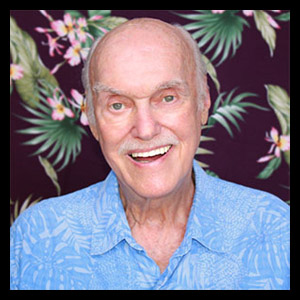
Ram Dass (1931–2019) was born Richard Alpert, a Harvard psychologist who conducted psychedelic research with Timothy Leary in the 1960s. He traveled to India in 1967, where he met his guru Neem Karoli Baba and was given his spiritual name. He studied across multiple traditions including bhakti yoga focused on Hanuman, Theravada, Mahayana, and Tibetan Buddhism, Zen, Sufism, and Jewish mysticism. He was known for teaching karma yoga and spiritual service. He authored The Psychedelic Experience and Be Here Now.
Teaching focus
Ram Dass's teaching focus, drawn from the source profile, sits in the Theravada and Mahayana traditions. Several threads come up: compassion training that doesn't collapse into pity or burnout;. On talks, the style is closer to thinking-along than presenting. Ram Dass works with whatever shows up in the room rather than reading from notes, which is part of why these talks land as conversational instead of scripted. Short pauses, longer sits, and questions that come back to direct experience are usual. Listed specialties on the source profile include retreat. The bigger move Ram Dass keeps making is back toward attention itself: what's happening, how it's being held, and what gets in the way. That keeps the teaching close to practice rather than drifting into commentary about practice. For talks, schedules, and longer essays, the affiliated organization's page is where the live material lives. Ram Dass's sessions tend to keep returning to the body, to breath, and to the felt quality of attention as the steady ground that the rest rests on. Ram Dass's sessions tend to keep returning to the body, to breath, and to the felt quality of attention as the steady ground that the rest rests on.
Background
Ram Dass teaches in the Theravada and Mahayana traditions. The teaching home is InsightLA. From the teacher's own profile: With a heavy heart we share that Ram Dass passed away on December 22, 2019. May he rest in loving awareness as he lives on in our hearts. Ram Dass first went to India in 1967. He was still Dr. Richard Alpert, a prominent Harvard psychologist and psychedelic pioneer with Dr. Timothy Leary. He continued his psychedelic research until that fateful Eastern trip in 1967, when he traveled to India. In India, he met his guru, Neem Karoli Baba, affectionately known as Maharajji, who gave Ram Dass his name, which means “servant of God.” Everything changed then - his intense dharmic life started, and he became a pivotal influence on a culture that has reverberated with the words “Be Here Now” ever since. Ram Dass’ spirit has been a guiding light for three generations, carrying along millions on the journey, helping to free them from their bonds as he works through his own. Since 1968, Ram Dass has pursued a panoramic array of spiritual methods and practices from potent ancient wisdom traditions, including bhakti or devotional yoga focused on the Hindu deity Hanuman; Buddhist meditation in the Theravadin, Mahayana Tibetan and Zen Buddhist schools, and Sufi and Jewish mystical studies. Perhaps most significantly, his practice of karma yoga or spiritual service has opened up millions of other souls to their deep, yet individuated spiritual practice and path. Ram Dass continues to uphold the boddhisatva ideal for others through his compassionate sharing of true knowledge and vision. His unique skill in getting people to cut through and feel divine love without dogma is still a positive influence on many people from all over the planet. In 1961, while at Harvard, explorations of human consciousness led him, in collaboration with Timothy Leary, Ralph Metzner, Aldous Huxley, and Allen Ginsberg, to pursue intensive research with psilocybin, LSD-25, and other psychedelic chemicals. Out of this research came two books: The Psychedelic Experience (co-authored with Leary and Metzner, and based on The Tibetan Book of the Dead, published by University Books); and LSD (with Sidney Cohen and Lawrence Schiller, published by New American Library).Because of the highly controversial nature of their research, Richard Alpert and Timothy Leary became personae non grata and were dismissed from Harvard in 1963. Tim Leary and Alpert then went to Mexico, ate mushrooms, and went from being academics to counter culture icons, legends in their own time, and young at that.For Ram Dass psychedelic work turned out to be a prelude to the mystical country of the spirit and the source of consciousness itself. Mind expansion via chemical substances became a catalyst for the spiritual seeking. This naturally led him eastward to the traditional headwater of mystical rivers, India. Once there, a series of seeming coincidences led him to Neem Karoli Baba and the transformation from Richard Alpert to Ram Dass. In the Insight stream Ram Dass works inside, the emphasis is on direct attention to body, feeling tone, and mind, alongside the brahmaviharas and an ongoing investigation of how clinging and aversion arise. Talks tend to be conversational rather than scripted, and there's room for sila and ethics to be talked about as part of practice rather than as a separate topic.
Lineage
Ram Dass teaches as a lay teacher in the Theravada and Mahayana traditions. The institutional home, per the source listing, is InsightLA, and that's where most of the public teaching schedule and any retreat offerings will be posted. The Insight lineage in the West runs through teachers like Mahasi Sayadaw, U Ba Khin, Anagarika Munindra, and Dipa Ma into the founders of IMS, Spirit Rock, and the regional centers, and most contemporary Insight teachers position themselves somewhere in that broad family.
What to expect
On a class or retreat with Ram Dass, the basic shape is short instruction, longer sittings, and some Q&A. Retreats are part of the offering, usually a few days to a week, mostly silent. The container is shaped by InsightLA, so format details, fees, and access policies follow that organization's norms. Expect plenty of silence, less talking-at-you than you might think, and an emphasis on letting the practice do its work rather than chasing experiences. For exact dates, registration, and any sliding-scale or scholarship information, There's usually a short Q&A window and, on retreats, optional teacher interviews where students can bring specific questions about their practice.