About
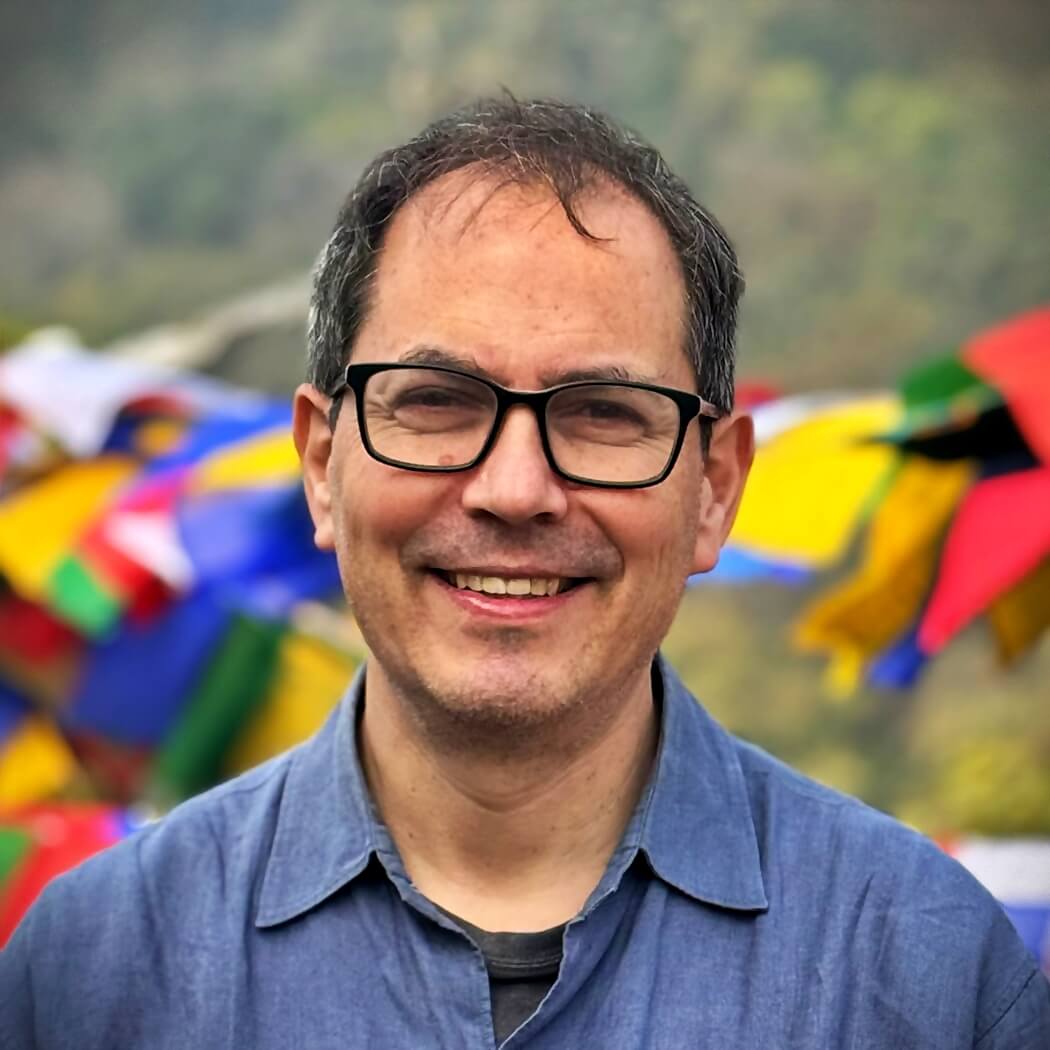
William Edelglass is Director of Studies at the Barre Center for Buddhist Studies and on leave from a tenured position at Emerson College in Boston. He previously taught philosophy at Marlboro College and held visiting positions at Buddhist institutes in Dharamsala and India. Edelglass has practiced in Zen, Tibetan, and Theravāda traditions. His scholarly work addresses Buddhist ethics and mindfulness, Buddhism and the environment, B. R. Ambedkar's Buddhist thought, and phenomenology. He leads retreats at multiple centers and has taught environmental philosophy, philosophy in prison contexts, and wilderness education.
Teaching focus
William Edelglass's teaching focus sits inside the Zen traditions of Japan, Korea, or China, with shikantaza or koan introspection depending on lineage as the working ground. Zen practice here keeps things spare. Sitting is the central act, posture matters, and verbal teaching tends to land in fewer words than other lineages use. Whether the form is shikantaza or koan introspection depends on lineage, but the underlying refusal to substitute thinking-about-practice for practice itself is constant. For practitioners with substantial prior experience, the teaching doesn't slow itself down or restate foundations that are already in place. Across the body of work, the consistent thread in William Edelglass's teaching is the refusal to let practice become abstract. The instruction asks for direct contact with what's actually arising, and the framing supports practitioners in giving it that. Recurring questions in the teaching include how to keep practice honest across years, how to hold difficulty without bypassing it, and how the dharma actually shows up in ordinary life rather than only on the cushion. Recurring questions in the teaching include how to keep practice honest across years, how to hold difficulty without bypassing it, and how the dharma actually shows up in ordinary life rather than only on the cushion.
Background
William Edelglass is Director of Studies at the Barre Center for Buddhist Studies and on leave from a tenured position at Emerson College in Boston. He previously taught philosophy at Marlboro College and held visiting positions at Buddhist institutes in Dharamsala and India. Edelglass has practiced in Zen, Tibetan, and Theravāda traditions. His scholarly work addresses Buddhist ethics and mindfulness, Buddhism and the environment, B. R. Ambedkar's Buddhist thought, and phenomenology. He leads retreats at multiple centers and has taught environmental philosophy, philosophy in prison contexts, and wilderness education. He has taught for Emory University’s Tibetan Studies Program in Dharamsala and more recently served as Director of the Smith College Tibetan Studies in India Program. [email protected] William leads Buddhist retreats at BCBS, Wonderwell Mountain Refuge, the Insight Meditation Society, and elsewhere. In addition to teaching several dozen undergraduate and graduate philosophy courses, William was an instructor leading wilderness trips for Outward Bound, taught philosophy in a federal prison, and taught environmental philosophy as part of the Chinese Academy of Social Science and the Royal Academy of Philosophy joint program for Chinese philosophy professors in Shanghai. He is currently on a seven-year leave of absence from his tenured position at Emerson College in Boston. William has a broad background as a scholar and a practitioner. He has practiced in Zen, Tibetan, and Theravāda traditions. William Edelglass's teaching is anchored at Barre Center for Buddhist Studies in central Massachusetts, the scholarly partner to IMS. The teaching draws from the Zen traditions of Japan, Korea, or China, with shikantaza or koan introspection depending on lineage as the working ground. Areas of particular focus include advanced practice. The Zen shape of William Edelglass's teaching shows up in the spareness. Less commentary, more presence. Posture, breath, and the willingness to sit through what doesn't get explained. Practitioners drawn to William Edelglass's teaching tend to be people who've already noticed that practice is a long arc, not a quick fix, and who want a teacher who treats it that way. Practitioners drawn to William Edelglass's teaching tend to be people who've already noticed that practice is a long arc, not a quick fix, and who want a teacher who treats it that way. Practitioners drawn to William Edelglass's teaching tend to be people who've already noticed that practice is a long arc, not a quick fix, and who want a teacher who treats it that way.
Lineage
William Edelglass teaches within the Zen traditions of Japan, Korea, or China. Current affiliation runs through Barre Center for Buddhist Studies in central Massachusetts, the scholarly partner to IMS. William Edelglass teaches as a lay practitioner rather than from a monastic role. The lineage shapes the form of the teaching, not just its content. Practitioners encountering it find a transmission line still actively developing. The lineage shapes the form of the teaching, not just its content. Practitioners encountering it find a transmission line still actively developing. The lineage shapes the form of the teaching, not just its content. Practitioners encountering it find a transmission line still actively developing.
What to expect
On retreat with William Edelglass you'll get long sits, walking practice, and dharma talks that build on each other across days. The container is silent or near-silent, which gives the teaching room to land in a way that single classes can't quite reach. Sittings are conventional, mindfulness of breath and body, with metta and inquiry into difficult mind-states woven through. There's space for questions, and the answers don't get rushed. The atmosphere is grounded rather than performative, and practitioners tend to leave with practical ground to keep working from on their own. The atmosphere is grounded rather than performative, and practitioners tend to leave with practical ground to keep working from on their own.