About
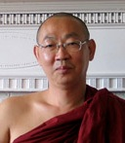
Sayadaw U Tejaniya is a Theravada Buddhist teacher who trained as a monk in the Burmese tradition. He previously lived as a householder before ordaining, giving him experience with lay practitioners' circumstances. Tejaniya has written on defilements and Buddhist practice. He has led numerous retreats and given recorded talks on meditation and awareness. His teaching emphasizes applying awareness to daily life alongside formal practice.
Teaching focus
U Tejaniya teaches a non-objects-based vipassana grounded in awareness of mind. Most vipassana methods anchor attention on a primary object, the breath, body sensations, the rise and fall of the abdomen. U Tejaniya's method asks practitioners to drop that anchoring and instead maintain continuous, low-effort awareness of whatever the mind is doing. The point isn't an empty cushion-time exercise. It's investigation into how the mind works, how attitude colors experience, and how craving and aversion shape what gets noticed. Right effort, in his framing, is gentle and sustained rather than forceful. He'll often correct yogis who are striving by asking what they think will happen if they try harder, and by pointing them back to the simpler question of what the mind is doing right now. He emphasizes wise attention, the difference between knowing about something and actually knowing it in the moment, and the role of right view in shaping practice from the start. His method is unusual in working as well in daily life as in retreat. Many of his students never sit a long retreat and yet develop sustained awareness over years of ordinary practice, because the method doesn't require special conditions to function.
Background
Sayadaw U Tejaniya is a Burmese Theravada monk and one of the most influential contemporary teachers of the Mahasi vipassana lineage. Born in Yangon (Rangoon) in 1962, he encountered meditation as a teenager under Sayadaw U Pandita, the senior Mahasi-lineage teacher, and continued lay practice for years before ordaining as a bhikkhu in 1996. He now serves as abbot of Shwe Oo Min Dhammasukha Forest Meditation Center near Yangon, the monastery established by his root teacher Shwe Oo Min Sayadaw, where he teaches a meditation method known for its emphasis on awareness of mind rather than on the breath, body sensations, or any single primary object. His method, sometimes called natural awareness or the noting-light approach, asks practitioners to maintain a continuous, gentle awareness of whatever is present, with particular attention to attitude. Right view in this framing isn't an abstract conviction but the way the mind is meeting experience moment by moment. He teaches widely in English to international yogis, and his books, including Don't Look Down on the Defilements: They Will Laugh at You, Awareness Alone Is Not Enough, When Awareness Becomes Natural, and Relax and Be Aware, are read worldwide. His talks are available on the Shwe Oo Min and Dharma Seed archives. The method is associated with a particular feel: relaxed, low-effort, sustained, and explicitly suspicious of striving. He's known for telling new yogis to slow down, to stop trying so hard, and to investigate why they think effort means push.
Lineage
U Tejaniya is a fully ordained Burmese Theravada bhikkhu in the Mahasi vipassana lineage. He trained in lay practice under Sayadaw U Pandita and other Mahasi-lineage teachers before ordaining in 1996, and his root teacher in monastic life was Shwe Oo Min Sayadaw, who established the meditation center U Tejaniya now leads near Yangon. The Mahasi lineage runs back through Mahasi Sayadaw (1904 to 1982), the seminal twentieth-century Burmese teacher whose noting method shaped the global vipassana revival.
What to expect
Retreats and online programs with U Tejaniya tend to be quiet, slow, and unusually sparse on technique. He'll repeat the same instructions across days, asking yogis to investigate attitude, effort, and what wise attention actually feels like. Daily interviews are typical and substantive. He'll work with each yogi at the level their practice currently sits, often correcting subtle striving or attachment to expected experience. The atmosphere is gentle, sometimes deceptively so. Many yogis report the method opening up only after they've stopped trying to make it work.