About
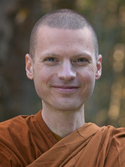
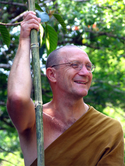
Thanissaro Bhikkhu is a Theravada Buddhist monk trained in the Thai Forest tradition under Ajahn Fuang Jotiko and Ajahn Suwat Suvaco. He teaches dharma talks and leads retreats, drawing on early Buddhist texts and his monastic training. His teaching approach emphasizes meditation as a skill, using analogies from everyday activities to explain subtle points in practice. He has given over 100 dharma talks and led multiple retreats.
Teaching focus
His teaching emphasizes meditation as a skill, with detailed practical instruction in working with breath energy in the body. He's known for clarity of instruction, for his prolific translation work, and for his somewhat distinctive position within Western Theravada that emphasizes karma, rebirth, and traditional doctrine alongside practice instruction. The work draws on Theravada Buddhism in its classical form as the foundational framework, taught with care for the textures of present experience rather than as abstract doctrine. Mindfulness of breath, body, feeling tone, and mental states forms the spine of the practice, with the four foundations of mindfulness as the standard organizational frame. The brahmaviharas, lovingkindness, compassion, sympathetic joy, and equanimity, are taught as serious meditative work alongside the mindfulness curriculum. Lovingkindness gets serious time on retreat, treated as central practice rather than supplemental, and the broader brahmavihara framework offers additional ground for the slower work of equanimity and forgiveness. Daily-life integration runs through the recorded teaching as a steady concern. The same awareness that opens during a sit is the awareness that meets traffic, family, and work, and the teaching keeps coming back to that continuity rather than treating retreat as a separate world. Across the recorded teaching runs a steady commitment to the actual work of practice, the slow unfolding that doesn't always make for inspirational soundbites but that carries the path forward across years of sitting. Across the work runs a careful refusal to oversell. The teaching points students toward what practice can actually do rather than what students might wish it would do, and that honesty becomes part of the trust students develop in the teacher's voice.
Background
Thanissaro Bhikkhu is a senior teacher in the Theravada tradition descended from the Burmese and Thai vipassana lineages as carried into the West, teaching since 1976. Thanissaro Bhikkhu (Geoffrey DeGraff) is an American Theravada bhikkhu in the Thai Forest tradition, the abbot of Metta Forest Monastery in California, and one of the most prolific translators of the Pali suttas into English. He trained for years in Thailand under Ajahn Fuang Jotiko and Ajahn Suwat Suvaco, both senior Thai Forest teachers. He's the author and translator of dozens of books, including translations of the major Pali suttas and many books of his own teaching. The recorded archive holds about 108 talks. The Dharma Seed archive at dharmaseed.org/teacher/179 holds about 108 recorded talks across 7 retreats, a substantial body of work for students to study at distance. Senior teachers like this one often shape not only individual students but the wider ecosystem of practice around them, through retreats, mentorship, and the steady availability of recorded teaching across decades. The teaching voice is plainly framed and unceremonial, in keeping with the broader Western lay-teacher insight tradition. Like many teachers in the wider Insight community, this teacher's path includes time on long silent retreat, ongoing study with senior teachers, and gradual integration of teaching responsibility through co-teaching and small local programs before stepping into broader retreat work. That apprenticeship model shapes the careful pacing of the teaching.
Lineage
Thanissaro was ordained in 1976 and trained for years under Ajahn Fuang Jotiko and Ajahn Suwat Suvaco in the Thai Forest tradition. He's the abbot of Metta Forest Monastery (Wat Metta) in southern California. The teacher holds full monastic ordination and teaches from inside that renunciate framing. He's the abbot of Metta Forest Monastery (Wat Metta) in California, with extensive published work freely available at dhammatalks.org.
What to expect
Programs at Wat Metta and through dhammatalks.org offer access to his teaching. Wat Metta operates as a working forest monastery with the rhythms of monastic life, and lay practitioners can visit and practice at the monastery. Retreats typically follow a classical Theravada structure with sittings, walking meditation, dharma talks, and one-on-one meetings with the teachers, often with chanting and shorter formal periods built into the schedule. The tone is unhurried and grounded, with attention given to the practical questions students bring rather than to large theoretical frameworks. For practitioners working at distance, recorded talks and online programs often offer a good initial point of contact, with in-person retreat following once the teaching voice and approach have become familiar.