About
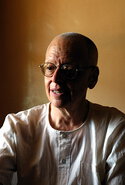
Trisha Stotler has practiced meditation since 1992 and has taught at the Insight Meditation Community of Washington (IMCW) since 2009. She serves as the organization's Executive Director of Programs. Her teaching draws primarily from Vipassanā and Early Buddhist teachings, with occasional references to other traditions. She focuses on using dharma as guidance through life transitions, groundlessness, end-of-life issues, and questions of happiness and purpose. She has studied with Gil Fronsdal, Gloria Taraniya, Ayya Dhammadipa, and Kittisaro.
Teaching focus
Trisha Stotler's teaching focus sits inside the Burmese vipassana revival as transmitted to the West, with insight meditation (vipassana) as the working ground. Vipassana practice as taught here works with direct observation of body, feeling-tone, mind-state, and dhammas, the four foundations of mindfulness as they appear in the Satipatthana Sutta. The instruction keeps coming back to what's actually arising rather than what should be. Grief practice gets real time. The teaching doesn't sanitize loss into a contemplative lesson, it lets it stay heavy long enough to be honest. Across the body of work, the consistent thread in Trisha Stotler's teaching is the refusal to let practice become abstract. The instruction asks for direct contact with what's actually arising, and the framing supports practitioners in giving it that. Recurring questions in the teaching include how to keep practice honest across years, how to hold difficulty without bypassing it, and how the dharma actually shows up in ordinary life rather than only on the cushion. Recurring questions in the teaching include how to keep practice honest across years, how to hold difficulty without bypassing it, and how the dharma actually shows up in ordinary life rather than only on the cushion. Recurring questions in the teaching include how to keep practice honest across years, how to hold difficulty without bypassing it, and how the dharma actually shows up in ordinary life rather than only on the cushion.
Background
Trisha Stotler has practiced meditation since 1992 and has taught at the Insight Meditation Community of Washington (IMCW) since 2009. She serves as the organization's Executive Director of Programs. Her teaching draws primarily from Vipassanā and Early Buddhist teachings, with occasional references to other traditions. She focuses on using dharma as guidance through life transitions, groundlessness, end-of-life issues, and questions of happiness and purpose. She has studied with Gil Fronsdal, Gloria Taraniya, Ayya Dhammadipa, and Kittisaro. Her teachings draw primarily from Vipassanā and Early Buddhist teachings, and she’s also known for bringing in wisdom from other traditions that highlight the universality of the dharma. Trisha has found guidance in the teachings of Gil Fronsdal, Gloria Taraniya, Ayya Dhammadipa, Kittisaro, and numerous others. Trisha is IMCW’s Executive Director of Programs, and has served the organization in many different capacities over the years. Read Trisha's blog posts. View more on YouTube. Trisha Stotler's teaching is anchored at Insight Meditation Community of Washington. The teaching draws from the Burmese vipassana revival as transmitted to the West, with insight meditation (vipassana) as the working ground. Areas of particular focus include grief. In Trisha Stotler's talks the emphasis lands on direct observation. What the breath actually does, what mood actually feels like in the body, what arises and passes when nothing is being added. The practice is asked to deliver its own evidence. Practitioners drawn to Trisha Stotler's teaching tend to be people who've already noticed that practice is a long arc, not a quick fix, and who want a teacher who treats it that way. Practitioners drawn to Trisha Stotler's teaching tend to be people who've already noticed that practice is a long arc, not a quick fix, and who want a teacher who treats it that way. Practitioners drawn to Trisha Stotler's teaching tend to be people who've already noticed that practice is a long arc, not a quick fix, and who want a teacher who treats it that way. Practitioners drawn to Trisha Stotler's teaching tend to be people who've already noticed that practice is a long arc, not a quick fix, and who want a teacher who treats it that way. Practitioners drawn to Trisha Stotler's teaching tend to be people who've already noticed that practice is a long arc, not a quick fix, and who want a teacher who treats it that way. Practitioners drawn to Trisha Stotler's teaching tend to be people who've already noticed that practice is a long arc, not a quick fix, and who want a teacher who treats it that way.
Lineage
Trisha Stotler teaches within the Burmese vipassana revival as transmitted to the West. Trisha Stotler Trisha has been a student of meditation since 1992 and teaching for IMCW since 2009. Her teaching is accessible to all levels, and she’s known for presenting complex ideas in ways that are easily understood. Her areas of personal interest are using the dharma as a guide through life transitions and times of groundlessness, end-of-life issues, and the exploration of happiness and purpose. Her teachings draw primarily from Vipassanā and Early Buddhist teachings, and she’s also known for bringing in wisdom from other traditions that highlight the universality of the dharma. Current affiliation runs through Insight Meditation Community of Washington. Trisha Stotler teaches as a fully ordained monastic.
What to expect
On retreat with Trisha Stotler you'll get long sits, walking practice, and dharma talks that build on each other across days. The container is silent or near-silent, which gives the teaching room to land in a way that single classes can't quite reach. Sittings are conventional, mindfulness of breath and body, with metta and inquiry into difficult mind-states woven through. There's space for questions, and the answers don't get rushed. The atmosphere is grounded rather than performative, and practitioners tend to leave with practical ground to keep working from on their own. The atmosphere is grounded rather than performative, and practitioners tend to leave with practical ground to keep working from on their own.