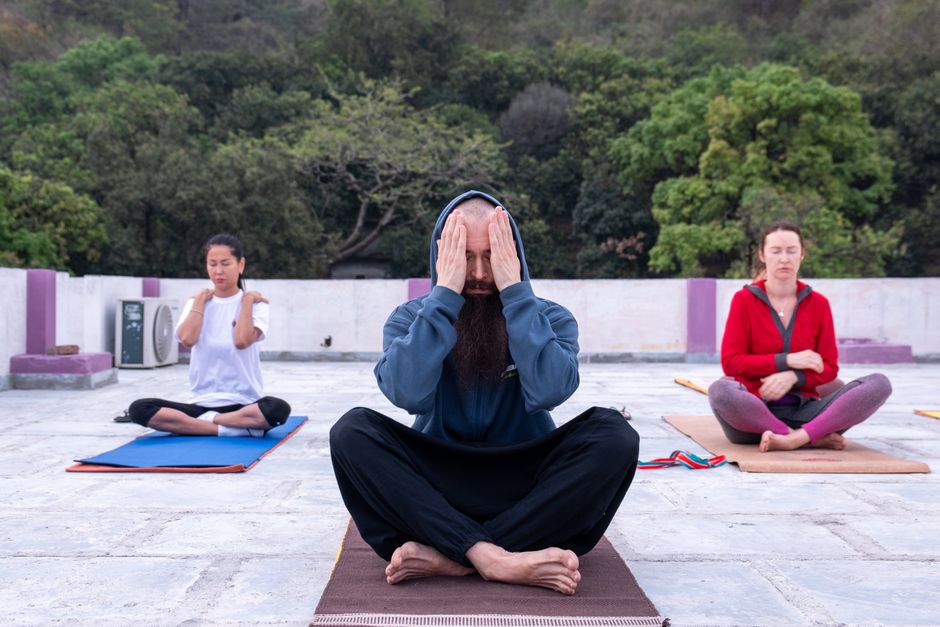
You've been practicing for a few years. Maybe a decade. Friends have started asking you to "teach them how to meditate," and the thought won't leave you alone. So you opened a browser, typed in some variation of "meditation teacher training," and got hit with a wall of numbers ranging from $200 to $20,000.
Related: see our deeper guide on Free and Low-Cost Online Meditation Teacher Training: What's Actually Available for a focused walkthrough on free online meditation teacher training.
That spread isn't a mistake. It reflects real differences in lineage, depth, accreditation, and — yes — marketing. Let's break down what meditation teacher training actually costs in 2026, what you're paying for at each tier, and where the hidden expenses hide.
Why the Price Range Is So Wide (and Why "Cheap" Sometimes Means "Useless")
A 30-hour online certification from a content mill costs about the same as a nice dinner out. A three-year residential training under a teacher in a recognized Tibetan or Zen lineage can run into five figures, plus travel, plus the dāna (donation) you'll eventually want to offer your teacher.
In our directory of 597 meditation teacher training programs globally, prices cluster into rough tiers. But the tier isn't really about hours of instruction. It's about three things:
- Lineage and faculty. Is the lead teacher authorized by a tradition, or did they certify themselves after a weekend workshop?
- Accreditation. IMTA accreditation, university affiliation, or recognition by a Buddhist/Hindu institution costs the program money to maintain, and that gets passed on.
- Format. Residential retreats include room and board. Online programs don't.
Of those 597 programs, 212 are flagged as notable or IMTA-accredited. That's roughly a third. The other two-thirds aren't necessarily bad — some of the deepest dharma trainings sit outside any accreditation body — but if you're paying premium prices, you should know what you're paying for.
The Five Price Tiers of Meditation Teacher Training in 2026
Tier 1: Under $500 — The "Certificate Mill" Zone
You'll find dozens of these on Udemy, Teachable, and various wellness platforms. Usually 20-50 hours of video, a multiple-choice quiz, and a PDF certificate with your name on it.
Honest take: these aren't training programs. They're introductions to meditation packaged with a credential. If you want to actually teach humans in a room (or on Zoom) and hold space when someone has a difficult release, this tier won't prepare you. It can be useful as a primer before committing to something serious.
Tier 2: $500–$2,000 — Entry-Level Legitimate Programs
This is where most online meditation teacher trainings live. You're getting 60-200 hours of instruction, some live calls, practicum hours where you teach peers, and feedback from a lead trainer.
Sounds True, the School of Positive Transformation, and several yoga-school spinoffs sit here. Quality varies wildly. We've covered some of the better options in our roundup of the best online meditation teacher training programs for 2026, and a deeper review of Sounds True's program if that one's caught your eye.
Tier 3: $2,000–$5,000 — Mid-Tier Specialized Trainings
Here's where things get interesting. Trauma-informed certifications, somatic meditation trainings, MBSR teacher prep, and most Vedic Meditation teacher pathways sit in this range. You're usually looking at 200-500 hours, multiple live retreats (in-person or virtual), mentor calls, and a more rigorous certification process.
If you want to teach trauma survivors, this is the minimum you should be considering. Cheap trauma-informed training is a contradiction in terms — the curriculum and supervision required to do it ethically cost real money.
Tier 4: $5,000–$12,000 — Accredited Professional Pathways
MBSR teacher certification through the Mindfulness Center at Brown University, IMTA-accredited pathways, and the full Vedic Meditation teacher pipeline live here. So do most graduate-level mindfulness programs from accredited universities.
You're paying for: faculty who are published researchers or recognized lineage holders, supervision over 1-3 years, in-person residential components, and a credential that genuinely opens doors in clinical and corporate settings.
Tier 5: $12,000+ — Residential Lineage Training
Three-year Zen training periods. Long Tibetan retreats under a recognized lama. Year-long residencies at IMS or Spirit Rock for prospective insight teachers. These programs aren't priced like consumer products because they aren't consumer products — they're apprenticeships.
The tuition might look reasonable on paper, but factor in lost income, travel, and the fact that you can't really work a normal job during residential periods.
Cost by Tradition: What Each Lineage Actually Charges
Tradition matters more than format when it comes to pricing. Here's what we're seeing across the directory:
Secular Mindfulness (135 programs)
The most populated category and the widest price range. From $200 weekend certificates to $8,000 full curricula. We've broken down the strongest options in our guide to the best secular mindfulness teacher training certifications.
MBSR (108 programs)
MBSR teacher training has a relatively standardized pathway because Jon Kabat-Zinn's original curriculum is protected. Full certification typically runs $6,000-$10,000 across 2-3 years, including the foundational training, supervised practicum, and certification review. See our breakdown of MBSR teacher certification options for specifics.
Vipassana / Insight (102 programs)
This one's complicated. Goenka-tradition Vipassana doesn't have a "teacher training" you pay for — assistant teachers are appointed after years of practice and serving. Insight Meditation Society and Spirit Rock have a formal four-year teacher training that's invitation-based and costs roughly $5,000-$8,000 in tuition, but you have to be selected.
Zen (60 programs)
Almost entirely lineage-based. You don't pay to become a Zen teacher; you train under a roshi for years (often decades) and receive transmission. Residential costs at Zen centers vary from $400/month to several thousand for longer programs.
Tibetan (59 programs)
Similar to Zen — authorization comes through your teacher, not a payment. Major programs like the Foundation for the Preservation of the Mahayana Tradition's Masters Program cost $2,000-$5,000 per year of multi-year curricula.
Vedic / TM
Vedic Meditation teacher training (different from TM, though related — see our breakdown on the actual difference) typically costs $8,000-$15,000 for the full pathway. Our roundup of the best Vedic meditation teacher training programs covers the specifics.
The Hidden Costs Nobody Mentions in the Sales Page
Tuition is the number you see. It's not the number you pay. Here's what most programs leave off the brochure:
- Required retreats. Many serious trainings require you to attend silent retreats separately. A 10-day Vipassana retreat is donation-based, but a 7-day insight retreat at IMS runs $700-$1,500.
- Personal therapy or supervision. Trauma-informed and clinical programs often require ongoing supervision at $100-$200/hour.
- Required reading. $200-$500 in books across a serious program.
- Travel and accommodation. Even "hybrid" programs usually have an in-person component.
- Insurance. Once you start teaching, professional liability insurance runs $200-$500/year.
- Continuing education. Most accreditations require CEUs to maintain.
Realistic total for a Tier 3 program: budget about 1.4x the stated tuition. For Tier 4, about 1.6x. For Tier 5 residential, it's often 2-3x once you account for lost income.
Geography and Format: Why Where You Train Affects What You Pay
The US dominates the global market with 195 of the 597 programs we track, followed by the UK (58), India (25), Australia (22), and Canada (20). Pricing roughly follows what you'd expect — US and UK programs charge the most, Indian programs (including authentic lineage trainings) often charge surprisingly little.
An Indian Vipassana or yoga-meditation teacher training in Rishikesh might cost $1,500 including room and board for a month. The same curriculum repackaged for a Western audience and delivered online from the US might charge $4,000.
Format matters too. Of the 597 programs, 522 offer in-person components and 303 offer online options, with 46 truly hybrid. Online programs are generally 30-50% cheaper than residential equivalents, but you're trading sangha (community) and the embodied experience of training together.
If budget is a hard constraint, online is a legitimate path — just go in with eyes open about what you're not getting. Our guide on how to choose a meditation teacher training covers the trade-offs in detail.
What Actually Justifies the Price (and What's Just Marketing)
Here's the uncomfortable truth: meditation has a McMindfulness problem. There are programs charging $5,000 for content that's barely different from what you'd get in a $30 book. There are also programs charging $8,000 that are genuinely worth every penny because of who's teaching and what you'll be capable of holding by the end.
What justifies premium pricing:
- Lead teachers with verifiable lineage authorization (not just "20 years of experience")
- Small cohort sizes that allow real mentorship (typically under 30)
- Supervised teaching hours where you actually teach and get feedback
- Ongoing access to mentors after certification
- A clear scope-of-practice framework, especially around trauma
- Continuing community and alumni network
What doesn't justify premium pricing:
- Fancy production values and glossy course platforms
- Founder celebrity (be especially wary of teachers with scandal histories — and yes, several well-known names have them)
- "Lifetime access" to recorded content
- Vague promises about "transformational outcomes"
Before you commit, learn how to verify a teacher's lineage, watch for red flags that should make you walk away, and ask alumni the questions most people forget to ask.
How to Decide What You Can Actually Afford
A practical framework for figuring out your number:
- Be honest about why you're training. If it's primarily for personal deepening, you may not need certification at all. A long retreat and a good teacher might serve you better.
- Define your teaching context. Casual community classes? Corporate work? Clinical adjunct? Trauma populations? Each context has different minimum competency requirements — and minimum costs.
- Calculate your real budget. Tuition × 1.5 for hidden costs. Then ask whether you can pay that without putting yourself in financial stress that will undermine your practice.
- Consider time as money. A $2,000 program that takes 18 months may cost more in life-energy than a $5,000 program done in 6 months.
- Don't finance teacher training on credit cards. If you can't afford it without debt, you can't afford it. Wait, save, or find a different program.
Most reputable programs offer payment plans and partial scholarships, especially for people from underrepresented backgrounds or with genuine financial need. Ask. It's not begging — it's standard practice in this field.
The Bottom Line on 2026 Pricing
Here's the simple version. If you want to teach friends and run a small community group, $1,500-$3,000 will get you a legitimate online certification. If you want to teach in clinical, corporate, or healthcare settings, plan on $5,000-$10,000 across 1-3 years. If you want to teach in a recognized lineage, the path isn't really about money — it's about time, devotion, and the relationship with your teacher.
The biggest mistake we see is people paying mid-tier prices ($2,000-$4,000) for programs that don't actually prepare them to teach, then either abandoning the path or doing harm to students because they weren't equipped to hold what came up. Cheap can be more expensive than thoughtful investment.
Take your time. Sit a few more retreats before you decide. Talk to alumni. Read the syllabus closely. The dharma has been around for 2,600 years — your training decision can wait another six months.
Related reading
- How to Choose a Meditation Teacher Training: 7 Questions to Ask Before You Pay
- Meditation Teacher Training Red Flags: 9 Signs to Walk Away
- The 5 Best Trauma-Informed Meditation Teacher Training Programs
Choosing a teacher training?
Start with the free database, then choose with confidence.
Browse 300+ meditation teacher training programs free - filter by tradition, format, and accreditation. When you're ready to decide, The MTT Selection Workbook walks you through it with quizzes, rubrics, and red-flag checklists.