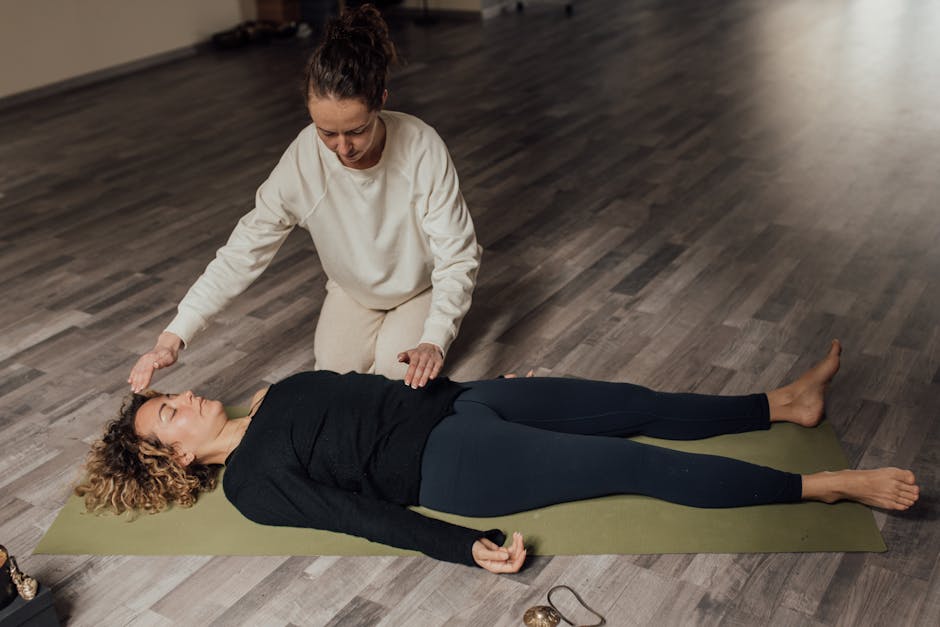
You sat on the cushion last Tuesday and a memory you hadn't thought about in fifteen years walked in uninvited. Your body locked up. Your teacher told you to "just notice it" and "return to the breath." You did, sort of. But something felt off — like the instruction was built for a nervous system that wasn't yours.
If you've ever wondered why so much standard meditation guidance feels tone-deaf around trauma — or worse, actively makes things harder — you're not imagining it. Most teacher trainings barely touch the subject. A few do it seriously. This guide is about those few.
Out of the 597 meditation teacher training programs we track in our database, only a small fraction center trauma-informed practice as a core competency rather than a weekend add-on. Below are the five we'd actually point a friend toward.
What "Trauma-Informed" Actually Means (and What It Doesn't)
Let's clear something up. "Trauma-informed" isn't a credential you earn by watching a 90-minute webinar on grounding techniques. It's a framework — drawn from clinical work by people like Bessel van der Kolk, Peter Levine, David Treleaven, and Resmaa Menakem — that fundamentally changes how you teach.
A trauma-informed teacher understands that the body scan can trigger dissociation. That closed-eye practice isn't safe for everyone. That "just observe the sensation" can flood a survivor's window of tolerance. That silence in a long retreat can become a pressure cooker, not a refuge.
It also doesn't mean you become a therapist. Good trauma-informed training teaches you exactly where the line sits, and how to refer out when something is beyond your scope.
This matters because a lot of meditation culture has, frankly, ignored harm. The dharma scandals of the last two decades — from Shambhala to Rigpa to multiple Zen lineages — were partly enabled by communities that treated dissociation as "spiritual progress" and silenced anyone whose nervous system was telling them something was wrong. Trauma-informed training is, in part, a corrective to that history.
What to Look For Before You Enroll
Before we get to the list, a few filters worth applying. Not every program calling itself trauma-sensitive actually is.
- Faculty credentials. Is there at least one licensed clinician on the teaching team? Trauma work without clinical oversight is a red flag.
- Lineage clarity. Vipassana, MBSR, Zen, and TM are not the same thing. A program should tell you which tradition it's rooted in and where it deviates.
- Practicum hours. Reading about trauma is different from teaching with it in the room. Look for supervised teaching practice.
- Scope-of-practice training. When and how do you refer someone to a therapist? If this isn't covered, walk away.
- Format honesty. Our directory shows 522 in-person, 303 online, and 46 hybrid offerings. Trauma-informed work often benefits from live human contact — be skeptical of fully self-paced trauma trainings.
If you want a broader framework for evaluating programs, the seven questions to ask before enrolling covers the structural stuff. What follows is specific to trauma work.
1. Trauma-Sensitive Mindfulness (David Treleaven)
If there's a single name that defines this field in the English-speaking meditation world, it's David Treleaven. His book Trauma-Sensitive Mindfulness is the de facto textbook, and his training program is where many teachers now start.
The TSM certification is a multi-month online program built around five core principles: staying within the window of tolerance, shifting attention to support stability, keeping the body in mind, supporting relationships, and understanding social context. It's not a meditation teacher training by itself — it's a layer you add to existing training, or pursue alongside one.
Best for: Existing meditation teachers, therapists, and MBSR instructors who want a rigorous clinical-adjacent framework. Also useful for yoga teachers and somatic practitioners.
Tradition: Secular mindfulness with strong Vipassana roots. Treleaven is transparent about his lineage.
Watch out for: If you've never taught meditation before, this might feel like jumping into the deep end. Pair it with a foundational training first — the mindfulness teacher training programs we've reviewed are reasonable starting points.
2. The Breathe Network — Trauma-Informed Yoga and Meditation
The Breathe Network was founded by Molly Boeder Harris, a sexual violence survivor and advocate, and it centers something most trainings only gesture at: the lived experience of survivors as the actual starting point of the curriculum.
Their certification program trains practitioners across meditation, yoga, and bodywork to serve survivors of sexual trauma specifically. The curriculum includes neurobiology of trauma, consent-based touch and language, somatic awareness, and — crucially — extensive training on what not to do.
Best for: Practitioners who want to work specifically with survivors of interpersonal and sexual violence. Also strong for anyone working in shelters, recovery programs, or community mental health settings.
Tradition: Integrative — draws on hatha yoga, somatic experiencing, and secular mindfulness. Not lineage-based in a Buddhist sense.
Watch out for: This work is heavy. The training itself can surface material for participants. Have your own support system in place before you start.
3. Mindful Self-Compassion Teacher Training (CMSC)
Founded by Kristin Neff and Christopher Germer, MSC isn't marketed primarily as trauma training — but the certified MSC teacher track includes substantial trauma-sensitivity content, and the practice itself was developed with awareness of how harsh self-criticism intersects with trauma history.
The full path includes the 8-week MSC course (as a participant), a 5-day teacher training intensive, a practicum, and supervised teaching. The whole sequence typically runs 12-18 months. There's also a Trauma-Sensitive MSC training specifically for practitioners working with PTSD populations.
Best for: Clinicians, social workers, and meditation teachers who want a structured, research-backed program with strong evidence behind it. MSC has solid research support for anxiety, depression, and aspects of PTSD recovery.
Tradition: Secular mindfulness with explicit Buddhist roots (Theravada and Tibetan compassion practices). Neff and Germer name their sources.
Watch out for: The pacing assumes you can attend in-person intensives. Online options exist but the in-person practicum is core.
4. UMass / Brown MBSR Teacher Training with Trauma-Informed Specialization
MBSR is the most-trained tradition in our directory after secular mindfulness (108 programs globally). The original MBSR curriculum predates much of current trauma research, but the lineage holders — now housed primarily at Brown University's Mindfulness Center after the original UMass program transitioned — have updated their teacher training significantly.
The full MBSR teacher certification pathway is long: foundational training, MBSR in Mind-Body Medicine, teacher development intensive, supervised teaching, and ongoing mentorship. Trauma-sensitivity is woven through, and there are now specific advanced offerings for teaching MBSR in populations with high trauma exposure.
Best for: People who want the most clinically validated meditation training pathway. MBSR has more peer-reviewed research than any other meditation modality.
Tradition: MBSR — secular mindfulness developed by Jon Kabat-Zinn, drawing on Vipassana, Zen, and yoga. If you're unclear how it differs from straight meditation, this comparison spells it out.
Watch out for: Expensive and time-intensive. Budget at least two years and several thousand dollars. The real cost of teacher training is worth reading before you commit.
5. Warriors at Ease — Trauma-Informed Yoga and Meditation for Military Communities
This one's specialized but worth knowing about. Warriors at Ease trains meditation and yoga teachers to work with active-duty service members, veterans, and military families — populations with high rates of combat trauma, moral injury, and military sexual trauma.
The training is delivered in tiers (Level 1 and Level 2), combines online coursework with intensive in-person practice, and is taught by faculty who are themselves veterans, military spouses, or have extensive clinical experience with these populations. Cultural competence around military life is built in — which matters, because civilian teachers often misread military culture in ways that erode trust quickly.
Best for: Teachers who want to serve veterans, work in VA settings, or partner with military family support organizations.
Tradition: Integrative — combines secular mindfulness, yoga nidra, breath work, and meditation. Not tied to a single Buddhist lineage.
Watch out for: Niche by design. If you don't have any connection to military communities, this probably isn't your entry point.
What These Programs Have in Common
A few patterns are worth naming. Every program on this list:
- Treats the body as primary. Trauma lives in the nervous system. Cognitive-only approaches don't reach it.
- Builds in choice and agency. Closed eyes optional. Different postures offered. No forced silence.
- Names scope of practice clearly. Teachers learn what they're not qualified to do — and who to refer to.
- Includes faculty with clinical training. Not "trauma-informed" as marketing language, but actual licensed practitioners on the team.
- Acknowledges that meditation can harm. No magical thinking. No "just sit longer." A willingness to say "this practice isn't right for this person right now."
If a program you're considering doesn't do these things, it probably isn't trauma-informed in a meaningful way — regardless of what its marketing says.
Who Should — and Shouldn't — Pursue This Training
Trauma-informed teacher training isn't a beginner credential. If you've been meditating for six months and want to teach, this isn't your starting point. Build a foundation in a clear tradition first. Get clear on whether you're drawn to Buddhist meditation, MBSR, Vedic practice, or something else. Sit retreats. Find a teacher you trust.
Then — once you've actually got something to offer — add trauma-informed training as a serious specialization. Don't bolt it on as a marketing feature.
If you're already a clinician, social worker, or somatic practitioner, the calculus shifts. You likely have the clinical foundation; what you need is meditation-specific training. Several of the programs above are designed exactly for you.
And if you're a survivor yourself, drawn to this work because of your own healing: that's a real and valid path. Just be honest with yourself about timing. Teaching from a freshly-processed wound is different from teaching from a healed one. Your own work comes first.
A Final Word on Where This Field Is Going
Twenty years ago, "trauma-informed meditation" was barely a phrase. Today it's everywhere — sometimes substantively, sometimes as a marketing decoration. The five programs above are, in our view, the ones doing the substantive version.
The broader meditation world is slowly waking up to the reality that contemplative practice isn't universally benign. That some people are harmed. That lineages have covered up abuse. That a teacher's job includes knowing when not to teach.
That awakening is overdue. The teachers who'll lead it are the ones training now.
If you're considering this path, take your time. Sit with the choice. Talk to graduates of any program before you enroll. Ask the uncomfortable questions about faculty, scope, and accountability. The right training will welcome those questions.
Related reading
- Meditation for PTSD: What the Research Actually Shows
- Meditation for Anxiety: Which Traditions Help (and Which Can Make It Worse)
- Meditation Not Working? Here's Why — and What to Try Instead
Choosing a teacher training?
Start with the free database, then choose with confidence.
Browse 300+ meditation teacher training programs free - filter by tradition, format, and accreditation. When you're ready to decide, The MTT Selection Workbook walks you through it with quizzes, rubrics, and red-flag checklists.