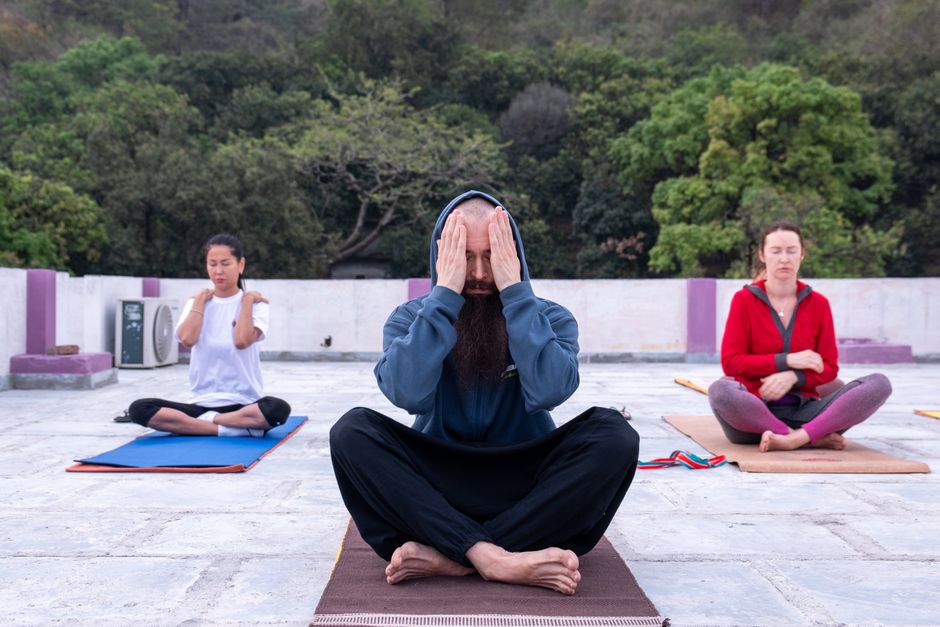
You've been practicing for a few years. Maybe longer. People at work have started asking you to "lead a quick meditation" before meetings, and your friends keep saying you should teach. Now you're wondering if there's a real program — not a weekend certificate mill, not a $4,000 Instagram bootcamp — that actually trains you to hold space for other people's suffering.
That's a harder question than it sounds. The mindfulness teacher training space is crowded. Our directory at OMP currently tracks 597 meditation teacher training programs globally, and only 212 are flagged as notable or IMTA-accredited. The rest range from genuinely useful niche trainings to the kind of "Become a Certified Meditation Coach in 30 Days" packages that have given the field a deserved bad name.
This guide cuts the noise. Below are five online mindfulness teacher trainings worth considering in 2026 — chosen for lineage, faculty depth, ethics standards, and what you actually get when you finish. We'll be specific about traditions, because Vipassana, MBSR, Zen, and secular mindfulness are not interchangeable, and a good program is honest about which one it's training you in.
What Makes a Program Actually Good (And What to Ignore)
Before the list, a quick filter. The mindfulness industry has earned its share of criticism — McMindfulness, dharma scandals at major centers, teachers crossing ethical lines, certifications sold like MLM products. A serious program will address these openly.
Here's what we looked for:
- Lineage transparency. Who taught the founders? What tradition is this rooted in? "Eclectic" usually means "we made it up."
- Faculty with real teaching hours. Not just credentials. Actual time on the cushion and in front of students.
- Ethics curriculum. Power dynamics, scope of practice, trauma awareness, referral pathways.
- Mentorship, not just lectures. You need someone watching you teach and giving feedback.
- A retreat requirement. If a program doesn't ask you to sit silently for several days, walk away.
- Realistic outcomes. No promises about six-figure mindfulness careers.
For the full breakdown of questions to ask before enrolling, our guide on how to choose a meditation teacher training goes deeper. And before you put down a deposit, read about the real cost of teacher training beyond tuition — retreats, supervision, and lost income add up fast.
1. MBSR Teacher Training — Brown University Mindfulness Center
If you want to teach the eight-week Mindfulness-Based Stress Reduction protocol — the secular curriculum Jon Kabat-Zinn developed at UMass in 1979 — Brown's pathway is the most rigorous and most recognized.
This isn't quick. The full teacher certification track involves foundational courses, MBSR Teacher Advancement Intensive (TAI), supervised teaching, and silent retreat requirements. It typically takes 3–5 years if you're working a job alongside it.
Tradition: Secular MBSR (rooted in Theravada Buddhist insight practice, but explicitly non-religious in delivery).
Format: Online and hybrid options. Live cohort-based sessions, not self-paced video.
Best for: Healthcare professionals, therapists, and anyone who wants to teach the validated 8-week protocol in clinical or corporate settings.
For more on this pathway specifically — including alternative routes and pricing — see our breakdown of the best MBSR teacher training certifications. If you're not sure whether MBSR is even the right fit, our piece on how MBSR differs from regular meditation is a good starting point.
2. Mindfulness Meditation Teacher Certification Program (Tara Brach & Jack Kornfield)
Two-year program co-led by Tara Brach and Jack Kornfield, with a faculty that reads like the table of contents of a Western Insight Meditation anthology — Trudy Goodman, Pascal Auclair, JoAnna Hardy, Konda Mason, and more.
This is the most prominent online training rooted in the Insight (Vipassana) tradition, adapted for Western secular contexts but unapologetic about its dharma lineage. You'll cover concentration, mindfulness of body and emotions, the brahmaviharas (including metta or loving-kindness practice), and how to teach people who are struggling with grief, trauma, and addiction.
Tradition: Western Insight / Vipassana lineage (Spirit Rock, IMS roots).
Format: Fully online, two years, with live monthly group calls, mentor groups, and a required in-person or online silent retreat.
Best for: Experienced practitioners (typically 5+ years of consistent practice) who want to teach in a dharma-informed but accessible way.
One honest note: this program is selective and applications are competitive. If you've been practicing for two years and never been on retreat, you're not ready — and that's not a criticism, just timing.
3. Mindfulness-Based Professional Training Institute — UC San Diego
UCSD's program offers training in several mindfulness-based interventions: MBSR, Mindful Self-Compassion (MSC, developed by Kristin Neff and Christopher Germer), and Mindfulness-Based Cognitive Therapy (MBCT).
What sets UCSD apart is the clinical orientation. Faculty are largely clinicians and researchers. The training takes trauma seriously — which matters, because mindfulness can make anxiety worse for certain people if a teacher doesn't know how to recognize the signs.
Tradition: Secular mindfulness-based interventions (MBSR, MSC, MBCT).
Format: Mix of online live and hybrid. Cohort-based.
Best for: Therapists, social workers, and healthcare providers who want to integrate evidence-based mindfulness into their existing clinical work.
Worth knowing: the United States hosts roughly 195 of the 597 programs in our directory — by far the most globally — and UCSD is one of the most credible academic homes among them.
4. Sounds True Mindfulness Meditation Teacher Certification
Sounds True's program (the same one Brach and Kornfield lead, in partnership) is sometimes listed separately because they also offer shorter certificate programs aimed at people earlier in their teaching path.
If the full two-year MMTCP feels too big a leap, Sounds True's intermediate offerings — and their broader meditation teacher pathway — give you a more graduated entry point. We've reviewed Sounds True's training in detail, including curriculum, cost, and what graduates actually do afterward.
Tradition: Cross-traditional, but heavily Insight-influenced, with contributions from Tibetan and secular mindfulness teachers.
Format: Fully online, mix of self-paced modules and live cohort calls.
Best for: Practitioners who want a structured, supported entry into teaching without the multi-year commitment of MMTCP — and who are honest that they want broader, less lineage-specific training.
5. Mindfulness Training Institute (Mark Coleman & Martin Aylward)
A two-year program led by Mark Coleman and Martin Aylward, both senior Insight teachers with backgrounds in long Asian retreats and Western dharma communities. The Mindfulness Training Institute (MTI) is smaller and less famous than MMTCP, which some applicants prefer — the cohorts are tighter and the mentorship feels less industrial.
MTI is also notable for taking ethics and the "shadow side" of mindfulness teaching seriously. The curriculum addresses power dynamics, the limits of mindfulness for severe mental health conditions, and how to refer out responsibly.
Tradition: Insight / Vipassana, with strong nature-based and somatic threads.
Format: Online, with optional in-person retreat components in the US, UK, and Europe.
Best for: Mid-career practitioners who want a relational, lineage-aware training and don't need a household-name brand on their certificate.
What About the Cheaper, Faster Programs?
You've seen them. "Become a certified mindfulness teacher in 8 weeks. $497." Some are fine for personal enrichment. Almost none prepare you to actually teach.
Here's the rough math: a credible mindfulness teacher training in 2026 will cost between $3,500 and $8,500 in tuition, plus retreat fees, plus supervision hours. It will take 1–3 years. It will require you to already have a personal practice — usually a few years of it.
If a program promises certification without a retreat requirement, without supervised teaching practica, and without any prerequisite practice experience, it's selling a credential, not training. There's nothing illegal about that. But your future students deserve more.
The honest alternative, if you're not ready for a full teacher training: deepen your own practice first. Sit a 10-day Vipassana retreat or an online Zen retreat. Read widely. Find a mentor. Teacher training is the last step, not the first.
Online vs. In-Person: What You Actually Lose
Of the 597 programs in our directory, 303 offer online formats and 522 still offer in-person components (many programs offer both). The trend is clear: online is now mainstream, and for teacher training specifically, it has real advantages.
You can study with a teacher in California from a small town in Ireland. You can keep your job. You can build relationships with a cohort across time zones.
But there are tradeoffs. Holding space for someone in real grief — when their body is in the room with yours — is different from doing it over Zoom. Most serious online trainings recognize this and require at least one in-person silent retreat. If your prospective program doesn't, ask why.
For a broader comparison of formats, our piece on online vs in-person retreats applies here too.
How to Decide
A few questions to sit with:
- What tradition do you actually practice in? If you've spent five years in Insight communities, an MBSR-only training will feel hollow. If you're a hospital social worker, MMTCP might be more dharma than you need.
- Who do you want to teach? Patients in a clinic? Corporate teams? A neighborhood sangha? Trauma survivors? The answer narrows your shortlist quickly.
- How many years have you been practicing — really? Daily app sessions for two years isn't the same as sitting weeklong silent retreats. Be honest with yourself.
- Can you afford the full cost, including retreats and lost income? See our full cost breakdown.
- Who will mentor you? Not the headline name. The actual person reading your reflections and watching you teach.
None of these programs are the "right" answer for everyone. They're each a serious option in their own corner of the field. The wrong move is choosing a program because it has good marketing — the right move is choosing one whose lineage, faculty, and ethics match what you actually want to offer the people who'll eventually sit in front of you.
If you're still early in your practice and the question feels premature, that's worth listening to. Teaching well is downstream of practicing well. Take the long way.
Related Reading
- Best Online Meditation Teacher Training Certifications (2026)
- How to Choose a Meditation Teacher Training: 7 Questions to Ask
- How to Get Certified to Teach Meditation Online
Choosing a teacher training?
Start with the free database, then choose with confidence.
Browse 300+ meditation teacher training programs free - filter by tradition, format, and accreditation. When you're ready to decide, The MTT Selection Workbook walks you through it with quizzes, rubrics, and red-flag checklists.