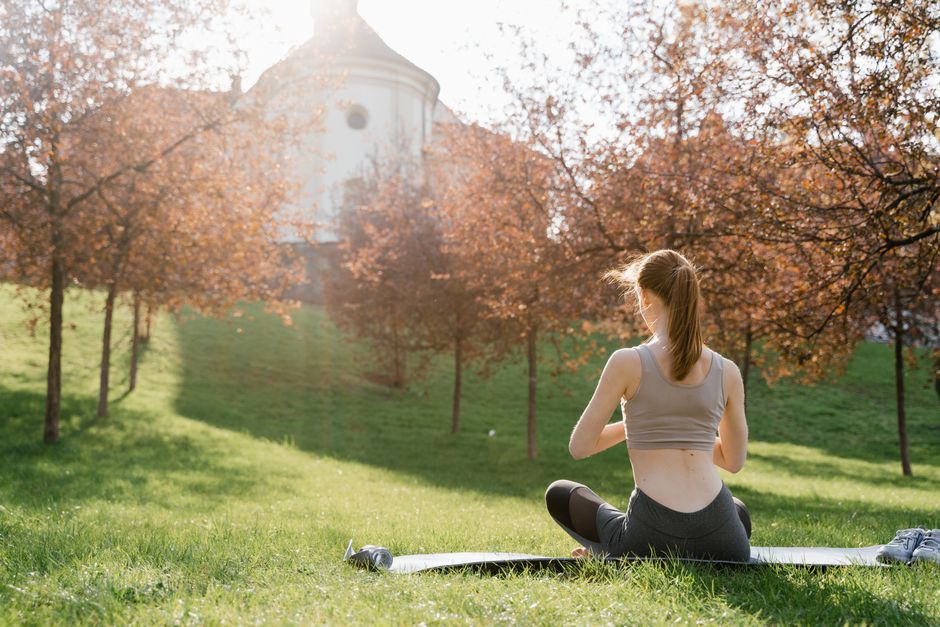
Your knees are screaming. Your back feels like someone wedged a brick between your shoulder blades. The assistant teacher just announced that starting today, you'll be sitting three "sittings of strong determination" — no moving hands, legs, or eyes for a full hour. And somewhere around minute eighteen, a thought arrives with terrifying clarity: I could just leave. I could pack my bag tonight and be home by morning.
Welcome to Day 4. If you're searching this in the middle of a 10-day Goenka course (smuggled phone time, perhaps?) or trying to mentally prepare before you arrive — you're not weak, broken, or doing it wrong. Day 4 is famously the breaking point. Here's why, and what's actually happening inside the technique.
Why Day 4 Is the Pivot Point of the Whole Course
The first three days of a Goenka-style Vipassana retreat are dedicated to Anapana — focused awareness on the breath at the small triangle below the nostrils and above the upper lip. It's narrow, simple, and (relatively) gentle. You're sharpening the mind like a blade before you use it.
On Day 4, the actual Vipassana technique is introduced. You stop watching the breath and start scanning the body, piece by piece, from the top of the head to the tips of the toes, observing whatever sensations arise — heat, tingling, pressure, pain, numbness — without reacting.
That sounds reasonable on paper. In practice, Day 4 fuses three brutal things at once:
- A new, harder technique right when you're already exhausted.
- Adhitthana ("sittings of strong determination") — three one-hour sits per day where you commit not to move.
- Accumulated physical and emotional fatigue from 72+ hours of silence, 4 AM wake-ups, and unfamiliar food.
Goenka himself talks about Day 4 and Day 6 as the two classic "storm days." Veteran students nod knowingly when these come up. If you're suffering on Day 4, you're not failing the course — you're doing the course.
What Actually Happens Physically on Day 4
Here's the part nobody warns you about with enough honesty. Sitting cross-legged for ten-plus hours a day, without back support, creates real physical pain. Not "discomfort." Pain. The Goenka tradition treats this as central to the practice, not as a problem to fix.
The instruction is to observe sensations with equanimity — neither craving pleasant ones nor pushing away unpleasant ones. The theory: every reaction you have to bodily sensation is, at root, the same mechanism that generates suffering everywhere else in your life. Train equanimity here, and you train it everywhere.
What this feels like at minute 35 of a one-hour Adhitthana sit:
- A burning band around one or both knees.
- Sharp, electric pain in the sacrum or hips.
- A throbbing ache between the shoulder blades.
- Pins and needles in feet that have lost all feeling.
- Sudden waves of nausea, heat, or cold.
You're being asked to observe all of this without flinching. The mind, predictably, rebels. This is not unique to you. If you're noticing anger or anxiety surfacing as you meditate, that's part of the territory the technique deliberately opens up.
The Emotional Storm Nobody Warned You About
Physical pain is only half of Day 4. The other half is the wave of emotional material that surfaces once the mind has been quiet for three days and is now being directed, methodically, through the body.
The Vipassana framework calls these sankharas — stored mental-emotional patterns that have been "imprinted" on the body. When you scan with equanimity, old patterns supposedly rise to the surface to be observed and released. Whether or not you buy the metaphysics, the experience is real: people cry, rage, panic, laugh uncontrollably, or sink into deep grief during Day 4 sits.
Common Day 4 emotional experiences:
- Grief for people, decisions, or selves you haven't thought about in years.
- Anger at the teacher, the technique, the schedule, your bunkmate's breathing.
- Existential doubt — "what am I even doing with my life?"
- The escape fantasy — meticulously planning your departure.
- Boredom so intense it feels like a physical substance.
This is also where the line between contemplative practice and trauma response can get blurry. Vipassana is a powerful technique with very little built-in psychological support, and that has produced real casualties over the years. If you have a trauma history, this is worth taking seriously — see how trauma-informed meditation approaches handle the same material differently. It's also why many practitioners explore body scan practice for physical anxiety symptoms in gentler contexts first.
Why the Technique Is Designed This Way (and Whether That's Okay)
S.N. Goenka inherited this lineage from Sayagyi U Ba Khin in Burma, and the structure — 10 days, total silence, Adhitthana sits, body scanning — is held very tightly. Centers don't modify it. The argument from the tradition is that the intensity is the point: you can't release deep patterns by dabbling.
There's truth in that. There's also a real conversation happening in contemplative communities about whether the format is appropriate for everyone, and whether the "just observe with equanimity" instruction is enough for someone whose body is flooding with old trauma at hour eight of Day 4.
It helps to remember: Vipassana in this format is one specific lineage, not "meditation" in general. Insight meditation as taught at IMS or Spirit Rock uses similar roots but offers different scaffolding. Burmese Mahasi-style noting is different again. And none of these are MBSR, Zen, or TM — they're not even trying to do the same thing. If you want a clearer map of how these traditions actually diverge, Vipassana vs MBSR vs Zen and Vipassana vs mindfulness are good starting points.
OMP's directory tracks 102 Vipassana and Insight-tradition teacher training programs out of 597 total globally — it's a significant lineage, but it's one branch of a much bigger tree.
How to Actually Get Through Day 4 (Without Lying to Yourself)
If you're in it right now, or about to be, here's what tends to help. None of this is a hack. It's just honest.
1. Lower the stakes of the Adhitthana sits
The instruction is "don't move hands, legs, or eyes." That's the aspiration. If you have to shift to avoid actual injury, you shift. The teachers will tell you privately that nobody is grading you. The work is in the intention, not in becoming a statue.
2. Use the noon interview
The assistant teacher exists for exactly this moment. Sign up. Tell them what's happening — the pain, the rage, the panic, the escape fantasies. They've heard all of it. You may get a small technical adjustment that changes everything.
3. Watch the storyline, not just the sensation
Day 4's misery isn't only physical — it's the story you're spinning around the physical. "This will never end. They've broken me. I'm wasting my life." Noticing the storyline as a separate object from the sensation is, in a sense, the whole technique. If your mind feels stuck in loops, the dynamics described in feeling trapped in thoughts during meditation apply doubly here.
4. Eat enough at lunch
You don't get dinner — just fruit and tea for new students at 5 PM. Day 4 hits harder on an under-fueled body. Eat the rice. Eat the dal. This is not the retreat to fast through.
5. Know that Day 5 is usually easier
Almost universally. Something shifts after Day 4 — partly because you've adapted, partly because the technique starts to do what it's supposed to do. Most people who quit, quit on Day 3 or Day 4. Those who stay through Day 5 generally finish the course.
What Day 4 Is Actually Teaching (Beyond the Misery)
The deepest lesson of Day 4 isn't about pain tolerance or stoicism. It's about the gap between sensation and reaction — the millisecond in which the mind decides "this is unbearable" or "I need this to stop." That gap is where the entire practice lives.
You start to notice that the knee pain at minute 40 is, technically, just a pattern of heat and pressure. The suffering is what your mind builds on top of it. And if that's true for knee pain in a meditation hall, what does it mean for the rest of your life — the difficult conversations, the financial anxiety, the relationship grief?
This is the insight the technique is engineered to deliver, and Day 4 is the day it starts to land. Not as a concept. As a felt, embodied recognition.
Whether you ultimately stay with this lineage or explore others — Zen's koan-and-zazen approach, metta practice for the heart, or something better suited to your temperament — Day 4 of Vipassana tends to leave a permanent mark. People talk about it for years afterward.
A Quiet Note: Should You Even Be Doing This?
Vipassana in the Goenka format is not for everyone, and the tradition's "everyone benefits" framing doesn't always match reality. If you're currently in active trauma recovery, severe depression, an eating disorder relapse, or psychosis, a 10-day silent retreat with body scanning and no psychological support is probably not the right entry point.
That's not a criticism of the technique. It's just honest about what it is: a steep, narrow, traditional path. There are gentler doorways — an 8-week MBSR program, a shorter online Vipassana retreat, or working with a teacher one-on-one. Day 4 will still be there if and when you want it.
Frequently Asked Questions
Is it okay to leave a Vipassana retreat on Day 4?
Yes, you can leave at any time — nobody will stop you. That said, most people who quit later regret leaving on Day 4 specifically, because Day 5 tends to bring significant relief. Talk to the assistant teacher first. Often a small adjustment is enough to get you through.
Why does Vipassana introduce body scanning on Day 4 instead of Day 1?
The first three days of Anapana breath focus are designed to sharpen and stabilize the mind enough that body scanning can actually work. Trying to do Vipassana's whole-body sweep with an untrained attention would just be frustrating and ineffective. The sequence is deliberate, and the Goenka tradition holds it tightly.
What are Adhitthana sits and why do they start on Day 4?
Adhitthana means "sitting of strong determination" — a one-hour sit during which you resolve not to move your hands, legs, or open your eyes. Three of these are added to the daily schedule on Day 4. The intention is to deepen equanimity in the face of strong sensation, though in practice the rule is held as an aspiration rather than a hard requirement.
Is Day 4 the hardest day, or does it get worse?
Days 4 and 6 are most commonly cited as the hardest. Day 4 is the shock of the new technique combined with accumulated fatigue. Day 6 can bring a second wave of resistance once the novelty has worn off and you're confronting how much course is left. Day 5, 7, 8, and 9 tend to be markedly easier for most students.
Related reading
- Online Vipassana Retreats: The Best Programs for 2026
- Meditation for Anxiety: Which Traditions Help (and Which Can Make It Worse)
- Meditation Retreats: Research-Backed Benefits & What to Expect
If you're reading this from inside a course: close the tab, go back to your sensations, and trust that Day 5 is coming. If you're reading this before you arrive: you can't fully prepare, but you can show up willing to meet what's there. That's enough.
Vipassana is bigger than one organization
The Vipassana Handbook
S.N. Goenka's centers are one branch of a much larger tradition. The Handbook breaks down all four major lineages — Goenka, Mahasi noting, Pa-Auk, and TWIM — what a 10-day retreat actually looks like day by day, and the teacher-certification paths. 26 pages, independent.