Key Takeaways
- Meditation for insomnia sleep problems is clinically supported: multiple peer-reviewed trials show mindfulness-based practices reduce the time it takes to fall asleep and improve overall sleep quality.
- Not all meditation styles work equally well at night — body scan, guided imagery, and slow-breathing techniques consistently outperform alert-state practices like mantra meditation for bedtime use.
- A 2015 JAMA Internal Medicine randomized controlled trial found mindfulness meditation significantly improved sleep quality in older adults with moderate sleep disturbances compared to a sleep hygiene education program.
- The best approach combines a consistent pre-sleep ritual (15–30 minutes) with the right technique for your specific sleep problem — racing thoughts, physical tension, or early waking each respond to different methods.
- Apps like Calm, Headspace, and Insight Timer offer solid sleep-specific content, but free NHS-approved and YouTube-based options are genuinely effective alternatives.
- Consistency matters far more than duration — two weeks of nightly practice produces measurable changes in sleep architecture, according to research from Harvard Medical School.
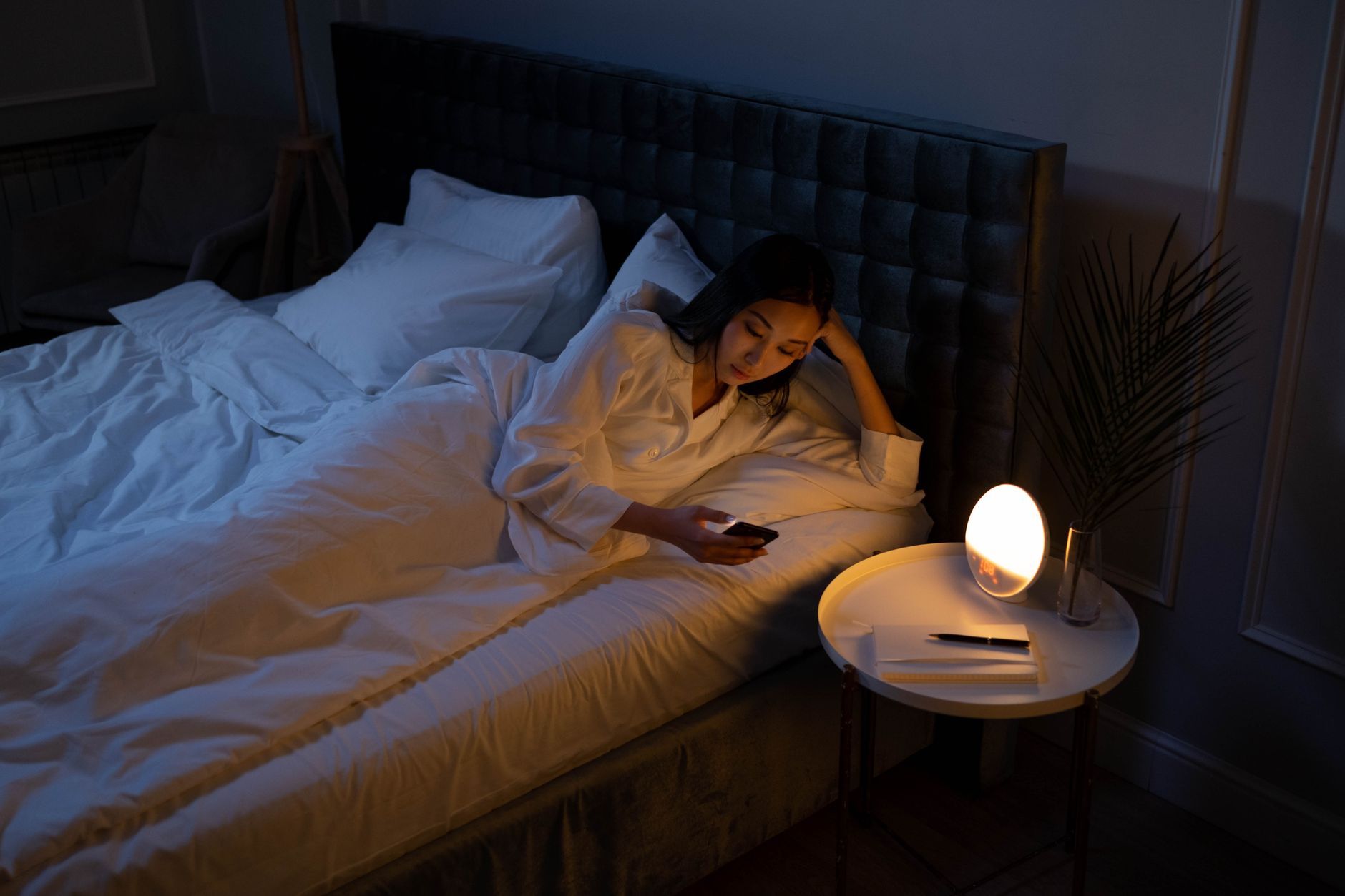
You've been lying there for 45 minutes. The room is dark. Your body is exhausted. But your mind has decided this is a good time to replay that awkward conversation from 2019, draft tomorrow's to-do list, and catastrophize about everything in between. If that sounds familiar, you're not alone — the American Sleep Association estimates that 50 to 70 million US adults experience chronic sleep problems, and acute insomnia affects roughly 30% of the general population at any given time.
The standard advice — avoid screens, cut caffeine, keep a sleep schedule — is all correct and almost universally ignored at midnight when you're desperate. What you actually need is a reliable, in-the-moment tool. Meditation for insomnia sleep is that tool. But there's a meaningful gap between "meditation is good for sleep" (broadly true) and knowing exactly which technique to use, when to use it, and what a realistic first two weeks looks like. That's what this guide covers.
Why Meditation Works for Insomnia: The Research Context
The connection between meditation and better sleep isn't just wellness marketing. It's grounded in a growing body of neurological and clinical research that explains the mechanism clearly.
Sleep onset insomnia — the inability to fall asleep — is largely driven by hyperarousal of the sympathetic nervous system. Your brain interprets the quiet of bedtime as an opportunity to process unresolved cognitive and emotional material. Cortisol levels stay elevated. Heart rate variability decreases. The prefrontal cortex, which regulates rumination, keeps firing when it should be handing control over to the parasympathetic system.
Meditation directly addresses this cascade. A landmark 2015 study published in JAMA Internal Medicine, led by researchers at the University of Southern California and the VA Greater Los Angeles Healthcare System, randomized 49 middle-aged and older adults with moderate sleep disturbances into either a mindfulness awareness program or a sleep hygiene education program. The mindfulness group showed significantly greater improvements in insomnia symptoms, depression, fatigue, and daytime impairment. Crucially, the effects were durable at six-week follow-up.
Harvard Medical School's sleep research division has documented that mindfulness practice increases activity in the anterior cingulate cortex and reduces default mode network rumination — the brain's tendency to loop through worries and unresolved narratives at rest. Reduced default mode network activity is essentially what the transition to sleep requires.
A 2019 meta-analysis published in the journal Mindfulness, which pooled data from 18 randomized controlled trials, found that mindfulness-based interventions produced statistically significant improvements in sleep quality as measured by the Pittsburgh Sleep Quality Index (PSQI), with the strongest effects seen in participants who practiced consistently for at least four weeks. Johns Hopkins researchers have similarly identified mindfulness meditation as comparable in effect size to low-dose sleep medication for mild-to-moderate insomnia — without the dependency risk.
Understanding the scientific benefits of meditation more broadly can also motivate consistent practice, since sleep improvements are part of a wider pattern of nervous system regulation that compounds over time.
The Right Technique for Your Specific Sleep Problem
One of the most common mistakes people make is treating "meditation" as a monolith. A focused-attention mantra practice that's excellent for daytime concentration can actually be counterproductive at night because it activates cortical engagement. The technique needs to match the problem.
Racing Thoughts and Mental Rumination
If your primary issue is an overactive mind — replaying events, worrying about tomorrow, unable to "switch off" — the most effective approach is open monitoring meditation combined with progressive muscle relaxation. Open monitoring means gently noticing thoughts without engaging with them, observing them as passing events rather than demands for attention. Pair this with a slow, deliberate body scan from feet to crown, and you give the mind an object of neutral attention that gradually displaces the thought-loop.
The 4-7-8 breathing method, developed within pranayama traditions and popularized in clinical contexts by Dr. Andrew Weil, is particularly useful here: inhale for 4 counts, hold for 7, exhale for 8. The extended exhale activates the vagus nerve and stimulates parasympathetic response within 2 to 4 breath cycles. Research from the NIH's National Center for Complementary and Integrative Health supports slow-pace breathing (under 6 breaths per minute) as a reliable method for reducing pre-sleep arousal.
Physical Tension and Body-Based Anxiety
If you notice tight shoulders, jaw clenching, or a general sense of physical restlessness when you lie down, a progressive muscle relaxation (PMR) body scan is more effective than breath-focused techniques alone. Systematically tense each muscle group for 5 seconds, then release. Work from feet upward. The contrast between tension and release trains the nervous system to recognize and deepen the relaxation response. Edmund Jacobson developed this technique in the 1920s; it has since accumulated one of the largest evidence bases of any non-pharmacological sleep intervention.
Early Morning Waking (3–5am)
Waking in the early hours and being unable to return to sleep is a different problem, often associated with elevated cortisol in the second half of the sleep cycle or underlying anxiety. Here, yoga nidra — sometimes called "non-sleep deep rest" — is consistently recommended by sleep researchers. It involves lying in a state of conscious relaxation while following guided rotational body awareness. A single 30-minute yoga nidra session has been shown in Indian Journal of Physiology and Pharmacology research to produce brainwave patterns similar to stage 2 NREM sleep, offering genuine rest even if full sleep doesn't return quickly.
Stress-Driven Insomnia (Life Events, Work Pressure)
When insomnia is clearly tied to an identifiable external stressor, a structured Mindfulness-Based Stress Reduction (MBSR) program is the gold standard. MBSR, developed by Jon Kabat-Zinn at the University of Massachusetts Medical School, combines body scan, sitting meditation, and mindful movement over an 8-week format. Multiple RCTs have confirmed its effectiveness for stress-related sleep disruption specifically. If you're interested in exploring this more deeply, MBSR training programs are available online and can provide both personal practice tools and, for those who want to share these techniques professionally, a recognized certification pathway.
A Practical Nightly Meditation Routine (Step-by-Step)
The following routine is designed for someone with moderate insomnia who wants a structured, evidence-informed nightly practice. It takes 20 to 25 minutes in total and can be shortened once the habit is established.
- 60 minutes before bed: Environmental reset (5 minutes). Dim lights to below 10 lux if possible. Lower room temperature to 65–68°F (18–20°C), the range research confirms is optimal for sleep onset. Silence notifications. This isn't meditation yet — it's priming your environment so meditation can work.
- 45 minutes before bed: Journaling release (5 minutes). Write down every unfinished task, worry, or thought that might interrupt sleep. Research from Baylor University published in the Journal of Experimental Psychology found that writing a specific to-do list before sleep (not a reflection, but a forward-looking task list) reduced sleep onset time by an average of 9 minutes. This offloads the cognitive holding pattern.
- 30 minutes before bed: Body scan meditation (10 minutes). Lie on your back. Beginning at the soles of your feet, move your attention slowly upward through each body part — calves, knees, thighs, hips, abdomen, chest, shoulders, arms, hands, neck, face. At each region, simply notice sensation without trying to change it. If thoughts arise, acknowledge them without engagement and return to the body location. Many people fall asleep before reaching the crown.
- 20 minutes before bed: Slow-breath anchor (5–8 minutes). If you're still awake, shift to breath-only attention. Use a 5-count inhale, natural pause, and 7-count exhale. Don't force it — the rhythm will naturally slow. Allow the exhale to become slightly audible. This signals safety to the nervous system.
- In bed: Guided imagery (as needed). If sleep still hasn't come, use a short guided sleep meditation from an app or a self-generated scene. A consistent imaginary environment — the same beach, forest, or room each night — becomes a conditioned sleep cue over time. Your brain begins to associate that mental location with unconsciousness.
Apps, Programs, and Tools: An Honest Comparison
The market for sleep meditation tools is crowded. Here's an honest breakdown of the most widely used options, including approximate 2026 pricing and real limitations.
| Tool / App | Best For | Sleep-Specific Content | Approx. Annual Cost (2026) | Notable Limitation |
|---|---|---|---|---|
| Calm | Guided sleep stories, music, body scans | Extensive — Sleep Stories, Daily Calm, sleep music | ~$70/year | Can become passive listening rather than active practice |
| Headspace | Structured beginners; science-forward | Sleepcasts, wind-down exercises, sleep courses | ~$70/year | Less flexible for experienced practitioners |
| Insight Timer | Variety seekers, budget-conscious users | Thousands of free sleep tracks, yoga nidra | Free (Plus ~$60/year) | Quality varies significantly between teachers |
| Waking Up (Sam Harris) | Intellectually rigorous practitioners | Some sleep content; stronger for daytime practice | ~$100/year | Not primarily sleep-focused |
| YouTube (free) | Those wanting zero cost | Extensive (search "yoga nidra sleep" or "body scan sleep") | Free | Ads, inconsistent quality, requires active searching |
| MBSR Online Program | Stress-driven insomnia; structured learners | Embedded in 8-week curriculum | $300–$600 for full course | Time commitment; not designed as a nighttime-only tool |
For a broader evaluation of digital meditation tools, our guide to the meditation apps available in 2026 covers both sleep-specific and general-purpose platforms in more detail.
Common Mistakes That Undermine Sleep Meditation
Even people who are committed to the practice often stall because of a handful of very predictable errors.
- Trying too hard to fall asleep. Paradoxical intention is well-documented in sleep research: the harder you try to sleep, the more aroused your system becomes. The goal of meditation is not to force sleep but to create conditions in which sleep can occur naturally. Reframe success as "I relaxed deeply" rather than "I fell asleep in X minutes."
- Using alert-state meditation at night. Focused-attention practices, loving-kindness meditation directed outward, or any technique requiring mental effort can increase cortical activation. Save these for mornings. At night, the target is diffuse, passive attention.
- Inconsistent timing. Your circadian rhythm is exquisitely sensitive to behavioral cues. Meditating at 10pm one night and 1am the next sends conflicting signals. Aim for the same 20-minute window nightly, even on weekends, for at least 14 days before evaluating results.
- Giving up after one bad night. Meditation changes sleep architecture through neuroplastic adaptation — this takes time. A single practice session provides some immediate benefit, but the compounding effect that produces reliable sleep improvement requires 10 to 21 consecutive days of practice, according to Harvard sleep research timelines.
- Meditating on a device in bed. The blue light emitted by phones and tablets suppresses melatonin by up to 85% according to research published in the Proceedings of the National Academy of Sciences. If you use an app, download content in advance, set your phone to airplane mode and maximum warm-light display, or use a dedicated sleep sound device instead.
- Skipping the daytime practice component. Nighttime meditation is more effective when paired with even 10 minutes of daytime mindfulness. Daytime practice lowers the baseline cortisol and sympathetic arousal you carry into the evening, making the nighttime session less remedial and more consolidating.
When to Seek Additional Support
Meditation is powerful, but it has appropriate limits. If you have been experiencing insomnia for more than three months, if sleep deprivation is impairing your ability to function safely at work or while driving, or if insomnia is accompanied by symptoms of clinical anxiety, depression, or sleep apnea, please speak with a qualified healthcare provider.
Cognitive Behavioral Therapy for Insomnia (CBT-I) is currently considered the first-line clinical treatment for chronic insomnia by the American College of Physicians, and it can be combined with meditation practice effectively. Many CBT-I programs now incorporate mindfulness components, recognizing that the two approaches address complementary aspects of the problem.
For those who find that guided group meditation helps them stay accountable, exploring live online meditation classes that include sleep-specific sessions can provide both structure and community support, which research on behavioral change confirms significantly improves adherence.
Frequently Asked Questions
For the anxious mind
The Anxious Mind Bundle
Three short, practical guides for anxious people: why meditation can backfire and what works instead, a 30-day calm tracker to find your patterns, and a 21-day grounding journal for the days the mind won't switch off. Normally $53 — together for $29.
Get the bundle — $29 →