About
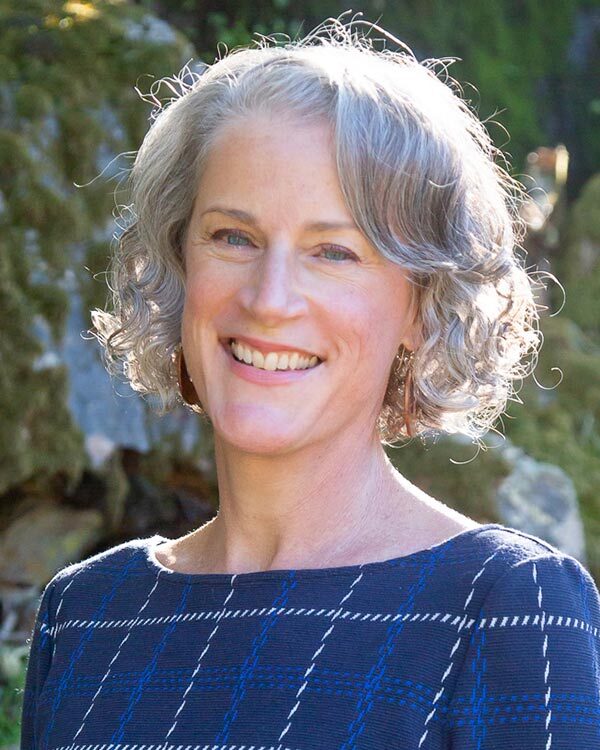
Antonia Fokken is a licensed marriage and family therapist and certified yoga therapist based in Oakland, California. She holds an MA in art therapy and marriage and family therapy from the College of Notre Dame and completed a BA in Psychology with an emphasis in Eastern Perspectives on Holistic Health at SFSU in 1994. Her training includes EMDR, Sensorimotor Psychotherapy, Integrative Restoration (I-Rest), MBSR, and Mindful Self-Compassion. She has taught yoga in studios, schools, hospitals, juvenile halls, and chemical dependency recovery programs across the San Francisco Bay Area. Fokken was faculty at the Niroga Institute and has taught graduate coursework at Sofia University and CIIS. She maintains a private psychotherapy practice.
Teaching focus
Antonia Fokken's teaching focus sits inside the secular mindfulness-based stress reduction lineage, with secular mindfulness-based stress reduction as the working ground. The MBSR thread carries a clinical lineage, the body scan, attention to stress physiology, and an evidence-based framing that lets practice land for people who showed up because of pain, anxiety, or burnout. Underneath the clinical surface, the practice opens into territory that goes much further than symptom management. Trauma-informed teaching shows up as pacing, as explicit consent for difficult material, and as a willingness to abandon the schedule when a practitioner needs that more than the next instruction. Working with stress isn't treated as the entry-level version of the dharma. It's where most practitioners actually start, and the teaching takes that starting point seriously. Across the body of work, the consistent thread in Antonia Fokken's teaching is the refusal to let practice become abstract. The instruction asks for direct contact with what's actually arising, and the framing supports practitioners in giving it that. Recurring questions in the teaching include how to keep practice honest across years, how to hold difficulty without bypassing it, and how the dharma actually shows up in ordinary life rather than only on the cushion.
Background
Antonia Fokken is a licensed marriage and family therapist and certified yoga therapist based in Oakland, California. She holds an MA in art therapy and marriage and family therapy from the College of Notre Dame and completed a BA in Psychology with an emphasis in Eastern Perspectives on Holistic Health at SFSU in 1994. Her training includes EMDR, Sensorimotor Psychotherapy, Integrative Restoration (I-Rest), MBSR, and Mindful Self-Compassion. She has taught yoga in studios, schools, hospitals, juvenile halls, and chemical dependency recovery programs across the San Francisco Bay Area. Fokken was faculty at the Niroga Institute and has taught graduate coursework at Sofia University and CIIS. She maintains a private psychotherapy practice. She became a licensed psychotherapist in 2001, a certified yoga teacher in 2005, and a certified yoga therapist in 2008. Antonia has taught yoga in studios across the SF Bay Area, as well as in juvenile halls, schools, group homes, hospitals, and chemical dependency recovery programs. She was also proud to be on the faculty of the Niroga Institute (www.niroga.org) Yoga Teacher and Therapy Training Programs. She has been a psychotherapist for the past 25 years and is currently in private practice in Oakland Ca. Her other formal studies include: training in bioenergetics (founded by Alexander Lowen), Restorative Teacher Training with Judith Lasater, Integrative Restoration (I-Rest) training with Richard Miller PhD, Sensorimotor Psychotherapy (body and mindfulness oriented therapy) training in the treatment of trauma, EMDR, Acceptance and Commitment Therapy (ACT), Dialectical Behavioral Therapy (DBT,) Mindfulness Based-Stress Reduction (MBSR), Non-Violent Communication (NVC), Cognitive Behavioral Therapy (CBT) and Mindful Self-Compassion Practices. Academically, she has been on the faculty of Sofia University (formerly the Institute for Transpersonal Psychology), and the California Institute of Integral Studies (CIIS), where she taught graduate coursework to students becoming therapists. Antonia Fokken's teaching is anchored at Spirit Rock. The teaching draws from the secular mindfulness-based stress reduction lineage, with secular mindfulness-based stress reduction as the working ground. Areas of particular focus include trauma, stress, anxiety. As an MBSR-rooted teacher, Antonia Fokken works with mindfulness as a stress-response tool that also turns out, over time, to be quite a bit more. The instruction stays clinical at the surface and contemplative underneath. Practitioners drawn to Antonia Fokken's teaching tend to be people who've already noticed that practice is a long arc, not a quick fix, and who want a teacher who treats it that way. Practitioners drawn to Antonia Fokken's teaching tend to be people who've already noticed that practice is a long arc, not a quick fix, and who want a teacher who treats it that way.
Lineage
Antonia Fokken teaches within the secular mindfulness-based stress reduction lineage. Antonia is a licensed marriage and family therapist, certified EMDR therapist, yoga teacher, and yoga therapist with a background in somatic therapy and art therapy. She was introduced to yoga and meditation in college in 1994 while completing a BA in Psychology with an emphasis in Eastern Perspectives on Holistic Health at SFSU, and she has continued to dive into the teachings since then. In 1998, she graduated with an MA in art therapy and marriage and family therapy from the College of Notre Dame. Current affiliation runs through Spirit Rock. Antonia Fokken teaches as a lay practitioner rather than from a monastic role.
What to expect
In Antonia Fokken's classes and groups, expect guided sitting, dharma teaching held to a manageable length, and time for practitioners to ask the questions that are actually live for them. Instruction stays accessible without religious vocabulary, and the framing welcomes practitioners who've come to meditation through stress, pain, or burnout rather than through tradition. Pacing is trauma-informed, which means slow when slow is needed and explicit invitations to titrate intensity rather than push through. The atmosphere is grounded rather than performative, and practitioners tend to leave with practical ground to keep working from on their own. The atmosphere is grounded rather than performative, and practitioners tend to leave with practical ground to keep working from on their own.