About
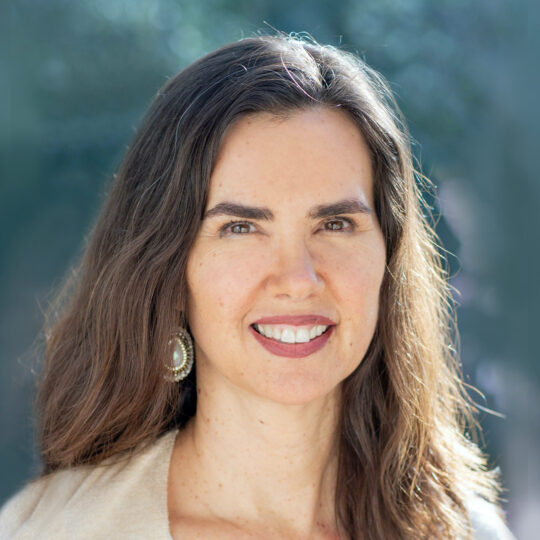
Elissa Epel is a professor at the University of California, San Francisco, and researcher in behavioral medicine. She studies the relationship between chronic stress and biological aging, particularly telomere and telomerase activity, as well as food addiction and self-regulation. Epel is a member of the National Academy of Medicine and serves as President Elect of the Academy of Behavioral Medicine Research. She is on the steering council for the Mind & Life Institute. She co-authored The Telomere Effect with Nobel laureate Elizabeth Blackburn. Epel co-leads retreats that combine mind-body science with meditation practice, including Longevity Week at Blue Spirit in Costa Rica.
Teaching focus
Elissa Epel's teaching focus sits inside the secular mindfulness movement, with secular mindfulness practice as the working ground. The framing stays accessible to practitioners without religious commitment. Mindfulness is taught as what it actually is, a way of paying attention, with the deeper contemplative material emerging as it becomes useful rather than being asserted upfront. Working with stress isn't treated as the entry-level version of the dharma. It's where most practitioners actually start, and the teaching takes that starting point seriously. The teaching is shaped by the silent-retreat container, with the long arcs and the sustained quiet that container makes possible. Across the body of work, the consistent thread in Elissa Epel's teaching is the refusal to let practice become abstract. The instruction asks for direct contact with what's actually arising, and the framing supports practitioners in giving it that. Recurring questions in the teaching include how to keep practice honest across years, how to hold difficulty without bypassing it, and how the dharma actually shows up in ordinary life rather than only on the cushion. Recurring questions in the teaching include how to keep practice honest across years, how to hold difficulty without bypassing it, and how the dharma actually shows up in ordinary life rather than only on the cushion.
Background
Elissa Epel is a professor at the University of California, San Francisco, and researcher in behavioral medicine. She studies the relationship between chronic stress and biological aging, particularly telomere and telomerase activity, as well as food addiction and self-regulation. Epel is a member of the National Academy of Medicine and serves as President Elect of the Academy of Behavioral Medicine Research. She is on the steering council for the Mind & Life Institute. She co-authored The Telomere Effect with Nobel laureate Elizabeth Blackburn. Epel co-leads retreats that combine mind-body science with meditation practice, including Longevity Week at Blue Spirit in Costa Rica. Epel co-leads retreats integrating mind-body science with meditation, including the Longevity Week at Blue Spirit, Costa Rica. Epel is the co-author of The Telomere Effect with nobel laureate Liz Blackburn, a New York Times best seller under Science. Elissa Epel's teaching is anchored at Spirit Rock. The teaching draws from the secular mindfulness movement, with secular mindfulness practice as the working ground. Areas of particular focus include stress, retreat. The framing in Elissa Epel's work stays accessible to practitioners who don't carry a religious vocabulary. The instruction is grounded in what mindfulness actually does, in the body and in the day, rather than in tradition for its own sake. Practitioners drawn to Elissa Epel's teaching tend to be people who've already noticed that practice is a long arc, not a quick fix, and who want a teacher who treats it that way. Practitioners drawn to Elissa Epel's teaching tend to be people who've already noticed that practice is a long arc, not a quick fix, and who want a teacher who treats it that way. Practitioners drawn to Elissa Epel's teaching tend to be people who've already noticed that practice is a long arc, not a quick fix, and who want a teacher who treats it that way. Practitioners drawn to Elissa Epel's teaching tend to be people who've already noticed that practice is a long arc, not a quick fix, and who want a teacher who treats it that way. Practitioners drawn to Elissa Epel's teaching tend to be people who've already noticed that practice is a long arc, not a quick fix, and who want a teacher who treats it that way. Practitioners drawn to Elissa Epel's teaching tend to be people who've already noticed that practice is a long arc, not a quick fix, and who want a teacher who treats it that way.
Lineage
Elissa Epel teaches within the secular mindfulness movement. Current affiliation runs through Spirit Rock. Elissa Epel teaches as a lay practitioner rather than from a monastic role. The lineage shapes the form of the teaching, not just its content. Practitioners encountering it find a transmission line still actively developing. The lineage shapes the form of the teaching, not just its content. Practitioners encountering it find a transmission line still actively developing. The lineage shapes the form of the teaching, not just its content. Practitioners encountering it find a transmission line still actively developing. The lineage shapes the form of the teaching, not just its content. Practitioners encountering it find a transmission line still actively developing.
What to expect
On retreat with Elissa Epel you'll get long sits, walking practice, and dharma talks that build on each other across days. The container is silent or near-silent, which gives the teaching room to land in a way that single classes can't quite reach. Instruction stays accessible without religious vocabulary, and the framing welcomes practitioners who've come to meditation through stress, pain, or burnout rather than through tradition. The atmosphere is grounded rather than performative, and practitioners tend to leave with practical ground to keep working from on their own. The atmosphere is grounded rather than performative, and practitioners tend to leave with practical ground to keep working from on their own.