About
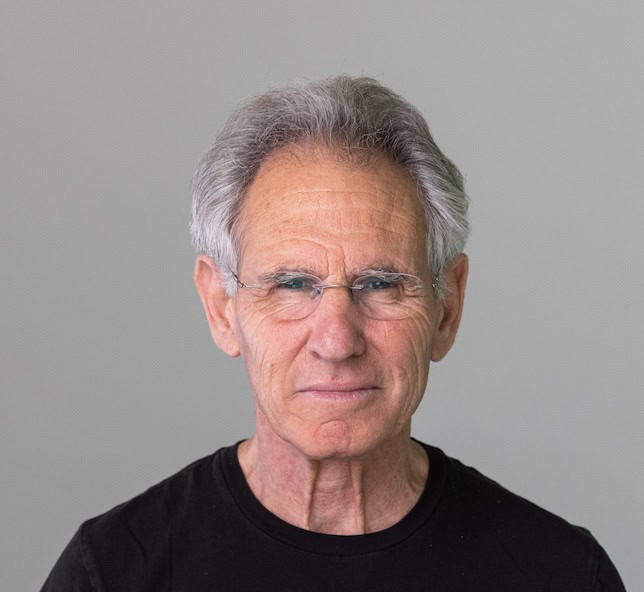
Jon Kabat-Zinn is a molecular biologist (PhD, MIT) and Professor of Medicine emeritus at the University of Massachusetts Medical School. In 1979, he founded the Mindfulness-Based Stress Reduction (MBSR) clinic, and in 1995 established the Center for Mindfulness in Medicine, Health Care, and Society. He has authored 15 books translated into over 45 languages, including Full Catastrophe Living, Wherever You Go, There You Are, and Mindfulness for Beginners. His work integrating mindfulness into institutional settings—medicine, psychology, education, business, criminal justice, and professional sports—has contributed to the adoption of MBSR by over 700 hospitals and medical centers worldwide. He leads workshops, retreats, and online guided meditations globally.
Teaching focus
Kabat-Zinn appears at Upaya as part of the wider faculty Roshi Joan Halifax has gathered to teach alongside the Soto Zen core. Upaya's programs regularly bring in scholars, clinicians, scientists, poets, and knowledge holders from beyond the Zen sangha to teach in dialogue with the practice. Kabat-Zinn's sessions live inside that container. The work tends to ask how a particular field of expertise meets contemplative practice and what each can learn from the other. Sessions are usually held alongside zazen and the Soto Zen forms that structure the days at Upaya, so students can expect a rhythm of formal sittings, talks or seminars from Kabat-Zinn, group conversation, and silence. The framing is open enough for non-Buddhist participants to take part fully. The depth comes from Kabat-Zinn's own field rather than from technical Zen instruction. For students with a steady practice, the value is in seeing how practice meets a specific discipline, and how that discipline reads when held inside the container Upaya provides. For people newer to Zen, Kabat-Zinn's sessions are a low-friction way into that container.
Background
Jon Kabat-Zinn, PhD appears in Upaya Zen Center's teacher and faculty roster as part of the wider contemplative community Roshi Joan Halifax has gathered in Santa Fe, New Mexico, over the past four decades. The biographical material on file is drawn directly from Upaya's own teacher page and reflects what Kabat-Zinn has chosen to share there. Jon Kabat-Zinn, Ph.D. did his doctoral work in molecular biology at MIT in the laboratory of the Nobel Laureate, Salvador Luria. He is Professor of Medicine emeritus at the University of Massachusetts Medical School, where he founded the Center for Mindfulness in Medicine, Health Care, and Society (in 1995), and (in 1979) its world-renown Mindfulness-Based Stress Reduction (MBSR) Clinic. He is the author of 15 books, the most recent of which are Mindfulness Meditation for Pain Relief (2023), and a Thirtieth Anniversary Edition of Wherever You Go, There You Are 2024). They include the bestsellers Full Catastrophe Living, Wherever You Go, There You Are, and Mindfulness for Beginners. In 2018/2019, he published a series of four volumes updating and expanding the 2005 edition of Coming to Our Senses: Meditation is Not What You Think; Falling Awake; The Healing Power of Mindfulness; and Mindfulness for All. His books are published in over 45 languages. His work has contributed to a growing movement of mindfulness into mainstream institutions such as medicine, psychology, health care, neuroscience, schools, higher education, business, social justice, criminal justice, prisons, the law, technology, government, and professional sports. Over 700 hospitals and medical centers around the world now offer MBSR. Jon lectures and leads mindfulness workshops and retreats around the world and online. In the Spring of 2020, at the start of the Covid-19 pandemic, he offered 66 consecutive weekdays of 90 minute online guided meditations, talks, and dialogue, the so-called mitigation retreat: see https://www.youtube.com/watch?v=RqkYJfT8gsw. His website is https://www.jonkabat-zinn.com. That body of work places Kabat-Zinn inside a center known for blending Soto Zen practice with contemplative care for the dying, climate work, neuroscience dialogues, and a long-running program for clinicians and chaplains called GRACE. Upaya's roster mixes resident priests with visiting scholars, doctors, scientists, poets, and indigenous knowledge holders, and the programs reflect that blend. Kabat-Zinn's appearances at Upaya situate this work inside that wider conversation between zazen and the world it sits inside. For practitioners who arrive at Upaya through a sesshin or a Being with Dying training, the common thread is a posture of upright, alert presence under whatever conditions show up. The forms are recognizably Soto Zen: zazen, kinhin, oryoki, the Bodhisattva precepts, dharma talks, and dokusan with senior teachers. The framing is wider than any single discipline, which is part of what has made Upaya a meeting ground for working clinicians, scientists, artists, and long-time Buddhist practitioners. Kabat-Zinn contributes to that container in the role Upaya's website assigns. People interested in the specific arc of Kabat-Zinn's career outside Upaya can follow the linked website and external publications listed on the Upaya page itself, which is where any deeper biographical detail belongs.
Lineage
Kabat-Zinn's teaching home for the work documented here is Upaya Zen Center in Santa Fe, founded by Roshi Joan Halifax in the 1980s and rooted in the Soto Zen lineage. Upaya's broader faculty includes resident priests, visiting senior teachers, scientists, clinicians, poets, and indigenous knowledge holders. Kabat-Zinn contributes as part of Upaya's wider faculty rather than as a Zen priest. Information about specific dharma transmission lines, ordination, or external lineage roots belongs on Kabat-Zinn's own site rather than fabricated here.
What to expect
In a program with Kabat-Zinn at Upaya, expect zazen and Soto Zen forms paired with teaching in Kabat-Zinn's own area of focus. Days follow Upaya's rhythm of sittings, walking meditation, meals, talks, and time for questions. Silence is taken seriously, but so are the conversations that come out of it. The framing is wide enough for people from outside Buddhist practice to take part fully. Long-time Zen students will recognize the forms; newcomers will be supported through them. Expect to leave with a clearer sense of how practice meets the specific subject Kabat-Zinn is teaching.