About
Duncan Ryuken Williams is affiliated with the Barre Center for Buddhist Studies. He has contributed to Insight Journal, including an article on lessons from Japanese American internment in World War II. Limited information is available about his primary teachers, teaching locations, or specific practice lineage.
Teaching focus
His teaching combines academic Buddhist scholarship with contemplative practice, with particular focus on Japanese American Buddhist history and on the meeting of Buddhism with American religious experience. The work draws on Zen practice as the foundational framework, taught with care for the textures of present experience rather than as abstract doctrine. Zazen sits at the center of the practice, with breath and posture as the steady anchors. Koan practice or shikantaza enters depending on the lineage stream, and the teaching emphasizes direct present recognition rather than discursive elaboration. Lovingkindness gets serious time on retreat, treated as central practice rather than supplemental, and the broader brahmavihara framework offers additional ground for the slower work of equanimity and forgiveness. Daily-life integration runs through the recorded teaching as a steady concern. The same awareness that opens during a sit is the awareness that meets traffic, family, and work, and the teaching keeps coming back to that continuity rather than treating retreat as a separate world. Across the recorded teaching runs a steady commitment to the actual work of practice, the slow unfolding that doesn't always make for inspirational soundbites but that carries the path forward across years of sitting. The teaching also addresses the relational and ethical dimensions of practice in concrete ways, with attention to how meditation actually shows up in conversations, conflicts, and the small choices that make up a working life. The cushion isn't the only site of dharma.
Background
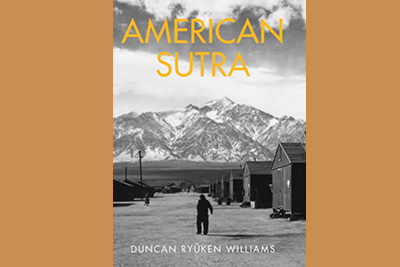
Duncan Ryuken Williams is an established teacher in the Insight and Zen tradition descended from the Burmese and Thai vipassana lineages as carried into the West. Duncan Ryuken Williams is affiliated with Barre Center for Buddhist Studies. He's a senior scholar of Japanese Buddhism and Buddhist American history, including work on the Japanese American internment during World War II. He's the author of American Sutra: A Story of Faith and Freedom in the Second World War. The teacher's recorded material is mostly hosted through affiliated centers and personal platforms rather than through Dharma Seed. Established teachers occupy a useful middle position in the directory, with enough recorded teaching to give students a sustained body of work to study, and enough ongoing practice to keep developing. Students often note a warm, grounded presence and an ability to slow practice down to its actual texture rather than rush through technique. The lay-teacher form of practice this teacher works within asks something specific of students: they have to take responsibility for their own practice in ways monastic students don't always have to, since the structures of monastic life don't carry them. That responsibility is part of what the teaching points at. The wider Western Buddhist landscape that grew up across the second half of the twentieth century has produced a range of teaching voices working at the meeting point between classical Asian sources and contemporary lay practice, and this teacher is one of those voices. Across the recorded body of work runs a consistent attention to what's actually workable inside ordinary obligations rather than only in retreat.
Lineage
Williams is a senior academic in Buddhist studies, particularly Japanese American Buddhist history. He's affiliated with BCBS. The teacher works as a layperson, in keeping with the broader Western lay-teacher form of the tradition. He's affiliated with Barre Center for Buddhist Studies.
What to expect
Programs at BCBS combine academic study with contemplative practice. Retreats run on a Zen schedule with multiple zazen periods, kinhin walking practice, and dokusan or work practice depending on the lineage. The pacing is structured and the silence is firm. The tone is unhurried and grounded, with attention given to the practical questions students bring rather than to large theoretical frameworks. First-time retreatants are usually welcomed without fuss, and the format is designed to support practitioners across a range of experience levels rather than only veterans. Newer students may want to begin with shorter programs and work up to longer silent residential retreats over time.