About
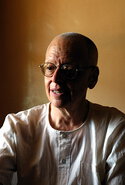
Linda Naini is a mindfulness meditation teacher with the Insight Meditation Community of Washington and an integrative life coach. She began practicing mindfulness in 2009 during her father's terminal illness and subsequent depression. She has completed teacher trainings including the .b Teacher Training (children and adolescents), Jonathan Foust's Year of Living Mindfully, and the Mindfulness Meditation Teacher Certificate Program. Naini leads ongoing classes and sanghas in the Washington, D.C. area, teaches a weekly Wednesday Zoom class using Pema Chodron's teachings, and has taught in corporate and academic settings. As an Iranian-American, she incorporates Persian poetry and Sufi teachings into her classes. She holds additional certifications in yoga, health coaching, and iRest.
Teaching focus
Linda Naini's teaching focus sits inside the Insight Meditation lineage that grew from Burmese vipassana through teachers like Joseph Goldstein, Sharon Salzberg, and Jack Kornfield, with insight meditation (vipassana) as the working ground. The Insight Meditation lineage carries forward the Burmese vipassana teaching as it took root in the West through teachers like Joseph Goldstein, Sharon Salzberg, and Jack Kornfield. That means mindfulness held at the center, with metta and the broader brahmaviharas as steady companions, and a household-friendly framing that doesn't require ordination or extreme retreat conditions. Grief practice gets real time. The teaching doesn't sanitize loss into a contemplative lesson, it lets it stay heavy long enough to be honest. Teen-oriented teaching keeps the language plain, the demands realistic, and the framing free of adult hand-wringing about what young people should be doing with their attention. Online teaching is treated as its own form, with attention to what works in that medium rather than as a downscaled version of in-person work. Across the body of work, the consistent thread in Linda Naini's teaching is the refusal to let practice become abstract. The instruction asks for direct contact with what's actually arising, and the framing supports practitioners in giving it that.
Background
Linda Naini is a mindfulness meditation teacher with the Insight Meditation Community of Washington and an integrative life coach. She began practicing mindfulness in 2009 during her father's terminal illness and subsequent depression. She has completed teacher trainings including the.b Teacher Training (children and adolescents), Jonathan Foust's Year of Living Mindfully, and the Mindfulness Meditation Teacher Certificate Program. Naini leads ongoing classes and sanghas in the Washington, D.C. area, teaches a weekly Wednesday Zoom class using Pema Chodron's teachings, and has taught in corporate and academic settings. As an Iranian-American, she incorporates Persian poetry and Sufi teachings into her classes. She holds additional certifications in yoga, health coaching, and iRest. In 2013, Linda participated in the.b Teacher Training, where she received a certification to teach mindfulness meditation to children and adolescents. In 2014, she completed Jonathan Foust’s Year of Living Mindfully (YLM). And in 2018, she graduated from the Mindfulness Meditation Teacher Certificate Program (MMTCP). Linda has co-led residential retreats and led daylongs and series classes for IMCW, the University of Maryland Baltimore County, Montgomery College, a Muslim women’s group, and various corporations. She co-led the Downtown Dharma sangha for three years, has co-taught the Takoma Park Monday night sangha since 2018, and has taught once a month for the Columbia sangha since 2020. For the last five years, on Wednesday mornings from 9-10 am ET, Linda has taught a Zoom class using Pema Chodron’s book, “Comfortable with Uncertainty: 108 Teachings on Cultivating Fearlessness and Compassion.” She also teaches a weekly meditation class through extendYoga on Friday mornings. Linda Naini's teaching is anchored at Insight Meditation Community of Washington. The teaching draws from the Insight Meditation lineage that grew from Burmese vipassana through teachers like Joseph Goldstein, Sharon Salzberg, and Jack Kornfield, with insight meditation (vipassana) as the working ground. Areas of particular focus include grief, online, teens. The voice in Linda Naini's teaching is recognizably in the Insight Meditation lineage, warm without being soft, and willing to sit with the difficult places practice opens. Mindfulness, loving-kindness, and the gradual accumulation of insight are the working vocabulary. Practitioners drawn to Linda Naini's teaching tend to be people who've already noticed that practice is a long arc, not a quick fix, and who want a teacher who treats it that way. Practitioners drawn to Linda Naini's teaching tend to be people who've already noticed that practice is a long arc, not a quick fix, and who want a teacher who treats it that way.
Lineage
Linda Naini teaches within the Insight Meditation lineage that grew from Burmese vipassana through teachers like Joseph Goldstein, Sharon Salzberg, and Jack Kornfield. Linda Naini Linda is a mindfulness meditation teacher for the Insight Meditation Community of Washington and an integrative life coach with over a decade of teaching and coaching experience. She developed a deep appreciation for Tara Brach’s teachings and the practice of mindfulness in 2009 during her father’s terminal illness and later while working through her own depression after his death. Current affiliation runs through Insight Meditation Community of Washington. Linda Naini teaches as a lay practitioner rather than from a monastic role.
What to expect
On retreat with Linda Naini you'll get long sits, walking practice, and dharma talks that build on each other across days. The container is silent or near-silent, which gives the teaching room to land in a way that single classes can't quite reach. Sittings are conventional, mindfulness of breath and body, with metta and inquiry into difficult mind-states woven through. There's space for questions, and the answers don't get rushed. The atmosphere is grounded rather than performative, and practitioners tend to leave with practical ground to keep working from on their own. The atmosphere is grounded rather than performative, and practitioners tend to leave with practical ground to keep working from on their own.