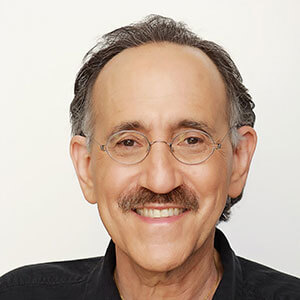
About
Rashid Hughes is a mindfulness teacher, yoga instructor, restorative justice facilitator, and writer based in Washington, DC. He is affiliated with the Insight Meditation Community of Washington. Hughes co-founded Heart Refuge Mindfulness Community, which centers mindfulness practice within the experiences of Black, Indigenous, and other People of Color. He holds certifications in mindfulness teaching, yoga instruction, restorative justice facilitation, and as a Fire Pujari in the Kashi tradition. He served as Mindfulness Director for the Howard University Contemplative Justice Fellowship and offers restorative justice community spaces through the National Reentry Network for Returning Citizens.
Teaching focus
Rashid Hughes's teaching focus sits inside the Insight Meditation lineage that grew from Burmese vipassana through teachers like Joseph Goldstein, Sharon Salzberg, and Jack Kornfield, with insight meditation (vipassana) as the working ground. The Insight Meditation lineage carries forward the Burmese vipassana teaching as it took root in the West through teachers like Joseph Goldstein, Sharon Salzberg, and Jack Kornfield. That means mindfulness held at the center, with metta and the broader brahmaviharas as steady companions, and a household-friendly framing that doesn't require ordination or extreme retreat conditions. Race, lineage, and the specific weight of practicing inside marked bodies are part of the working dharma rather than a separate program tacked alongside it. Engaged dharma is taken seriously here. Practice and ethical-political commitment get treated as a single fabric. Across the body of work, the consistent thread in Rashid Hughes's teaching is the refusal to let practice become abstract. The instruction asks for direct contact with what's actually arising, and the framing supports practitioners in giving it that. Recurring questions in the teaching include how to keep practice honest across years, how to hold difficulty without bypassing it, and how the dharma actually shows up in ordinary life rather than only on the cushion.
Background
Rashid Hughes is a mindfulness teacher, yoga instructor, restorative justice facilitator, and writer based in Washington, DC. He is affiliated with the Insight Meditation Community of Washington. Hughes co-founded Heart Refuge Mindfulness Community, which centers mindfulness practice within the experiences of Black, Indigenous, and other People of Color. He holds certifications in mindfulness teaching, yoga instruction, restorative justice facilitation, and as a Fire Pujari in the Kashi tradition. He served as Mindfulness Director for the Howard University Contemplative Justice Fellowship and offers restorative justice community spaces through the National Reentry Network for Returning Citizens. In 2022, Rashid was honored to become a Fellow at the Garrison Institute, a real experience that inspired him, in 2024, to serve as the Mindfulness Director for the inaugural cohort of the Howard University Contemplative Justice Fellowship. Building on this momentum, in 2025 he began a meaningful partnership with the National Reentry Network for Returning Citizens, where he now offers Restorative Justice community spaces for Returning Citizens in Washington, DC. He draws inspiration from various wisdom traditions and his personal experience as a Black man, and his teachings emphasize that spiritual practices can serve as a radical source of personal and collective liberation. With great joy, Rashid is dedicated to nurturing life at home with his wife and daughter. Rashid Hughes's teaching is anchored at Insight Meditation Community of Washington. The teaching draws from the Insight Meditation lineage that grew from Burmese vipassana through teachers like Joseph Goldstein, Sharon Salzberg, and Jack Kornfield, with insight meditation (vipassana) as the working ground. Areas of particular focus include BIPOC, restorative justice, social justice. The voice in Rashid Hughes's teaching is recognizably in the Insight Meditation lineage, warm without being soft, and willing to sit with the difficult places practice opens. Mindfulness, loving-kindness, and the gradual accumulation of insight are the working vocabulary. Practitioners drawn to Rashid Hughes's teaching tend to be people who've already noticed that practice is a long arc, not a quick fix, and who want a teacher who treats it that way. Practitioners drawn to Rashid Hughes's teaching tend to be people who've already noticed that practice is a long arc, not a quick fix, and who want a teacher who treats it that way. Practitioners drawn to Rashid Hughes's teaching tend to be people who've already noticed that practice is a long arc, not a quick fix, and who want a teacher who treats it that way.
Lineage
Rashid Hughes teaches within the Insight Meditation lineage that grew from Burmese vipassana through teachers like Joseph Goldstein, Sharon Salzberg, and Jack Kornfield. Rashid Hughes Rashid Hughes is an intersectional-contemplative teacher, writer, and restorative justice facilitator who envisions a transformed world where everyone lives with deep connection to nature and one another. He is a certified Mindfulness Teacher, Yoga Instructor, Restorative Justice Facilitator, and Fire Pujari from the Kashi tradition. He draws inspiration from various wisdom traditions and his personal experience as a Black man, and his teachings emphasize that spiritual practices can serve as a radical source of personal and collective liberation. Current affiliation runs through Insight Meditation Community of Washington. Rashid Hughes teaches as a lay practitioner rather than from a monastic role.
What to expect
On retreat with Rashid Hughes you'll get long sits, walking practice, and dharma talks that build on each other across days. The container is silent or near-silent, which gives the teaching room to land in a way that single classes can't quite reach. Sittings are conventional, mindfulness of breath and body, with metta and inquiry into difficult mind-states woven through. There's space for questions, and the answers don't get rushed. The atmosphere is grounded rather than performative, and practitioners tend to leave with practical ground to keep working from on their own. The atmosphere is grounded rather than performative, and practitioners tend to leave with practical ground to keep working from on their own.