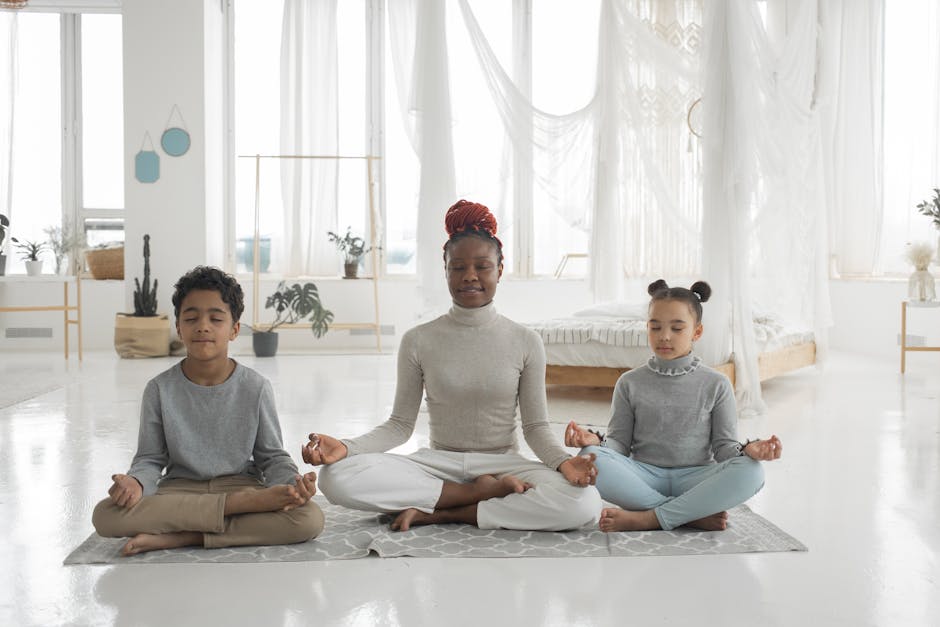
Your kid won't sit still. They're seven, or four, or eleven, and the school counselor mentioned "mindfulness," or the pediatrician suggested it for sleep, or you're just exhausted by the Tuesday-afternoon meltdowns and willing to try anything that isn't another screen-time bribe.
Here's the honest part: meditation apps for kids are a mixed bag. Some are genuinely thoughtful. Some are cartoons with breathing exercises bolted on. And almost none of them teach what an actual contemplative tradition would call meditation — they teach short attention exercises, body awareness games, and sleep stories. That's fine. Kids don't need Vipassana retreats. But you should know what you're actually buying.
Below are four apps worth your time in 2026, what they're good at, what they're not, and how to use them without turning practice into another screen habit.
What Kids Actually Need (and What Apps Can't Give Them)
Before the list, a quick reality check. The strongest predictor of whether a child develops a calming practice isn't the app — it's whether someone in their life practices too. Kids mirror. If you sit for five minutes while they do their thing, the whole exercise lands differently than if you hand them a tablet and walk away.
Apps work best for three things with kids:
- Sleep — guided wind-downs and stories that aren't overstimulating
- Big feelings — short, age-appropriate ways to name and ride out anger, anxiety, sadness
- Focus breaks — two-to-five-minute resets during homework or transitions
Apps don't replace a parent sitting on the floor with a child who's crying. They don't teach the long arc of attention training that, say, zazen or Vipassana develops in adults over years. They're tools. Use them like tools.
One more thing worth saying: the "mindfulness" most kids' apps teach is loosely descended from MBSR and secular adaptations of Buddhist practice. It's been simplified, gamified, and stripped of its lineage. That's not necessarily bad for a six-year-old. But it's worth knowing the soup you're serving.
1. Smiling Mind — The Most Substantive (and It's Free)
Smiling Mind is a nonprofit out of Australia, built with input from psychologists and educators. It has dedicated programs for kids ages 3–6, 7–9, 10–12, and teens. The whole thing is free. No subscription, no upgrade screens.
What it does well
The voices are calm without being syrupy. The progressions are sensible — short body-awareness practices, then breath, then noticing thoughts, then loving-kindness-style well-wishing exercises adapted for kids. There's a strong classroom component, so if your child's school uses it, the home practice reinforces what they're already doing.
For ages 7 and up, the sessions are genuinely teaching attention skills, not just playing soothing music. The teen track is solid enough that some adults use it.
What to watch for
The interface isn't flashy. Some kids who expect cartoon characters will bounce off it. The 3–6 program is the weakest tier — at that age, you're better off just doing belly breathing on the floor with them.
Best for: Ages 7–14, parents who want something free and substantive, families already exposed to school-based mindfulness programs.
2. Moshi — Sleep Stories That Actually Work
Moshi (formerly Moshi Twilight) is the sleep app for kids. It's built around audio "Moshi tales" — slow, gentle bedtime stories with original music, designed to bore children into sleep in the best possible way.
What it does well
If your child can't fall asleep, Moshi is probably the single most effective tool on this list. The pacing is deliberately slow. The narrators include some recognizable voices. The stories don't have plot tension that keeps kids engaged — they meander, descend, and dissolve.
It also includes meditations, breathing exercises, and "mindful moments" for daytime use, but the core strength is sleep. Many parents who've tried other sleep apps end up here for the kids' content specifically.
What to watch for
It's a paid subscription (around $60/year). The non-sleep content is fine but not exceptional — you're paying for the bedtime library. There's also a real risk of kids becoming dependent on the audio to fall asleep, which is its own problem to manage.
Best for: Ages 3–10 with sleep difficulties. If bedtime is the war zone, this is the app.
3. Headspace (Kids Section) — Polished, Predictable, Familiar
If you already have a Headspace subscription, the kids' section is included. It's split into age bands (5 and under, 6–8, 9–12) and themes (calm, focus, sleep, kindness, wake up).
What it does well
The animation is genuinely charming. Andy Puddicombe's voice — when he's the narrator — is calm and clear in a way that works for adults and kids. The five-themes structure makes it easy to grab a session that fits the moment ("we need calm" or "we need focus before homework").
For families where a parent already practices through the main Headspace app, the consistency helps. The kid hears something that sounds like what mom or dad does. That coherence matters.
What to watch for
It's a Headspace subscription, which isn't cheap (~$70/year). The kids' content is a small fraction of what you're paying for, so it really only makes sense if the adults use the main app too. If you're choosing between this and Smiling Mind on quality of kid content alone, Smiling Mind wins. If you want a unified family practice tool, Headspace makes sense.
For a deeper look at how Headspace stacks up against alternatives, the Headspace vs Calm comparison and the Ten Percent Happier vs Headspace writeups go deeper.
Best for: Families where a parent already uses Headspace; ages 5–12.
4. Calm (Kids Content) — Strong on Sleep Stories, Variable Elsewhere
Calm has a substantial kids' library — sleep stories, lullabies, breathing exercises, and meditations broken into rough age groups. The sleep stories include some big-name narrators reading classic tales (think LeVar Burton reading bedtime fare), which is the main draw.
What it does well
The sleep story production is high quality. Some of the music and nature soundscapes work well as homework background or bedtime ambience. If you have Calm already for yourself, the kids' content is a reasonable bonus.
What to watch for
The actual meditation instruction for kids is thinner than what Smiling Mind offers, and the app's interface assumes an adult is driving. It's a meditation app with a kids' section, not a kids' app. The subscription is also pricey (~$70/year).
If you're trying to decide between platforms, the Calm vs Insight Timer comparison covers the broader tradeoffs.
Best for: Ages 4–10, families who want strong sleep stories and already have Calm for adult use.
Quick Comparison
- Best free option: Smiling Mind
- Best for sleep: Moshi (ages 3–10), Calm (ages 6+)
- Best if you already meditate: Headspace (kid content lines up with parent practice)
- Best teaching of attention skills: Smiling Mind (ages 7+)
- Most engaging visuals: Headspace
How to Actually Use These Without Making Things Worse
A few honest cautions, because the "more meditation = better kid" framing is a setup for disappointment.
Don't use apps as punishment or correction. "You're being too wild, go do your meditation" teaches kids that meditation is what you do when you're bad. Bad framing, lasting damage. Use these as offerings during calm moments, not weapons during meltdowns.
Sit with them when you can. Especially under age 8, doing a session together — you on the floor, them next to you — is worth ten solo sessions. It models the behavior and removes the "this is a kid thing" stigma.
Cap the screen. The irony of treating screen-induced overstimulation with another screen is real. Audio-only sessions (eyes closed, lying down) sidestep most of this. Smiling Mind and Moshi work fine without watching the screen.
Don't expect calm. Sometimes a kid does a five-minute body scan and gets up calmer. Sometimes they fidget the whole time and then yell at their sister. Both are normal. Practice doesn't deliver predictable outputs, especially in children. If you're tracking results, you're already off.
For older kids and teens specifically, the guide on meditation for teens covers what shifts as kids hit the age where peer perception matters and "kids' apps" become uncool overnight. And if your child is dealing with anxiety, ADHD, or trauma, the ADHD-specific guide and anxiety-and-traditions guide are worth reading before you commit to any single approach.
When Apps Aren't the Answer
Sometimes a kid doesn't need an app. They need to run around outside for an hour. They need a parent who isn't on their phone. They need fewer scheduled activities, not another one.
Meditation apps work when they're a small piece of a larger picture — sleep, movement, unstructured time, real connection. They fail when they're trying to compensate for the absence of those things. No twelve-minute audio session fixes a chronically overstimulated nervous system in a child whose life has no margin.
If your kid is struggling enough that you're researching apps at 11 p.m., it's also worth asking what else might be tight in their life. The broader guide on age-appropriate techniques goes into off-screen practices that often work better than anything on a tablet.
Related Reading
- Meditation for Kids: Age-Appropriate Techniques and Apps
- Meditation for Teens: How to Start and What to Expect
- The 5 Best Free Meditation Apps: No Subscription Required
If you try one of these and your kid hates it, that's information, not failure. Try a different one, try it at a different time of day, or set the apps aside for a season and come back later. Practice will find them when it's ready to.