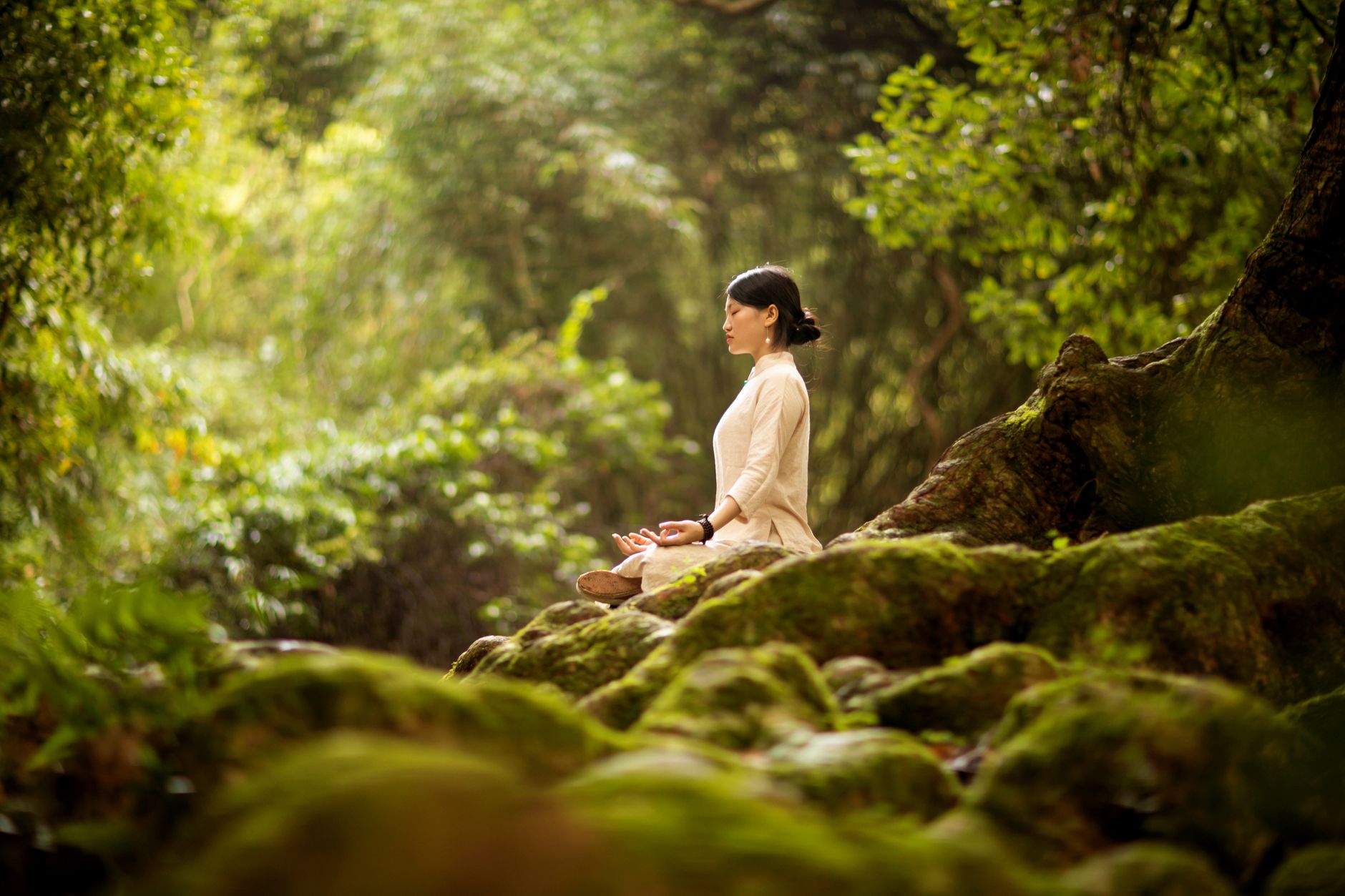
The Complete Guide to Vipassana Insight Meditation: Origins, Practice, Teacher Paths
Vipassana is one of the most practiced and most misunderstood meditation traditions in the Western world. The word is Pali, the language of the earliest Buddhist texts, and it means "insight" — specifically, direct seeing into the nature of phenomena as they arise and pass in moment-to-moment experience. It's not relaxation. It's not stress management. It's a systematic investigation of the mind.
Origins
The practice traces back to the early Buddhist teachings — specifically the Satipatthana Sutta, the "Discourse on the Foundations of Mindfulness," considered the core contemplative text of Theravada Buddhism. But modern Vipassana as practiced in retreat centers worldwide was largely shaped by a 19th and 20th-century revival in Burma.
Ledi Sayadaw (1846-1923), a Burmese monk, taught that lay practitioners could practice Vipassana — not just monastics — and that this was urgent given the threats to Theravada Buddhism from colonialism. His students passed the method to other teachers. One lineage passed through U Ba Khin, a Burmese civil servant, to his student S.N. Goenka, who brought the practice to India in 1969 and later to the West.
A parallel lineage ran through Mahasi Sayadaw (1904-1982), whose noting technique influenced an enormous number of Western teachers including Joseph Goldstein, Sharon Salzberg, and Jack Kornfield — the founders of the Insight Meditation Society in Barre, Massachusetts.
The Two Major Western Lineages
The Goenka tradition teaches a specific body-scanning technique — systematically sweeping attention through the body from head to foot and foot to head, observing sensations with equanimity. The theory is that observing sensations without reacting to them interrupts the pattern of conditioned reactivity (craving and aversion) that the tradition identifies as the root of suffering. Goenka's ten-day courses are offered free of charge at centers worldwide. They're rigorous, precise, and demanding.
The IMS / Insight Meditation tradition (primarily Mahasi-influenced) uses a noting technique: mentally labeling arising phenomena ("rising, falling," "thinking, thinking," "pain, pain") to sustain mindful awareness. The noting stabilizes attention and allows systematic observation of the three characteristics — impermanence, suffering, and non-self — as they manifest in direct experience. Western insight teachers have developed their own voices and approaches within this framework over fifty years.
What the Practice Actually Involves
Sitting still. For a long time. Watching what happens.
That sounds simple. It isn't. In the early stages of practice, the mind reveals how restless it actually is. The attention won't stay where you put it. Boredom arises. Discomfort arises. A low hum of anxiety about everything you're not doing arises. This is useful information, not failure.
As concentration deepens — often after a period of intensive retreat — the resolution of experience becomes finer. Sensations resolve into rapid arising and passing. What felt like "the knee" becomes patterns of pulsing, pressure, heat, dissolving. The solidity of self-experience becomes less convincing. Traditional texts describe a progression of insight knowledges (vipassana nanas) that unfold in a recognizable sequence. Teachers in these traditions are trained to recognize where a student is in this progression and guide appropriately.
What Retreat Is Actually Like
A Goenka ten-day retreat begins with noble silence on the evening of day one and ends on the morning of day ten. No reading, no writing, no phone, no talking (except for teacher interviews). Wake at 4 a.m. Sit until 9 p.m. Ten hours of formal sitting daily, with walking meditation breaks. Simple vegetarian meals. No eye contact with other students.
Days 1-3 focus on breath awareness (anapana), building concentration before Vipassana instruction begins on day 4. Days 4-9 are body-scanning practice. Day 10, noble silence is broken and metta (loving-kindness) is introduced.
People encounter a remarkable range of experiences in ten-day retreats: profound calm, terror, grief, boredom beyond description, unexpected joy, physical pain, and occasionally, clear moments of insight into the impermanent nature of experience. It's not always pleasant. It's almost always meaningful.
Who It's For
Vipassana is for people who are genuinely curious about the nature of their own minds and are willing to endure real discomfort to find out. It's not appropriate as a first encounter with meditation if you're in an acute mental health crisis. Many centers ask participants to disclose significant psychiatric history before enrollment, not to exclude people, but to ensure appropriate support.
It's surprisingly accessible otherwise. Goenka courses are free, offered worldwide, and available to people with no prior meditation experience. Many participants report it as one of the most significant experiences of their lives.
Finding Teachers
For Goenka retreats: dhamma.org lists all global centers. For the IMS / Insight tradition: the Insight Meditation Society (dharma.org), Spirit Rock (spiritrock.org), and our own teacher directory. Read our comparison of MBSR vs Vipassana if you're deciding between paths.