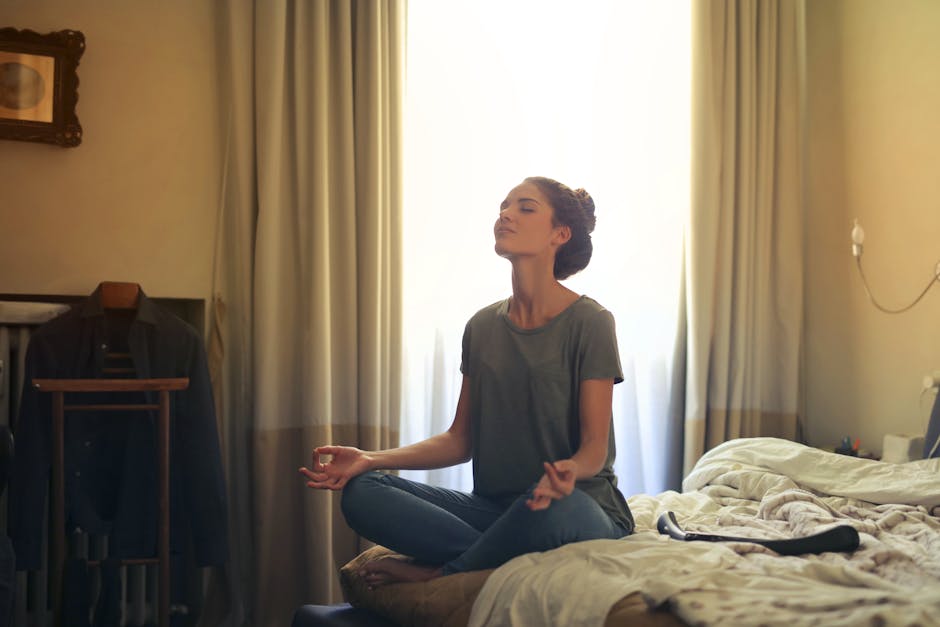
You've heard the stories. Ten days of silence. Eleven hours of sitting daily. No talking, no reading, no eye contact, no journaling. People come back transformed, or they come back wrecked. Sometimes both.
If you've lived through trauma — combat, assault, childhood neglect, medical trauma, loss — and you're considering a Vipassana retreat, you deserve more than a packing list. You deserve honest information about what intensive silent practice can do to a dysregulated nervous system, and what guardrails actually help.
This isn't a piece designed to scare you off. Vipassana has helped countless trauma survivors. But the tradition has historically been agnostic about psychological history, and the assumption that "everyone can sit" has hurt real people. Let's talk about what trauma-sensitive practice actually looks like before you commit.
Why Vipassana Needs Its Own Trauma Conversation
Vipassana isn't the same as MBSR. It isn't the same as Zen. And it's definitely not the same as a Calm app session. The S.N. Goenka tradition — the most globally distributed Vipassana network — uses a specific structure: 10 days, noble silence, body-scanning practice (called sweeping), and a non-negotiable schedule. Insight Meditation Society (IMS) and Spirit Rock run similar formats with somewhat more flexibility.
The intensity is the point. You're not learning a relaxation technique. You're being asked to observe sensation with equanimity, often for hours past the point where your body wants to stop. For a regulated nervous system, that confrontation can be liberating. For a trauma-shaped nervous system, the same instructions can trigger dissociation, flashbacks, or panic.
This matters because Vipassana is one of the most popular intensive traditions in the world. Our directory of 597 meditation teacher training programs tracks 102 Vipassana/Insight programs globally — third only to secular mindfulness (135) and MBSR (108). Many of those teachers go on to lead retreats. Not all of them have trauma training.
If you want a deeper comparison of how these traditions differ in approach to body and mind, our piece on Vipassana vs mindfulness walks through the lineage distinctions in detail.
What Trauma Can Do on the Cushion
Trauma lives in the body. That's not a metaphor — it's how the nervous system files threat memory. When you sit for hours in stillness and direct sustained attention inward, you can pull up sensations that have been stored away from conscious awareness for years.
Common experiences trauma survivors report on intensive retreats include:
- Hyperarousal: racing heart, restless legs, the urge to flee the hall
- Hypoarousal: dissociation, numbness, feeling like you're watching yourself meditate from outside your body
- Intrusive memory: images, smells, or body sensations connected to past events surfacing without warning
- Emotional flooding: grief, rage, or terror that doesn't move through in a single sit
- Sleep disruption: nightmares triggered by the day's content
None of this means you're meditating wrong. It means your nervous system is doing what nervous systems do when given uninterrupted access to stored material. The question is whether the retreat environment is equipped to support you through it.
If you've experienced panic or anxiety during shorter sits already, please read our breakdown of why meditation triggers panic attacks before committing to a 10-day intensive. The mechanisms scale up.
Questions to Ask Before You Register
Most centers don't volunteer this information. You have to ask. If they react defensively to any of these questions, that itself is data.
1. Is the teacher trauma-informed?
"Trauma-informed" is a specific competency, not a vibe. Ask whether the lead teacher has training in trauma-sensitive mindfulness — David Treleaven's framework is the most widely recognized — or clinical credentials. Many longtime dharma teachers have decades of meditation experience but zero training in stabilization techniques for dysregulated nervous systems.
2. What modifications are available?
Can you open your eyes? Can you stand up? Can you skip group sits? Can you do walking meditation when the schedule calls for sitting? In strict Goenka centers, the answer to most of these is "no" or "only with permission." At IMS, Spirit Rock, and many Insight-tradition retreats, modifications are explicitly welcomed.
3. Is there support staff beyond the teacher?
A 100-person retreat with one teacher and two assistants is a different container than a 30-person retreat with a teacher, two co-teachers, and a mental health consultant on-call. Ask. Trauma-informed retreats increasingly have licensed therapists available for one-on-one check-ins.
4. What's the protocol if someone destabilizes?
"We send them home" is not a protocol. Ask what early intervention looks like, whether there's a quiet recovery space, and whether they've ever had to coordinate with outside mental health providers. Centers that have thought through this will answer immediately.
5. What's the lineage?
Vipassana isn't monolithic. Goenka tradition, Mahasi tradition, Burmese versus Thai forest influences — each has different emphases. Knowing where your teacher trained matters. Our guide on verifying meditation teacher lineage walks through how to do this without being weird about it.
Red Flags and History Worth Knowing
The dharma world has its scandals. Sogyal Rinpoche. Joshu Sasaki. Eido Shimano. Multiple Insight teachers have been quietly let go for boundary violations. The "just sit through it" ethos has, in some cases, been weaponized against students raising legitimate concerns about teachers' behavior.
Specific red flags for trauma survivors evaluating a Vipassana retreat:
- "Strong determination" sits framed as mandatory — sitting through pain without moving is a practice, not an obligation, and trauma survivors often need permission to move
- No private interview slots — you should be able to talk to a teacher individually within the first 48 hours
- Discouragement of leaving early — a healthy center treats early departure as a clinical decision, not a moral failure
- Romanticizing breakdown — language like "it had to come up" or "this is the path" applied to severe distress without offering support
- No mention of pre-existing conditions on the application — good centers screen for trauma history, psychosis history, and current psychiatric medication
If you spot these patterns, that's useful information regardless of how famous the teacher is. Our broader list of dharma red flags applies here too.
What Trauma-Sensitive Vipassana Actually Looks Like
The good news: trauma-sensitive Vipassana exists, and the movement is growing. Here's what to look for.
Modified posture and movement permissions
You can use a chair. You can lie down for body scans. You can do walking practice during sit periods. The instruction is "find a position where you can stay with your experience" rather than "endure."
Anchors beyond breath and sensation
For some trauma survivors, focusing on the breath itself is destabilizing — breath was constricted during the original event, or holding attention there triggers panic. Trauma-sensitive teachers offer alternatives: sound, contact points, peripheral vision. We've covered five alternative anchors that work when breath doesn't.
Titration and dual awareness
Rather than diving fully into difficult sensation, trauma-sensitive teachers borrow from somatic therapy: alternate brief contact with the difficult material and longer contact with a resource (a part of the body that feels neutral or pleasant, a memory of safety). This is closer to somatic approaches to meditation than to traditional Vipassana, and the integration is happening at progressive centers.
Grounding tools available
Walking outside during breaks. Permission to step out of the meditation hall. Access to the 5-4-3-2-1 grounding method when sensations get overwhelming. None of these are "cheating." They're how nervous systems regulate.
Pre-screening and informed consent
You're asked, in detail, about trauma history, current treatment, and current symptoms — and the answers actually shape your experience at the retreat, not just sit in a file.
Should You Do an Online Retreat First?
For many trauma survivors, a residential 10-day silent retreat is the wrong first step. The lower-stakes version: a structured online retreat where you can sleep in your own bed, modify the schedule, and access support resources without isolation.
Our format data backs this up — of the 597 programs in our directory, 303 offer online delivery, including many Vipassana-tradition options. Our roundup of online Vipassana retreats covers what's available, and our comparison of online vs in-person retreats addresses what you trade off in each format.
An online weekend retreat with a trauma-informed teacher can tell you a lot about how your system handles concentrated practice before you commit ten days of your life. If you destabilize on day two of an online retreat, you can step away, talk to your therapist, and recalibrate. The same destabilization on a residential retreat is much harder to manage.
If You Decide to Sit
Suppose you've vetted the center, asked the questions, talked to your therapist, and you're going. A few preparations that materially help:
- Tell your therapist. Schedule sessions before and within a week after. This isn't paranoia — it's how integration works.
- Don't stop medication for the retreat. Some traditions historically discouraged psychiatric medication. This advice has caused real harm. Stay on your meds. Bring them.
- Build a personal toolkit. Know your grounding techniques cold before you arrive. Seven somatic grounding exercises are a starting point.
- Identify your "off-ramp." Before you go, decide what signs mean you'll leave early. Write them down. This protects you from getting stuck in retreat logic mid-crisis.
- Choose your roommate situation honestly. If sharing space with strangers is triggering, pay extra for a single room or pick a center that offers them.
- Plan reentry. Don't fly home the same day. Don't go straight back to work. The two days after retreat often matter as much as the retreat itself.
And if you find yourself struggling between sits with intrusive thoughts, our piece on feeling trapped in your thoughts covers what's normal and when to ask for help.
Frequently Asked Questions
Can people with PTSD safely do a 10-day Vipassana retreat?
Some can, with the right center, the right teacher, and active mental health support before and after. Many shouldn't — at least not as a first intensive. The research summarized in our piece on meditation for PTSD shows benefit from gentler, shorter, more structured practices first. Talk to a trauma therapist before committing.
Is Goenka-tradition Vipassana trauma-informed?
As an institution, no — the standard Goenka course doesn't include trauma screening, posture modifications aren't broadly available, and the schedule is non-negotiable. Individual assistant teachers vary widely. Goenka courses are free, which makes them accessible, but the trade-off is a standardized format that wasn't designed with trauma in mind.
What's the difference between Insight Meditation Society retreats and Goenka retreats for trauma survivors?
IMS, Spirit Rock, and similar Insight-tradition centers generally offer more flexibility: chair sitting, movement options, one-on-one teacher meetings, and increasingly explicit trauma-sensitive frameworks. They cost more (typically $100-150/day on sliding scale). Goenka centers operate on donation and follow a fixed format. Neither is universally safer, but Insight-tradition centers are usually easier to modify.
Should I tell the retreat staff about my trauma history?
Yes. If a center's application doesn't ask, write it in anyway, or call and disclose. A center that handles this disclosure thoughtfully — assigning you a check-in with a teacher, noting modifications you may need, briefing the support staff — is showing you it's safe. A center that dismisses the information is showing you something too.
A Soft Invitation
Vipassana, done well, is one of the most profound practices available. Done without trauma sensitivity, it can re-traumatize. Both things are true.
You don't have to decide today. Sit with the questions. Talk to your therapist. Maybe try a weekend online retreat first. Maybe explore which traditions tend to help with anxiety and which can make it worse. The dharma will still be there.
The most trauma-informed thing you can do is treat yourself as worth protecting. That's not avoidance of practice — it's practice.
Related reading
- Meditation for PTSD: What the Research Actually Shows
- The 5 Best Trauma-Informed Meditation Teacher Training Programs
- Online Vipassana Retreats: The Best Programs for 2026
Vipassana is bigger than one organization
The Vipassana Handbook
S.N. Goenka's centers are one branch of a much larger tradition. The Handbook breaks down all four major lineages — Goenka, Mahasi noting, Pa-Auk, and TWIM — what a 10-day retreat actually looks like day by day, and the teacher-certification paths. 26 pages, independent.