
Key Takeaways
- Online meditation classes are a legitimate, research-backed way to build a consistent practice — especially for beginners who need structure and flexibility.
- The best beginner classes combine technique instruction, guided sessions, and some form of accountability or community.
- Scientific evidence supports meditation's effects on stress reduction, attention, and emotional regulation — but quality of instruction matters.
- Free options (apps, YouTube) can get you started, but structured courses tend to produce better long-term consistency.
- If you eventually want to teach others, pathways exist — from short certificates to full online meditation teacher training programs.
Want a real teacher, not just an app? We maintain a directory of 666 meditation teachers across every major tradition — including the people training the next generation of teachers themselves. All free to browse.
Browse by tradition: Insight (167 teachers) · Zen (153) · Vipassana (110) · Tibetan (58) · Secular Mindfulness (11) — or explore the full directory by specialty (anxiety, sleep, beginners, trauma).
Meditation has been practiced in various forms for thousands of years, but the last decade has brought it squarely into the mainstream — and for good reason. A growing body of peer-reviewed research confirms what practitioners have long reported: a consistent meditation habit can meaningfully reduce stress, sharpen attention, and improve overall psychological well-being. The challenge for most beginners isn't motivation. It's knowing where to start, what style fits their life, and how to build a practice that actually sticks.
Online meditation classes have made that starting point far more accessible. You no longer need a local studio, a flexible schedule, or even a particular budget to begin. But "accessible" doesn't automatically mean "good." The internet is flooded with courses, apps, and guided sessions of wildly varying quality. This article cuts through that noise — explaining what to look for, which formats tend to work best for beginners, and what the research says about why any of this matters.
Why Meditation Is Worth Your Time (And What the Research Actually Says)
It's easy to dismiss meditation as a wellness trend dressed up in ancient clothing. The research suggests otherwise. A landmark meta-analysis published in JAMA Internal Medicine (Goyal et al., 2014) reviewed 47 randomized controlled trials and found that mindfulness meditation programs produced moderate improvements in anxiety, depression, and pain — comparable in some cases to antidepressant medications, with far fewer side effects.
A separate study published in Psychiatry Research: Neuroimaging (Hölzel et al., 2011) used MRI scans to demonstrate that eight weeks of mindfulness-based stress reduction (MBSR) led to measurable increases in gray matter density in the hippocampus — a region associated with learning and memory — along with reductions in the amygdala, which drives the stress response. These aren't self-reported mood improvements. These are structural changes in the brain.
For beginners specifically, a 2018 study in Behavioural Brain Research found that just 13 minutes of daily guided meditation over eight weeks was enough to improve attention, working memory, and mood in participants with no prior meditation experience. That's a meaningful finding: you don't need decades of practice or a retreat in the mountains to see real results. You need consistency, decent instruction, and a format that works for your life.
This is precisely where online classes have an edge. They remove the friction — no commute, no fixed class times, no social anxiety about sitting incorrectly in front of strangers — and allow you to build consistency in your own environment, at your own pace.
What Makes a Good Online Meditation Class for Beginners
Not all online meditation classes are created equal, and the format that works brilliantly for an experienced practitioner can feel bewildering for someone who has never sat in intentional silence before. When evaluating beginner-friendly options, a few criteria separate genuinely useful programs from those that are more marketing than substance.
Clear technique instruction. Beginners need to understand what they're doing and why — not just follow a soothing voice through a ten-minute audio track. Good beginner courses explain foundational concepts: what attention anchors are (breath, body sensation, sound), how to handle distracting thoughts without judgment, and how different styles of meditation (focused attention vs. open monitoring vs. loving-kindness) serve different purposes.
Structured progression. A course that dumps thirty guided sessions on you without a suggested sequence isn't really teaching you — it's just providing content. Look for programs that build skills progressively, introducing new techniques only after the previous ones have been practiced.
Qualified instruction. This matters more than many people realize. An instructor with a legitimate background — whether in MBSR, contemplative traditions, or evidence-based mindfulness training — brings a depth of understanding that shows up in how they explain difficult moments in practice. If you're curious about what that training looks like from the teacher's side, our overview of online meditation teacher training covers the main pathways and what separates rigorous programs from superficial ones.
Reasonable time commitment. Beginner classes that demand 45-minute daily sessions are setting most people up to quit. Research consistently shows that shorter, consistent sessions outperform longer, sporadic ones for building the habit.
The Main Formats: Courses, Apps, and Live Classes
Online meditation for beginners comes in three broad formats, each with distinct advantages and trade-offs.
Structured online courses are typically pre-recorded video or audio programs with a defined curriculum. They're self-paced, usually affordable (or free), and allow you to revisit lessons as needed. Programs on platforms like Coursera, Insight Timer, and dedicated meditation schools tend to fall into this category. For a detailed breakdown of what's currently available, our independent review of the best online meditation courses covers both free and paid options across different styles and learning formats.
Meditation apps are the lowest-friction entry point — most people already have a smartphone and can start within minutes of downloading. The best apps offer structured beginner programs, progress tracking, and a variety of session lengths. The trade-off is depth: apps are excellent for building the daily habit but often thin on the conceptual instruction that helps you understand what you're practicing. Our independent review of the leading meditation apps compares the major options across categories including beginner content, sleep support, and teacher quality.
Live online classes — via Zoom or similar platforms — offer something the other formats can't: real-time interaction with an instructor and a community of fellow practitioners. For many beginners, the accountability of a scheduled class and the ability to ask questions is worth the added structure (and often higher cost). Platforms like InsightLA, Tara Brach's online community, and various yoga studios now offer live meditation sessions that are accessible regardless of geography.
For most beginners, a hybrid approach works best: a structured course or app for daily practice, supplemented by a live session once a week or bi-weekly for guidance and community.
Three Online Meditation Courses Worth Considering
Rather than listing every available option, we've focused on programs that consistently earn strong marks for instructional quality, beginner accessibility, and transparency about their methods.
Sura Flow — Meditation for Deep Healing. Sura Kim's approach blends mindfulness with somatic awareness and compassion practices. Her programs are particularly well-suited for beginners who come to meditation with stress, burnout, or anxiety as their primary motivation. The instruction is warm without being vague, and the curriculum is thoughtfully sequenced for people starting from zero.
School of Positive Transformation — Mindfulness and Meditation Teacher Training. While this program is primarily aimed at people who want to eventually teach, its foundational modules are exceptional for serious beginners who want genuine depth. The instruction is evidence-informed and draws on MBSR methodology. If you're someone who learns best when you understand the "why" behind each practice, this curriculum rewards that orientation.
My Vinyasa Practice — Foundations in Meditation Certification. This program integrates breath work, yoga philosophy, and seated meditation in a way that works particularly well for beginners who are already comfortable with movement-based practices. The certification pathway is an added option for those who want formal recognition of their study, though the foundational content stands on its own for personal practice.
It's worth noting that none of these programs are perfect for every learner. Your ideal course depends on your primary motivation, your learning style, and how much time you can realistically commit each week.
Common Beginner Misconceptions That Hold People Back
A surprising number of people try meditation once or twice, decide they're "bad at it," and give up — often because of misconceptions about what meditation is supposed to feel like.
Misconception 1: The goal is to stop thinking. This is probably the most pervasive myth in beginner meditation. The goal is not to eliminate thoughts but to change your relationship to them — to notice when attention has drifted, and gently return it to the chosen anchor (breath, body, sound). Every time you notice and return, that's a successful repetition. Thoughts are not failures; they're the training material.
Misconception 2: You need long sessions to benefit. The research cited earlier (Basso et al., 2019, Behavioural Brain Research) used 13-minute sessions. Other studies have found meaningful effects with even shorter daily practices. Start with five minutes and build from there. Consistency over duration is the operative principle for beginners.
Misconception 3: There's one correct way to meditate. Focused attention practices, open monitoring, body scan, loving-kindness, walking meditation, mantra-based practices — these are all legitimate forms of meditation with different neurological profiles and best-fit use cases. A good beginner course introduces you to several styles so you can find what resonates.
Misconception 4: Results should be immediate and obvious. Meditation tends to work subtly and cumulatively. Most practitioners report that the changes become visible first to people around them — a partner noticing they're calmer, a colleague observing they handle pressure differently — before the practitioner consciously registers the shift. Expect a six-to-eight-week horizon before drawing conclusions about whether a practice is "working."
Beginner-Friendly Teachers Worth Studying With
If you're new to meditation and want to learn from a real teacher rather than just an app or a self-paced course, these 10 teachers are widely recommended for beginners. Each is established in their tradition, has substantial freely-available teaching online, and is known for accessible style.

Tara Brach
Insight · Theravada · Donate to Tara Brach
Working with Tara feels like permission to stop fighting yourself. She teaches you that your difficult thoughts and emotions aren't flaws—they're just waves moving through you. With over thirty-five y…

Sylvia Boorstein
Vipassana · Insight
Sylvia's teaching feels like sitting with someone who actually gets it—because she's lived it. As a psychotherapist, parent, and grandparent, she doesn't offer abstract wisdom. She offers her own stor…
Jack Kornfield
Theravada · Insight
Jack Kornfield is a Dharma teacher in the Theravada tradition. He has given 683 talks and led retreats. His teaching centers on mindfulness practice and its role in breaking habitual patterns and cond…

Sharon Salzberg
Vipassana · Insight · Theravada
When you sit with Sharon's teachings, you'll notice something shifts. She's not asking you to believe anything on faith alone—instead, she's inviting you to see for yourself what meditation actually d…
Joseph Goldstein
Vipassana · Theravada
Joseph Goldstein teaches in the Vipassana tradition of Theravada Buddhism. He has given 941 talks and led 115 retreats. Goldstein draws on various Buddhist schools while emphasizing core teachings on …
Sayadaw U Tejaniya
Theravada · Vipassana · Donate to Sayadaw U Tejaniya
Sayadaw U Tejaniya is a Theravada Buddhist teacher who trained as a monk in the Burmese tradition. He previously lived as a householder before ordaining, giving him experience with lay practitioners' …
Michael Fuchs
Tibetan · Dzogchen · Tergar
Michael Fuchs began meditation practice in 2003 and has studied with Mingyur Rinpoche since 2011. He is a graduate of the Tergar Meditation Teacher Program and teaches Joy of Living Level 1 and Anytim…
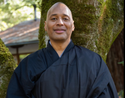
Shinmu Tamori Gibson
Zen · Vipassana · Theravada
Shinmu brings a grounded, embodied approach to practice—one that honors both precision and gentleness. You'll feel met where you are, whether you're just starting out or deepening years of work. Their…
Stephanie Wagner
Tibetan · Vajrayana · Tergar
Stephanie Wagner is a meditation teacher in the Tibetan Buddhist tradition who has studied with Yongey Mingyur Rinpoche, Tsoknyi Rinpoche, Sharon Salzberg, and Jetsun Khandro Rinpoche. She is affiliat…

Mary Grace Orr
Vipassana · Insight
Mary brings a rare kind of permission to practice: she won't rush you toward answers. Instead, she'll sit with your questions—the real, messy ones—and let them breathe. That's where the actual opening…
These are 10 of 666 teachers in our full directory, filterable by tradition (Insight, Zen, Vipassana, Tibetan, Secular Mindfulness, MBSR, Non-Dual, and more) and specialty (beginners, anxiety, grief, trauma, sleep, advanced practice).
If You Want to Go Deeper: From Student to Teacher
Some beginners discover fairly quickly that they're not just interested in practicing meditation — they're drawn to eventually sharing it with others. That's a meaningful and valid path, but it requires more than personal practice experience.
A credible pathway toward teaching typically begins with deepening your own practice significantly — ideally with a teacher or structured program — and then pursuing formal training. The landscape of training programs varies considerably in rigor and depth. At the lighter end, short certificate programs provide basic facilitation skills. At the more substantive end, full meditation coach certification programs involve significant curriculum study, supervised teaching practice, and often alignment with professional standards from bodies like the International Mindfulness Teachers Association (IMTA).
If this direction interests you, it's worth being discerning. The quality difference between a 20-hour online certificate and a comprehensive 200-hour training is substantial — in terms of what you'll actually know, and in terms of how credibly you'll be able to work with others. Our detailed coverage of meditation coach certification programs walks through the key distinctions.
Free vs Paid Online Meditation: The Honest Breakdown
One of the most common questions for beginners: do you actually need to pay for meditation instruction, or are the free resources enough? Here's the honest answer for each option.
Free Options Actually Worth Using
- Insight Timer — the largest free meditation library, with tens of thousands of guided sessions from real teachers (many of whom appear in our teacher directory). The free tier is unusually generous.
- Plum Village app — Thich Nhat Hanh's lineage offers most of its core teachings free.
- UCLA Mindful — UCLA Mindful Awareness Research Center publishes free guided practices.
- Tara Brach's website — over 1,000 free dharma talks and guided meditations from one of the most respected secular Insight teachers.
- Audio Dharma — free archive from the Insight Meditation Center (Gil Fronsdal, Andrea Fella, and others).
- Goenka 10-day Vipassana courses — held in 264 centers across 94 countries, completely free including room and board (donation-based).
When Paid Instruction Is Actually Worth It
- You need accountability and structure. An 8-week MBSR course has a defined start, end, weekly meetings, and homework. That structure dramatically improves completion rates.
- You're working on something specific (anxiety, chronic pain, trauma, sleep). Paid programs designed for these populations are generally evidence-based; free apps are not.
- You want a real human teacher, not just recorded content. Live classes (Zoom-based) and 1:1 mentoring are paid for a reason — the relational element matters.
- You're considering teaching. If you might eventually train as a teacher yourself, see our database of 597 teacher training programs across every tradition.
When Paid Is Mostly Marketing
Be skeptical of expensive "certifications" promising rapid mastery, $500+ "deep meditation programs" that wrap a few hours of content in slick branding, and apps that lock 90% of their library behind a subscription paywall when free alternatives are equivalent. The market has plenty of legitimate paid offerings — and plenty of marketing-heavy filler too.
Frequently Asked Questions
Can you really learn to meditate from an online class, or do you need in-person instruction?
For most beginners, online instruction is entirely sufficient — and in some respects preferable. Research on MBSR delivered online versus in-person has found comparable outcomes for stress reduction and well-being. The key variable is not the format but the quality of the curriculum and the consistency of practice. In-person instruction has advantages for advanced practitioners working with complex states or training to teach, but for building a solid foundational practice, a well-designed online course or app-based program works well.
How long should beginner meditation sessions be?
Five to fifteen minutes is a realistic and evidence-supported range for beginners. The priority is daily consistency rather than session length. Starting with five minutes and gradually extending as the practice becomes habitual is more effective than launching with ambitious 30-minute sessions that become difficult to sustain. Once daily practice is established — typically after four to six weeks — you can experiment with longer sessions if the inclination is there.
What's the difference between mindfulness meditation and other types?
Mindfulness meditation — particularly the focused attention style of watching the breath — is the most extensively researched and the most commonly taught in secular online programs. Other major categories include loving-kindness (metta) meditation, which cultivates compassion and positive emotion; body scan practices, which systematically move attention through physical sensation; open awareness practices, which observe the entire field of experience without a specific anchor; and mantra-based practices like Transcendental Meditation. Each has a different emphasis and different evidence base. Most beginner courses start with breath-focused mindfulness because it's accessible and well-supported, then introduce other styles progressively.
Are free meditation resources good enough, or is it worth paying for a course?
Free resources — particularly well-designed apps and platforms like Insight Timer — can genuinely get you started and sustain a practice long-term. The advantage of a paid structured course is typically depth of instruction, curriculum coherence, and sometimes access to a teacher for questions. If budget is a concern, start with a free app-based beginner program. If you find yourself hitting plateaus, getting confused about technique, or losing motivation after the initial novelty fades, a structured paid course is often worth the investment. Think of it the way you'd think about learning any skill: you can learn a lot from free resources, but expert instruction accelerates and deepens the learning.
Find Your Teacher
Beyond apps and recorded classes, the deepest progress usually comes from working with a real teacher. We've indexed 666 meditation teachers across 17 traditions — browse by lineage, specialty, or location.
Bottom Line
Online meditation classes have made it genuinely possible to build a meaningful, research-backed practice without a studio membership, a flexible schedule, or prior experience. The best beginner options — whether structured courses, apps, or live online sessions — share a commitment to clear instruction, progressive skill-building, and realistic time commitments. The science is solid: consistent meditation practice produces measurable benefits for stress, attention, and emotional regulation, often within eight weeks. What separates people who experience those benefits from those who don't is rarely aptitude. It's almost always consistency — which is exactly what a well-chosen online course or program is designed to support.
Related Reading
Online meditation classes for beginners — MindBodyGreen mbg+ Review 2026: Meditation Quality & Value.